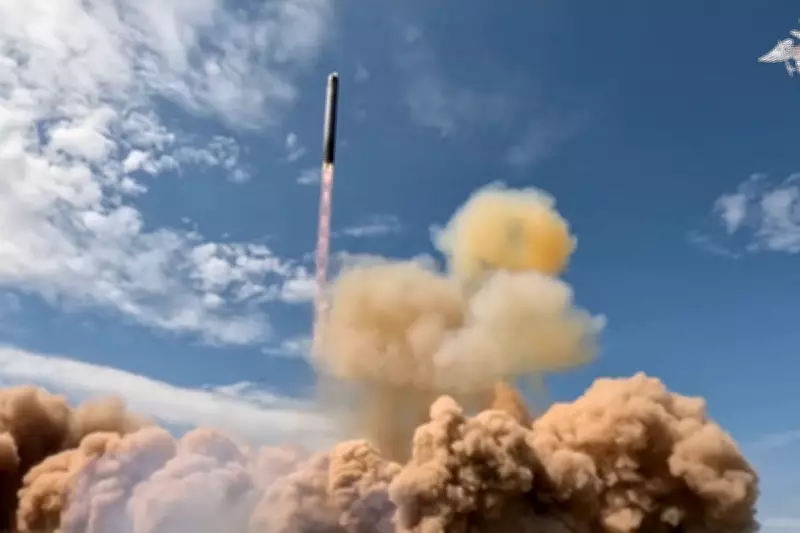
Russia has test-fired a new intercontinental ballistic missile, the Sarmat, as part of its ongoing efforts to modernise the country's nuclear forces. President Vladimir Putin hailed the Sarmat, known as 'Satan II' in the West, as the “most powerful missile in the world” and announced it would enter combat service by the end of the year.
The Sarmat Missile: Key Features
The Sarmat is designed to replace the aging Soviet-built Voyevoda missiles. It is claimed to possess a range of over 35,000 kilometres and enhanced capabilities to penetrate missile defences. This makes it capable of striking targets as far as South America, according to Russian officials.
Nuclear Rhetoric and Strategic Context
Putin has frequently employed nuclear rhetoric since the 2022 Ukraine invasion, aiming to deter Western support for Ukraine and maintain strategic balance. The missile test is part of Russia's broader modernisation of its nuclear triad, which also includes other advanced weapons such as the Avangard hypersonic glide vehicle and the Poseidon underwater drone.

The deployment of the Sarmat underscores Moscow's commitment to upgrading its nuclear arsenal amid heightened tensions with the West. Analysts suggest that the missile's capabilities could significantly alter the strategic landscape, though some Western experts remain sceptical about its claimed performance.