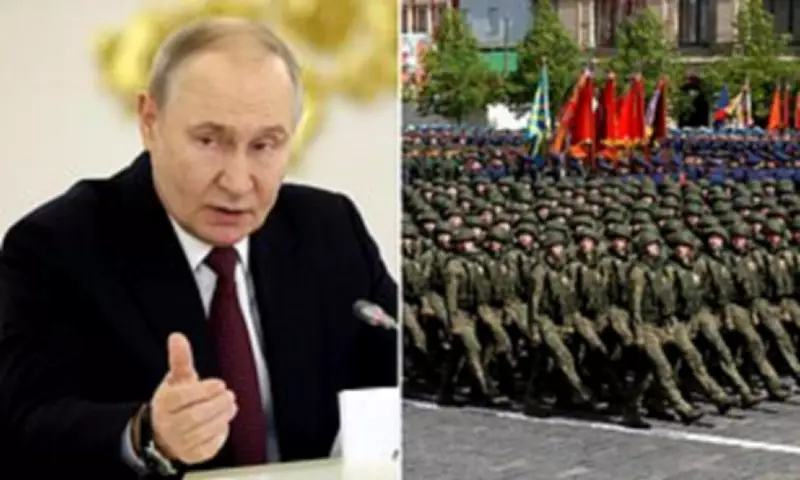
A chilling war game simulation conducted by former German and NATO officials has revealed a stark warning: Russia could potentially defeat the NATO alliance using a force of just 15,000 troops, achieving victory within mere days of launching an assault. The exercise, which simulated a Russian attack scenario set for October 2026, paints a concerning picture of alliance disunity and strategic vulnerability.
Simulation Details and Strategic Assumptions
The war game envisioned a Russian operation aimed at capturing the Lithuanian city of Marijampole, with President Vladimir Putin's forces requiring only 15,000 personnel to gain control over the Baltic nation. Crucially, the simulation highlighted significant hesitation and division within NATO's response framework, undermining the alliance's collective defence posture.
Key Findings from the Exercise
Austrian military expert Franz-Stefan Gady, who role-played as the Russian Chief of the General Staff during the simulation, provided critical insights. He stated that the United States declined to activate NATO's foundational Article 5, which mandates all member states to defend an ally under attack. This decision created a paralysis at the heart of the alliance's response mechanism.

Meanwhile, Poland activated its military forces but ultimately decided against deploying troops into the conflict zone. Germany exhibited pronounced reluctance to respond decisively as Russian forces advanced. Gady emphasised, 'Deterrence depends not only on capabilities, but on what the enemy believes about our will, and in the wargame my "Russian colleagues" and I knew: Germany will hesitate. And this was enough to win.'
Russia's Alternative Strategy
The simulation further revealed that Russia might not even need a conventional invasion force to achieve its military objectives in the Baltic region. Gady explained that Russia could establish so-called fire control from territories like Belarus and Kaliningrad. This strategy involves deploying rocket launchers, artillery systems, and drones to dominate strategic positions, effectively preventing enemy intervention without stationing a single soldier within Lithuania, Latvia, or Estonia.
Polish security analyst Bartłomiej Kot, another participant in the war game, corroborated this assessment in comments to the Wall Street Journal. He noted, 'The Russians achieved most of their goals without moving many of their own units.' Kot added that NATO's overall response was disproportionately focused on de-escalation measures when confronted with Russian provocation, rather than mounting a robust, unified military counter.
Broader Context and Timelines
The experts involved in the simulation have cautioned that Russia could be operationally prepared to execute such a scenario within the next 12 months, adding urgency to their warnings. This assessment emerges against the backdrop of ongoing diplomatic efforts to resolve the conflict in Ukraine.
The United States is currently brokering talks between Russian and Ukrainian envoys, aiming to halt the four-year-long invasion. While officials from both sides have described recent discussions as constructive and positive, tangible progress on core issues remains elusive. In a move indicating a desire to accelerate these peace efforts, Ukrainian President Volodymyr Zelenskyy disclosed last week that Washington has set a June deadline for Kyiv and Moscow to reach a settlement. However, similar deadlines set over the past year have passed without significant consequences or breakthroughs.
This war game serves as a potent reminder of the complex geopolitical landscape and the critical importance of NATO unity, credible deterrence, and strategic clarity in the face of potential adversarial actions.