
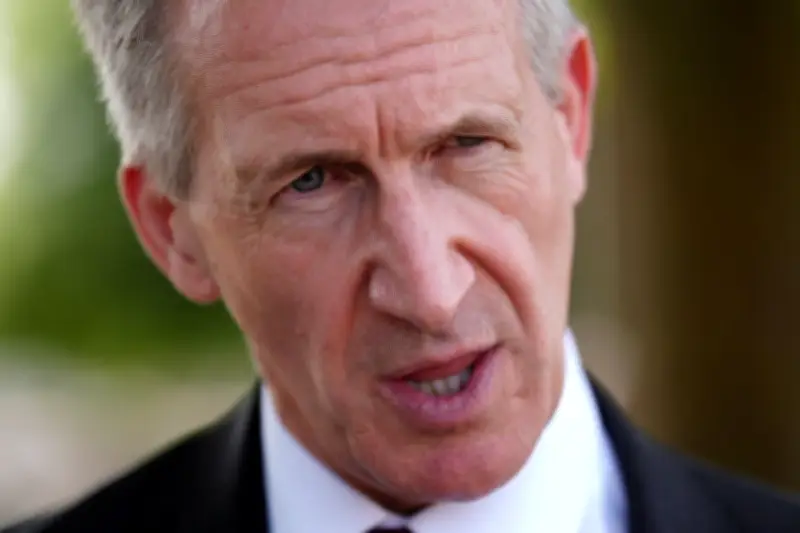
Defence Secretary Dan Jarvis has said that “real progress” has been made this week on the long-delayed defence investment plan (Dip), though work within the Government is ongoing to “get it right” in the coming days. In a sign that the blueprint for future-proofing the armed forces could receive a funding boost, Jarvis indicated that talks with the Treasury have moved forward recently.
Background on the defence investment plan
The Dip was originally due last year but has been delayed amid internal Government wrangling over the amount of money needed to finance the military. Jarvis’s predecessor, John Healey, resigned from his Cabinet post earlier this month because the Dip was only set to provide £13.5 billion in extra investment for defence, which he described as falling “well short” of what is required.
Asked whether the plan is ready, Jarvis told the Press Association: “I’ve been working very hard since I was appointed to satisfy myself that we’ve got the right resource and the right mix of capabilities. The Prime Minister has been clear that we will publish the defence investment plan before the Nato summit. That’s what we’re going to do. I have a responsibility to make sure I get it right and that is what I’m working to achieve.”
Progress and timeline
Jarvis added: “I pay tribute to my predecessor, he did a great job for defence, but the responsibility is now mine to deliver that plan, and what I need to do is satisfy myself that I’ve got the right level of resource and the right mix of capabilities. That is a process across Government. We’ve made real progress with it over the last week or so. I’m determined to get that right and I’m determined to do it before the Nato summit.”
Outgoing Prime Minister Sir Keir Starmer is set to press ahead with publishing the Dip before the July 7 Nato summit, despite major policy and spending commitments being paused across Government more widely in preparation for the transition of power. This move could potentially cause friction with his likely successor, Andy Burnham, who may want the final say on future military funding.
Additional funding and political context
Reports suggest that a further £1 billion has been added to the Dip since Healey resigned over the £13.5 billion he was offered. Jarvis said: “There will always be a strong case, not least given the circumstances that we’re operating in, to spend more on defence, but people will understand that there has to be a balance that is struck, and I have to work very closely with colleagues in the Treasury. It’s my job to secure the best deal for defence.”
He added that defence should be the UK’s “number one spending priority” and that the Prime Minister had made clear he was focused on this. Jarvis joined other Cabinet ministers, including Foreign Secretary Yvette Cooper and Chancellor Rachel Reeves, in publicly backing the newly-elected Makerfield MP for the leadership.
Support for Andy Burnham
Jarvis, who served as mayor of Sheffield City Region while Burnham was Greater Manchester mayor, said: “I’ve worked very closely with Andy Burnham. He was an exceptional mayor of Greater Manchester and I think he will be an excellent prime minister, he understands the importance of national security and making sure that we’ve got the right amount of resource to invest in our armed forces. That is a process that is absolutely under way, but it is on the back of a commitment already to historic levels of defence funding. Yes, we want to do more, and the Dip will deliver that, and, yes, we want to go further, the other side of the Dip. That is well understood by Andy Burnham. It’s well understood by the current Prime Minister. It’s my job to deliver for defence and that’s what I’m working hard to do.”
Warnings from former defence chief
Meanwhile, Admiral Sir Tony Radakin, who served as Chief of the Defence Staff from December 2021 to September last year, told the BBC’s Sunday with Laura Kuenssberg programme that the next leader would need to operate “almost like a wartime prime minister” in light of global threats. Burnham, following his victory in the Makerfield earlier this month, said: “A Makerfield test at the heart of British politics will make sure that the places Westminster has neglected will now get fairness.”
But Sir Tony told the programme: “As well as having the Makerfield test, I would say it’s the Moscow test. What do we look like to Moscow? Do we look like a strong member of the Nato alliance? Do we look like a strong nuclear power? Do we look like a strong ally of America? Because those are the elements that keep us safe.” Asked what his message to Burnham would be should he become prime minister, Sir Tony said: “It is keep our country safe, acknowledge that you have this extraordinary responsibility – so you’re almost like a wartime prime minister at the moment. And that means you need to invest in what really keeps us safe.”
Chancellor’s reassurance
Chancellor Rachel Reeves defended her record on defence spending and said the defence investment plan will be published “imminently” as she spoke to reporters on a visit to Ukraine. “The defence investment plan hasn’t yet been published, and what I can tell people is that plan will involve more money,” she said. “I’m already the Chancellor that’s overseen the biggest uplift in defence spending since the end of the Cold War, but recognising the scale of the challenge we face today, we need to increase that amount further. We’ll be doing so in setting that out imminently, and certainly ahead of the Nato summit in Ankara, but the new prime minister, who is almost certainly going to be Andy Burnham, will absolutely stand by Ukraine as the UK has done both as a Government and as a people ever since Russia’s invasion.” She added that the plan would be “a detailed account of how we’re going to spend that additional money to meet the scale of the challenges we face today, and crucially, the defence investment plan will be about the wars of tomorrow and today, not of the past.”




