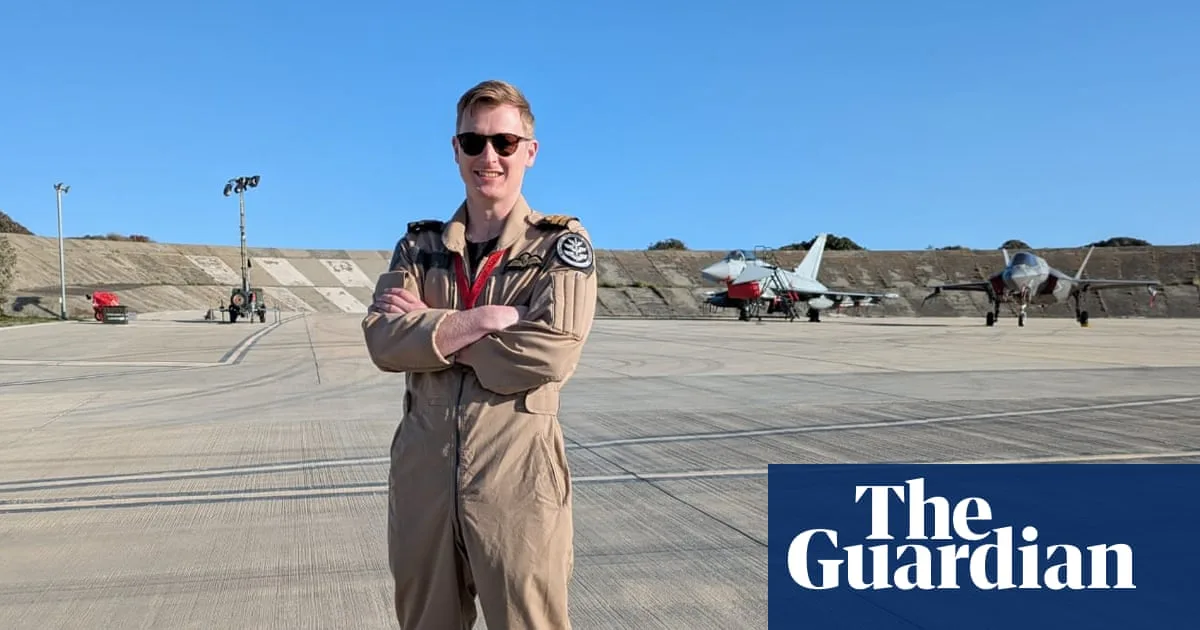
RAF Pilot Makes History with Iranian Drone Kill Over Jordan
In a significant military development, a British Royal Air Force pilot successfully gunned down an Iranian drone over Jordan, celebrating the achievement with a sunrise beer before promptly returning to duty. The unnamed officer, flying an advanced F-35 stealth fighter jet, engaged the target during a four-hour mission alongside two Typhoon aircraft on Monday evening.
First Combat Kill for RAF F-35
This engagement marks the first time an RAF F-35 jet has shot down a target during the ongoing conflict with Iran. The pilot also became the first from the RAF's stealth fighter program to destroy a target in active combat. Security protocols prevent the disclosure of the pilot's identity, but he shared details of the mission with The Times.
'We had one beer at sunrise and then I had to go to bed because I was on duty the next day,' the pilot recounted, describing his modest celebration with a local Cypriot Keo beer. He emphasized the professional focus required during such operations, stating, 'You are kind of more concerned about making sure you’ve shot the right thing. Making sure you positioned the aircraft in the right places. It’s not a euphoric sense of success. I suppose. I just get out the way and get back on to doing the job again.'
Heightened Tensions and Friendly Fire Incidents
The drone downing occurred amidst escalating regional tensions. Just hours earlier, a Kuwaiti pilot flying an American-made F/A-18 fighter jet mistakenly shot down three US F-15 planes, costing approximately $300 million in damages and forcing the American pilots to eject. This friendly fire incident, reported by sources to The Wall Street Journal, involved the Kuwaiti pilot mistaking the F-15E Strike Eagles for Iranian aircraft.
Furthermore, a British base in Cyprus, RAF Akrotiri, was struck by a drone launched from Lebanon on Sunday. Although officials described the damage as minor, the drone hit a hangar utilized by the United States for U2 spy planes conducting high-altitude reconnaissance missions. This attack has raised serious concerns about the effectiveness of local air defences in the region.
UK Military Response and Political Statements
In response to these threats, the United Kingdom has reportedly deployed around 400 additional troops to Cyprus to bolster defensive operations. Defence Secretary John Healey, speaking from RAF Akrotiri, declined to rule out the possibility of British aircraft participating in strikes against Iran. 'As circumstances in any conflict change, you’ve got to be willing to adapt the action you take,' Healey stated, outlining immediate enhancements including anti-drone helicopters and the imminent deployment of a Type 45 air defence destroyer.
Healey reinforced the UK's current stance, asserting, 'Everything that we have done is defensive, is legal and is coordinated with other allies.' Meanwhile, Prime Minister Sir Keir Starmer has maintained a position of restraint, refusing to permit American jets to launch offensive strikes on Iran from British bases. This decision has drawn criticism from US President Donald Trump, who expressed disappointment with the UK's stance.
Diplomatic Strains and Leadership Critique
President Trump, in an interview with the New York Post, did not deny reports that he privately referred to Sir Keir Starmer as a 'loser.' Trump remarked, 'Well, he's not Winston Churchill, let me put it that way,' and added that he was 'very surprised' and 'very disappointed' by the Prime Minister's actions. In retaliation, Sir Keir accused Trump of plunging the Middle East into 'chaos' and acknowledged that the US President has been avoiding communication with him.
During a Downing Street press conference, Sir Keir defended his administration's approach, emphasizing 'calm, level-headed leadership' and the deployment of resources such as anti-aircraft missiles since December. He announced that helicopters capable of intercepting missiles and drones would arrive in the Mediterranean imminently, with additional Typhoon jets being sent to Qatar. 'While the region has been plunged into chaos, my focus is providing calm, level-headed leadership in the national interest,' Sir Keir stated, warning the public that the conflict could persist and impact energy costs.
Timeline of Recent Events
- February 26: US-Iran nuclear talks conclude without agreement.
- February 27: UK Foreign Office withdraws staff from Iran.
- February 28: US and Israel conduct pre-emptive strikes on Iran, killing Supreme Leader Ayatollah Ali Khamenei.
- March 1: UK ministers question the legality of strikes; Sir Keir authorizes US use of British bases for defensive missions.
- March 2: RAF Akrotiri in Cyprus is hit by a drone, causing minimal damage.
- March 3: Trump criticizes Sir Keir; France, Germany, and Greece announce naval deployments to Cyprus.
- March 4: Sir Keir questions Trump's strategy; delays reported in Royal Navy deployment.
- March 5: Sir Keir affirms the UK-US relationship but notes lack of communication with Trump; European allies send ships to protect Cyprus.






