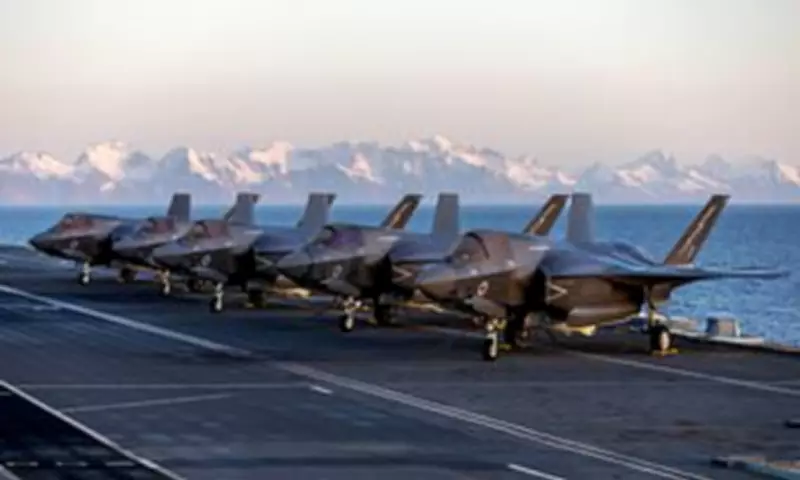
RAF Chief Expresses Doubts Over Arctic Operational Capabilities
The head of the Royal Air Force has openly admitted that Britain's air force would likely struggle to function effectively in the extreme sub-zero temperatures of the Arctic region. Air Chief Marshal Sir Harv Smyth made these candid remarks during a speech delivered at the Royal Aeronautical Society in London on Tuesday, highlighting a significant operational gap in the service's preparedness for cold-weather environments.
Decades of Focus on Warm Climates Leaves Arctic Readiness in Question
Sir Harv Smyth explained that decades of continuous engagement in Middle Eastern conflicts, including prolonged campaigns in Afghanistan and Iraq, have shaped the RAF into an air force that is 'incredibly good' at operating in high temperatures exceeding 35 degrees Celsius. He expressed confidence that any squadron could be deployed to such environments and perform missions effectively.
However, when questioned about capabilities in Arctic conditions with temperatures plummeting to minus 30 degrees Celsius, the defence chief was far less certain. 'I'm not 100 per cent sure we could do that in minus 30 degrees,' he stated, describing the Arctic as 'a much more hostile environment' compared to the desert climates where the RAF has honed its expertise.

Equipment Shortages Compound Operational Challenges
The admission comes alongside concerns about critical equipment shortages that could severely hamper the RAF's ability to sustain operations in Arctic regions. Military leaders have identified several key deficiencies:
- Insufficient supplies of specialized warm clothing for personnel
- Inadequate stocks of cold-weather lubricants necessary to keep aircraft operational
- Limited resources to maintain generators and other essential equipment in freezing conditions
These logistical challenges mean that even if personnel could adapt to the harsh environment, the RAF might struggle to deploy and maintain a credible force in the Arctic for extended periods.
Strategic Pivot to the High North Amid Geopolitical Tensions
The RAF's renewed focus on Arctic capabilities coincides with a broader strategic shift toward the High North, driven in part by the UK's efforts to manage diplomatic relations with the United States. This reorientation follows the diplomatic controversy surrounding former US President Donald Trump's expressed interest in acquiring Greenland, which created significant concern among Britain and its European allies.
Although President Trump eventually withdrew his threats regarding Greenland, the episode placed substantial pressure on European nations to increase their defence spending and enhance their operational capabilities in northern regions. The UK's response includes this strategic pivot toward Arctic readiness as part of a broader effort to strengthen NATO's northern flank.
Political Context and Broader Security Concerns
The discussion of Arctic capabilities occurs against a backdrop of heightened security concerns regarding Russian military expansion. Prime Minister Sir Keir Starmer recently announced the deployment of a Navy carrier force toward Greenland during a speech at the Munich Security Conference, warning that Vladimir Putin's Russia is rebuilding its military strength.
In his Munich address, the Prime Minister criticized what he called 'the easy answers of the extremes of left and right,' specifically targeting both Green and Reform parties as ideological extremists who he claimed are 'soft on Russia and weak on NATO.' Starmer warned that such political forces would undermine Britain's national security and potentially bring conflict to Europe if they gained power.
The Prime Minister further cautioned that Russia could be prepared to invade other parts of Europe by 'the end of the decade,' urging European nations to 'stand on our own two feet' and strengthen collective defence through a 'more European NATO.'

Historical Context and Future Direction
Interestingly, the British Armed Forces previously developed substantial proficiency in Arctic operations during the Cold War era, when northern defences were a priority. However, the focus shifted dramatically toward warmer climates over recent decades as Middle Eastern conflicts demanded attention and resources.
Air Chief Marshal Smyth expressed his desire to 'pivot back' to the era when military engineers were capable of working effectively in freezing conditions, suggesting a recognition that the strategic environment has changed and that the RAF must adapt accordingly.
This admission of operational limitations in Arctic conditions represents both a candid assessment of current capabilities and a clear signal that the RAF recognizes the need to develop cold-weather expertise as part of Britain's evolving defence strategy in an increasingly uncertain geopolitical landscape.