
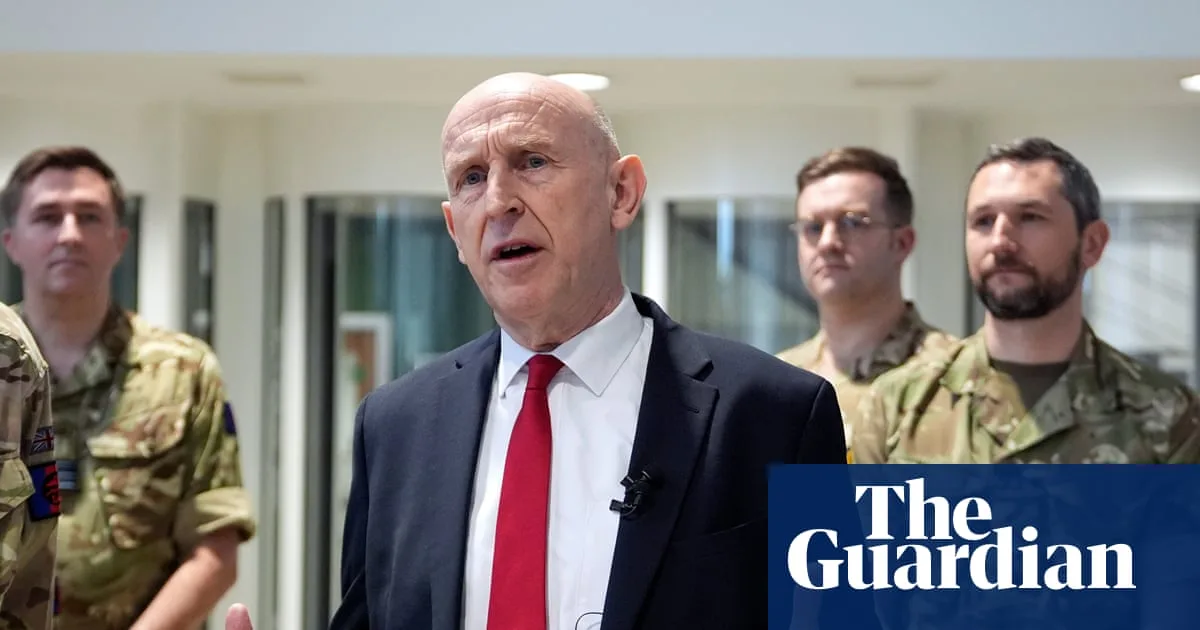
Vladimir Putin’s “hidden hand” lies behind Iran’s military methods, the UK defence secretary has said, after a night in which drones struck a base used by western forces in Erbil, northern Iraq.
John Healey was speaking after British officers at the UK’s military headquarters in north-west London told him that drone pilots from Iran and Iranian proxies were increasingly adopting tactics “from the Russians”. Iran has already fired more than 2,000 Shahed drones – long-range weapons heavily used by Russia against Ukraine – across the Middle East in response to the US-Israeli attack launched on 28 February.
Lt Gen Nick Perry, the chief of joint operations, told Healey as he visited the UK’s military command centre in Northwood it appeared that Russia had since passed back tactical advice to Iran and its proxies on how to deploy them. Iranian drone pilots were “flying them much lower, and therefore they were more effective” in hitting targets, Perry said. That had “proven problematic”, he said, because Shahed drones were becoming one of Tehran’s more effective weapons as the conflict heads towards a third week.
Overnight, a number of drones struck a western military base in Erbil, where British military personnel were based. A UK counter-drone team there shot down two others. There were no British casualties. Talking to journalists after his briefing, Healey said: “I think no one will be surprised to believe that Putin’s hidden hand is behind some of the Iranian tactics and potentially, potentially some of their capabilities as well.” He argued that was partly “because the one world leader that is benefiting from sky-high oil prices at the moment is Putin, because it helps him with a fresh supply of funds for his brutal war in Ukraine”.
Tehran signalled its defiance on Thursday with a statement issued in the name of Mojtaba Khamenei, who succeeded his father as supreme leader after the late ayatollah was killed at the start of the war. The declaration, delivered by a newsreader on state television, gave no clues on the state of the reportedly wounded leader’s health. It vowed Iran would continue to attack US bases in the region and keep the strait of Hormuz closed.
The International Energy Agency said the war had already caused the “largest supply disruption in history” on world oil markets. The US president, Donald Trump, shrugged off the impact of oil price spikes, writing on his Truth Social platform that because the US was the world’s biggest oil producer, “we make a lot of money”. Ali Larijani, the secretary of Iran’s supreme national security council, issued a rebuke to Trump’s repeated claims over the past two weeks that the conflict would be over quickly. “Trump says he is looking for a speedy victory,” Larijani said on X. “While starting a war is easy, it cannot be won with a few tweets. We will not relent until making you sorry for this grave miscalculation.”




