Pentagon Insiders Question Trump's Iran War Achievements Amid Ceasefire
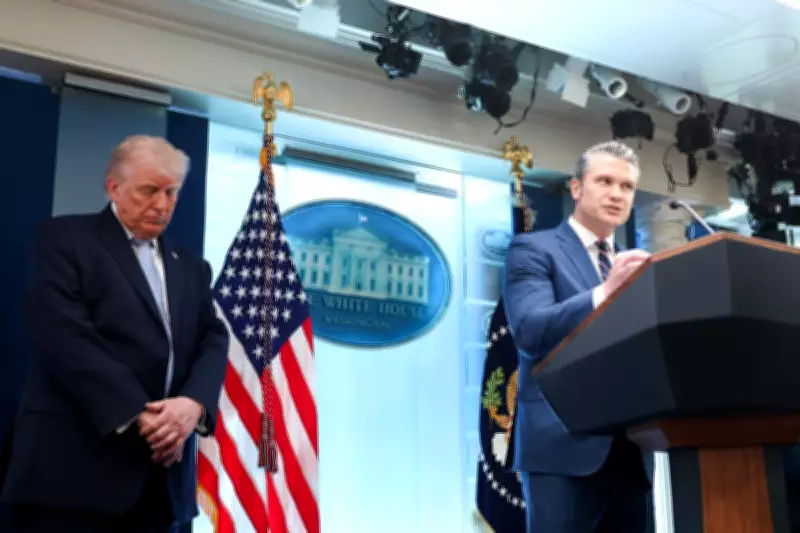
Following the declaration of an eleventh-hour ceasefire between the United States and Iran, the Trump administration has been quick to proclaim an unprecedented triumph. President Donald Trump announced the two-week armistice on Tuesday evening, asserting that the U.S. "already met and exceeded all Military objectives." Defence Secretary Pete Hegseth echoed this sentiment a day later, labelling it a "historic and overwhelming victory."
However, a growing chorus of Pentagon insiders and diplomats is raising serious questions about what precisely has been accomplished by the Trump administration's military campaign. The conflict has resulted in the deaths of 13 U.S. service members and, according to Iranian state media, thousands of Iranian civilians, all while significantly destabilising the global economy.
Strategic Doubts and Long-Term Concerns
"I don't know how the genie goes back in the bottle without the U.S. massively redefining our strategic objectives," a defence official told Politico. "I can't imagine what the U.S. could offer or threaten Iran with at this point that generates a satisfying outcome."

Since the war began in late February, U.S. forces have struck over 11,000 targets within Iran, severely crippling its ballistic missile capabilities and obliterating much of its air defence network. Yet, as Trump's negotiating team, led by Vice President JD Vance, prepares for peace talks with Iran this weekend in Pakistan, the United States confronts substantial hurdles.
Iran retains its hardline regime, now under the leadership of Mojtaba Khamenei, son of the former supreme leader who was killed in a U.S. air strike. The country still possesses its stockpile of enriched uranium. Furthermore, Iran has exercised newfound control over the strategically vital Strait of Hormuz, a critical trade route through which approximately 20 percent of the world's oil passes.
Iran's Demands and Regional Realities
On Wednesday, Iran unveiled a 10-point framework to end the war, which President Trump described as "a workable basis on which to negotiate." The demands include a U.S. nonaggression pledge, Iranian control of the Strait of Hormuz, and a halt to fighting across the region—including in Lebanon, where Israel has continued its bombardment. The White House, however, has stated that this 10-point plan does not align with what the president was referencing.
"POTUS is right that we've largely destroyed the navy, and most, but clearly not all, of their ballistic missile and drone capability," a second defence official told Politico. "But that won't actually change anything. Unless of course there's a major uprising inside of Iran ... but I'm not seeing that happening."
The regional status quo is likely to persist, according to officials, with the ceasefire deal merely buying the United States a limited amount of time. Representative Don Bacon, a Nebraska Republican, warned, "As long as this regime exists, they'll be a threat. We are safer today because Iran is significantly weakened. But the government is still in place and that means they'll threaten us in the long term."
Diplomatic Criticism and Political Paradox
A diplomat from Asia criticised Defence Secretary Hegseth for proclaiming victory while simultaneously threatening further military action should Iran fail to uphold the ceasefire terms. "Declaring victory by saying he will attack Iran some more seems like losing," said the unnamed diplomat, noting that for Iran, "not losing isn't the same as winning."
"There's a profound paradox here," a Trump ally close to the White House added. "If you're not willing to go to total war, and we clearly are not, then the attacks ultimately enhance the leverage of this awful regime. They know Trump desperately wants out. And they're going to get their pound of flesh, even though we hammered them with our attacks."

Official Statements and Public Sentiment
White House spokesperson Anna Kelly told The Independent: "The United States Military has met or exceeded all of our objectives for Operation Epic Fury. Iran's ballistic missiles are destroyed, their production facilities are demolished, their navy is underwater, their proxies are weakened, and their dreams of possessing a nuclear weapon are gone. Now, the administration is engaging in diplomatic discussions because the President was able to exert maximum leverage over the Iranian regime, and he is optimistic that this will lead to long-term peace in the region."
If the negotiations in Pakistan this weekend collapse, both sides appear prepared to resume hostilities. On Wednesday, Iran's Supreme National Security Council stated that "our hands remain upon the trigger," while Hegseth affirmed that the U.S. military "stand[s] ready in the background."
Multiple recent polls indicate that a majority of Americans oppose the war, adding a layer of domestic political pressure to the complex international situation. The Independent has contacted the Pentagon for further comment on these developments.