The Terrifying Shift in Nuclear Attack Warnings
The landscape of 2026, marked by rapid technological advancements and deepening political divisions, has rendered the iconic "four-minute warning" of the Cold War era obsolete. As global tensions escalate and the Doomsday Clock inches perilously closer to midnight, the stark reality of how Britons would be alerted to an imminent nuclear strike has undergone a dramatic transformation.
From Sirens to Smartphone Screams
Gone are the days of hand-cranked air raid sirens echoing across British towns. Today, the primary warning system for a catastrophic nuclear event is the government's Emergency Alert System, which delivers a piercing, ten-second shriek directly to mobile phones and tablets—even when set to silent. This digital siren is accompanied by a text message explaining the emergency, though for many, it may arrive too late to take meaningful action.
The system was last tested nationwide in September 2025, blaring across devices to simulate a real crisis. While it has been used locally for threats like extreme weather or unexploded WWII bombs, its most chilling potential application remains a nuclear strike against the UK.

The Cold War Legacy and Modern Realities
During the Cold War, Britons were promised a four-minute warning via radio broadcasts, with pre-recorded messages urging calm and instructing citizens to stay indoors, conserve water, and rely on tinned supplies. The script, prepared by the BBC's Wartime Broadcasting Service, emphasised that "there is nothing to be gained by trying to get away" and warned that survivors might truly "envy the dead."
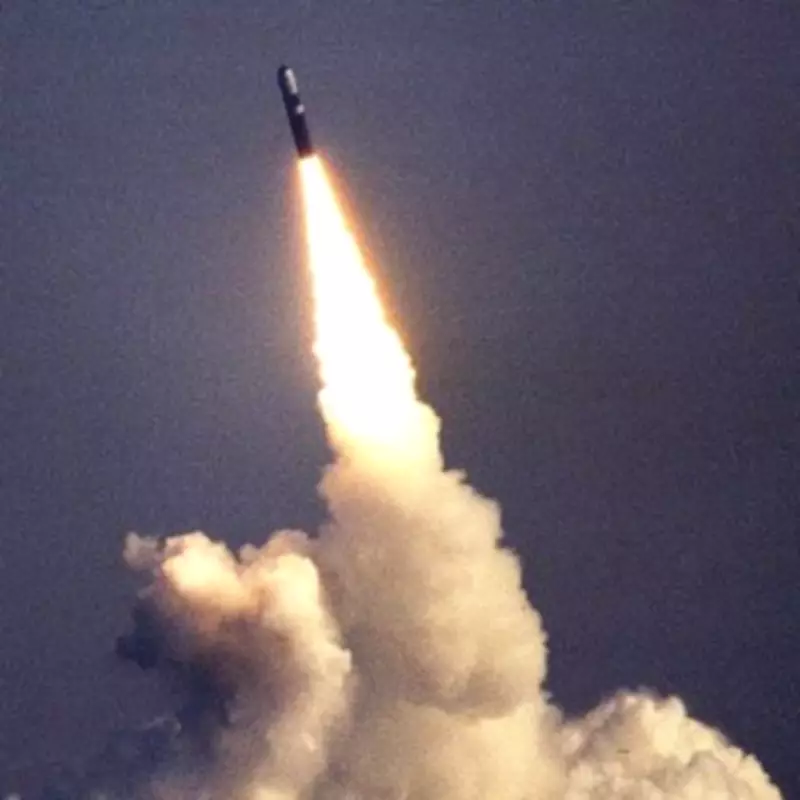
However, with hypersonic missiles like Russia's RS-28 Sarmat—nicknamed "Satan-2"—reportedly capable of striking the UK in as little as 200 seconds, even that brief window has vanished. Nuclear expert Professor Andrew Futter estimates that, at best, the UK might receive 15–20 minutes' notice if Russia launched an attack, but he starkly notes, "It wouldn't give us time to do anything."
Shelter Strategies and Survival Odds
According to the International Commission on Radiological Protection, individuals may have roughly 10 minutes after a detonation to seek adequate shelter from radioactive fallout. Ideal locations include basements, the centres of multi-story buildings with brick or concrete walls, or underground spaces like parking garages. However, Professor Futter cautions that even London Underground stations may not be deep enough to offer protection from a direct blast.
Despite these grim scenarios, the principle of Mutually Assured Destruction remains a powerful deterrent, as any nuclear aggressor would face immediate retaliation from other global powers.
The Doomsday Clock and Safe Havens
The Doomsday Clock, maintained by the Bulletin of the Atomic Scientists, currently stands at 85 seconds to midnight—the closest it has ever been to symbolic catastrophe. This reflects heightened geopolitical risks, from conflicts in Europe to technological arms races.
In the event of a strike, some areas of the UK might be marginally safer due to their remoteness or geography. These include:
- Foula, Shetland
- Cornwall and Weymouth
- Folkestone, Dover, and Margate
- Clacton-on-Sea and Felixstowe
- Brixworth and Bideford
- Aberystwyth and Skegness
- Isle of Anglesey and Barrow in Furness
- Lancaster, Whitby, and Carlisle
- Dumfries, Berwick-upon-Tweed, and Inverness
Yet, as Dubai residents recently experienced with emergency shelter alerts, the digital age has reshaped preparedness into a fleeting, screen-based warning—a far cry from the communal sirens of the past. The evolution from four-minute warnings to app alerts underscores a terrifying truth: in 2026, time itself may be the ultimate casualty in a nuclear crisis.