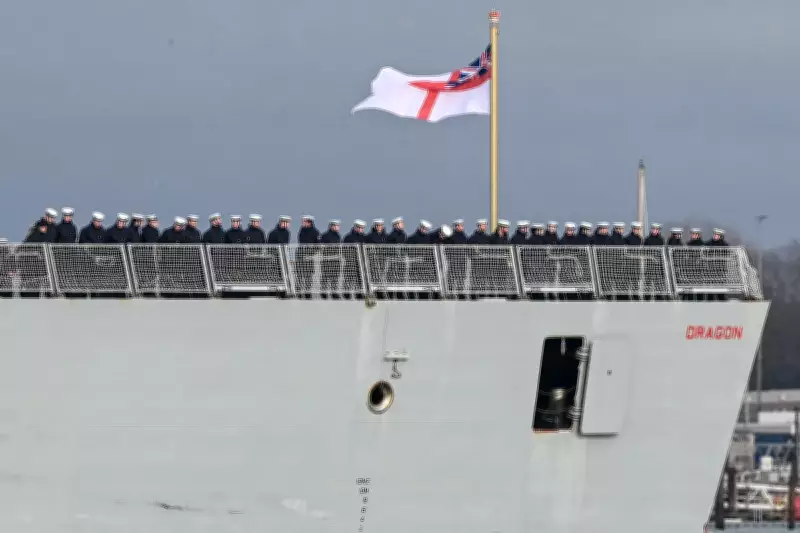
Parliament's Defence Committee has issued a stark warning about the Royal Navy's capacity to handle international crises, expressing "grave concerns" following the UK's response to escalating tensions with Iran. This comes despite initial satisfaction with military preparedness after confidential briefings from senior Ministry of Defence officials.
Delayed Deployment Exposes Naval Shortcomings
The committee's confidence was undermined by the deployment timeline of Type 45 destroyer HMS Dragon, which left Portsmouth for the Mediterranean nine days after a drone strike targeted a Royal Air Force base in Cyprus on March 1st. Prime Minister Sir Keir Starmer had previously agreed to a United States request to use British military bases for defensive strikes against Iranian missile sites, citing risks to "British lives," with promises of immediate naval deployment.
Instead of demonstrating naval strength, the week-long delay in HMS Dragon's departure has been widely criticised as an "appalling and embarrassing" failure that exposed critical shortcomings within the UK's maritime capabilities. Ministry of Defence officials were reportedly "fuming" about the timeline, which highlighted detrimental impacts of previous financially-driven decisions, including restrictive contractor agreements limiting out-of-hours work.

Growing Gap Between Rhetoric and Reality
The Defence Committee's statement noted: "We note, however, the considerable gap between some of the political rhetoric circulating internationally, and the reality of the UK's support to the United States and regional partners."
"The situation has also underlined longstanding and grave concerns – which we share – about whether the Royal Navy has sufficient capacity and resilience to respond effectively to a crisis at a time of worsening global security."
The committee has consequently called upon the government to "urgently release the Defence Investment Plan and take steps to increase spending on defence to 3 per cent of GDP during this Parliament."
Contrasting Perspectives on Naval Response
Defence Secretary John Healey offered a contrasting perspective, praising what he described as the Royal Navy's "remarkable effort" in preparing HMS Dragon for deployment. He stated: "I have only praise for our Royal Navy personnel and civilian teams who have worked flat out to prepare HMS Dragon for deployment to the eastern Mediterranean."
"What is normally six weeks of work was completed in just six days – a remarkable effort delivered around the clock. They are the very best of Britain in action," Healey added, highlighting the accelerated preparation timeline despite the delayed departure.
Commanding Officer Expresses Confidence
HMS Dragon's commanding officer, Commander Iain Griffin, expressed confidence in his crew's readiness: "My ship's company have worked tirelessly to ensure we are ready for our mission to the eastern Mediterranean."
"I am proud of the professional manner in which they have responded. We are trained for this, we are ready for this, we have the equipment and people, we have the support of the British people and, most importantly, our families and friends," Griffin stated as the warship headed toward the eastern Mediterranean region.
The incident has reignited debates about defence spending priorities and naval capabilities at a time of increasing global instability, with parliamentary scrutiny focusing on whether current funding levels adequately support the UK's international security commitments and crisis response requirements.