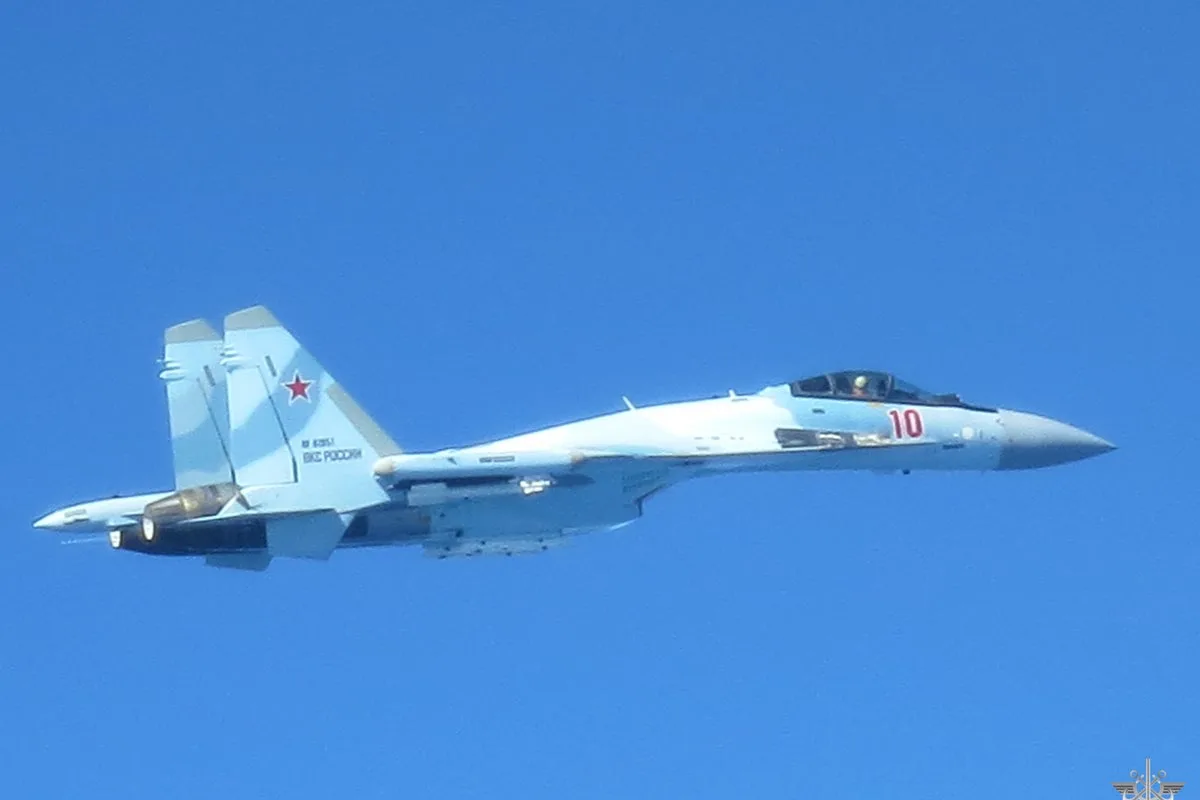
NATO Scrambles Fighter Jets to Intercept Russian Bombers Over Baltic Sea
NATO forces have intercepted a formation of Russian strategic bombers and fighter jets flying over the Baltic Sea, in a muscular display of air power on the alliance's eastern flank. The incident occurred on Monday, diverting attention from ongoing conflicts in the Middle East and highlighting persistent tensions in the region.
Multinational Response to Russian Air Mission
French Rafale fighters, stationed at a Lithuanian air base as part of NATO's long-standing air-policing efforts, were deployed to monitor the Russian flight. These aircraft, armed with air-to-air missiles, were joined by jets from Sweden, Finland, Poland, Denmark, and Romania. According to the French detachment, the multinational force took to the skies to inspect and maintain surveillance over the Russian aircraft, ensuring compliance with international airspace regulations.
The Russian mission included two supersonic Tu-22M3 strategic bombers, accompanied by approximately ten fighter jets—a mix of SU-30s and SU-35s—that took turns escorting the larger bombers. This coordinated flight lasted over four hours, as reported by the Russian Defense Ministry on Monday via Telegram.
Russian and NATO Statements on the Incident
The Russian Defense Ministry stated that the long-range bombers' flight was pre-scheduled and conducted over neutral waters of the Baltic Sea. "At certain stages of the route, the long-range bombers were accompanied by fighters of foreign states," the ministry noted. It emphasized that Russian Aerospace Forces regularly conduct flights over neutral waters, including the Arctic, North Atlantic, Pacific Ocean, Baltic, and Black Seas, all in strict compliance with international airspace rules.
Neither the Russian ministry nor NATO's Allied Air Command responded immediately to requests for comment on Tuesday. However, such interceptions are routine; NATO often scrambles fighter aircraft when Russian warplanes approach or fly near alliance airspace. NATO has previously reported that intercepted Russian planes frequently fail to use transponders, communicate with air traffic controllers, or file flight plans, necessitating identification by NATO jets.
Historical Context and Regional Significance
This incident is the latest in a series of Russian maneuvers over the Baltic Sea. The Russian ministry often reports similar flights, including one in January that also prompted NATO interception, and at least four times last year. NATO's Baltic air policing mission, established in 2004 when Lithuania, Latvia, and Estonia joined the alliance, monitors many Russian flights to and from the Kaliningrad enclave.
Even prior to the war in Ukraine, NATO was intercepting Russian aircraft around 300 times annually, primarily over northern European waters. Lithuania's defense ministry revealed that NATO jets were scrambled four times between April 13 and 19 to intercept Russian aircraft violating flight rules, such as turning off transponders and operating without flight plans.
On-the-Ground Account from Šiauliai Air Base
A journalist from The Associated Press witnessed the French detachment's response from Šiauliai Air Base in Lithuania, a key site for NATO fighter patrols on the eastern flank. Two French Rafale fighter jets, each with a two-man crew comprising a pilot and navigator, were seen racing in vans from their headquarters to the hangars. The crews, already suited up due to standby status, were prepared to take off within minutes if scrambled.
The crews quickly assumed their positions in the cockpits, with jet engines ignited, awaiting the order to launch. Upon receiving clearance, they taxied out of the hangars and roared into the clear skies, ready to engage in the interception mission. This rapid response underscores the high readiness levels maintained by NATO forces in the region.
Stefanie Dazio in Berlin and Kostya Manenkov in Tallinn, Estonia, contributed to this report.






