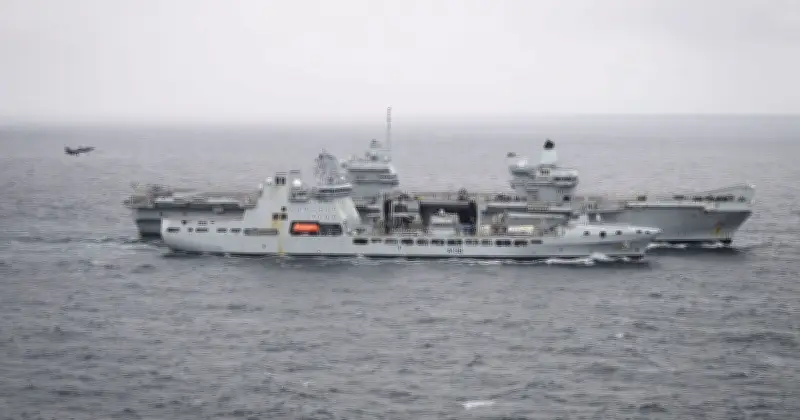
Vladimir Putin could cripple Britain by targeting vulnerable underwater cables and energy pipelines in the High North, MPs have warned, as the UK faces the prospect of a Russian attack on NATO by 2030.
The Commons Defence Committee said Britain has "glaring gaps" in its military capabilities in the strategically vital region, leaving the population, critical infrastructure and the UK's nuclear deterrent exposed to Russian threats.
MPs warned that "dramatic progress" is needed to strengthen Britain's armed forces and naval presence in the area before the end of the decade. The High North, encompassing the Arctic and parts of the North Atlantic, has become increasingly important to UK security as Moscow steps up its military activity and sends spy ships into British waters.
Underwater cables and pipelines at risk
The committee warned that underwater cables carrying vital data and pipelines supplying energy could be targeted by Russian sabotage even during peacetime. In the event of war, Moscow could threaten Britain's population, civilian and military infrastructure, nuclear deterrent and crucial supply routes across the Atlantic from the US.
The report highlighted a serious shortfall in anti-submarine warfare capabilities, despite Russian submarines and naval sabotage forces posing one of the biggest threats to the UK.
Britain relies on Royal Navy warships and nuclear-powered submarines to detect and deter hostile vessels, but its existing fleet is ageing and frequently unavailable because of maintenance.
Fleet shortfalls and submarine availability
The Navy currently has five Type 23 frigates, which hunt submarines and help protect the UK's nuclear weapons, alongside six Type 45 destroyers. Together, these represent only just over half the Navy's requirement for 19 vessels.
Eight new Type 26 frigates are eventually expected to replace the ageing Type 23s, but construction delays have prompted MPs to urge ministers to keep the existing ships in service for as long as possible.
The inquiry also heard of "a shockingly low availability" of submarines and concerns that Britain had temporarily lost the ability to operate them beneath Arctic ice. That could allow Russian nuclear submarines to hide beneath the ice without being challenged, while attack submarines move into position during a conflict.
Committee chairman urges action
Committee chairman Tan Dhesi said: "The High North poses a major strategic challenge for the UK's security. This is a demanding, hostile environment, and one that our greatest adversary, Russia, is seeking to dominate for military advantage.
"The UK needs to be willing to address a hard truth: it does not currently have all the capabilities to operate successfully in the High North."
He warned that Russian submarine and sabotage forces posed direct risks to the North Atlantic, Britain and its nuclear deterrent. Mr Dhesi added that the Ministry of Defence had accepted a serious gap in anti-submarine warfare, while the low availability of destroyers, frigates and attack submarines raised questions about whether the UK could meet its commitments.
He said: "And if the UK Government means what it says – that Russia could attack NATO as soon as 2030 – then work to rectify these vulnerabilities cannot start soon enough."
The committee also questioned whether the UK-led Joint Expeditionary Force, a coalition of northern European nations, should shift more of its attention towards the High North rather than maintaining its current level of activity in the Baltic region.
Mr Dhesi said ministers should consider the move, particularly if Britain faces uncertainty over US support for NATO. The UK might then need to strengthen its Army presence in the Baltics, especially in Estonia. The Kremlin is seeking to exploit the High North for its mineral resources and strategic shipping routes, which are becoming more accessible as sea ice melts.
Political reaction and defence spending calls
Conservative shadow minister for war readiness Stuart Anderson said the report exposed serious weaknesses as the risk of conflict with Russia increased.
Referring to remarks by Sir Keir Starmer, he said: "If NATO could be at war with Russia as soon as 2030, as the former prime minister warned, that means time is just as important as money.
"To deter war we must be ready for it, that means spending money now, not kicking the can down the road until it's too late."
Mr Anderson called on the Chancellor to set out plans to spend 3% of GDP on defence by 2030, warning that anything less would leave Britain at risk in the High North. The Ministry of Defence has been contacted for comment.