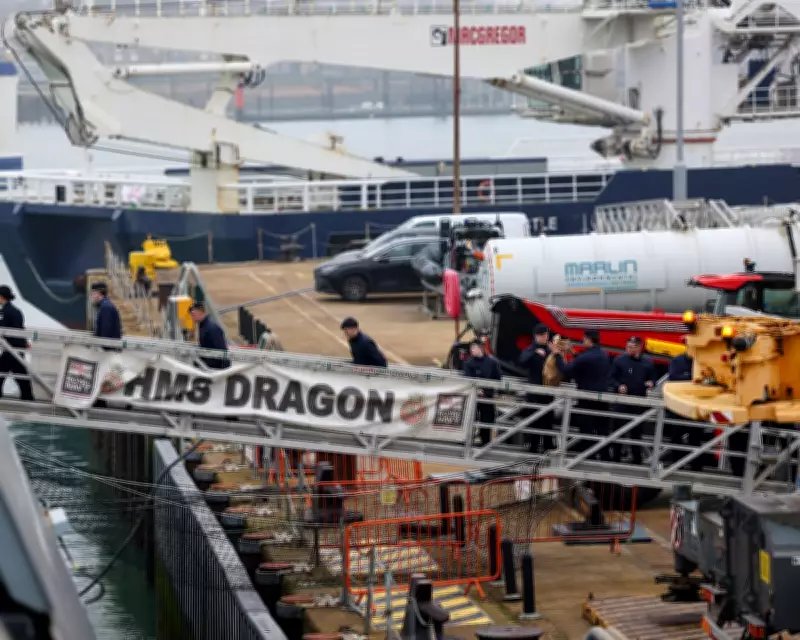
MoD Criticised Over HMS Dragon's Delayed Deployment to Cyprus
The Ministry of Defence has faced sharp criticism following delays in deploying HMS Dragon to Cyprus, where it is tasked with defending a British military base from potential attacks by Iran. A week after the government announced the Portsmouth-based Type 45 destroyer would be sent, the vessel remains at dock, with estimates suggesting it could take another five days or more to reach its destination.
Claims of Naval Shame Amid Deployment Delays
The pace of preparing HMS Dragon has sparked claims that Britain's proud naval history is being shamed. Sources within the MoD describe the efforts to make the destroyer sea-worthy in such a short timeframe as herculean. Defence Secretary John Healey informed the House of Commons on Monday that navy crews are working tirelessly, up to 22 hours a day, and that HMS Dragon is expected to sail within a couple of days. Insiders report that a process typically requiring six weeks has been nearly completed in just six days.
Why Wasn't a Destroyer Ready for Immediate Deployment?
Experts note that a destroyer in a high state of readiness can be deployed from dock in five days or less. However, HMS Dragon was not in such a state; last week, it was undergoing scheduled repairs in dry dock ahead of a NATO mission. This led to rumours that HMS Duncan might be sent instead. Matthew Heaslip, a senior lecturer in naval history at the University of Portsmouth, attributed the situation to resource shortages, suggesting HMS Duncan was needed for domestic defence in UK waters.

Heaslip explained, "The UK has limited air defence capabilities, relying on the Royal Air Force and short-range missiles. With three of the six destroyers in deep maintenance, one must remain ready in UK waters at all times for nominal coverage."
The Complex Process of Readying a Warship
Preparing HMS Dragon involved multiple steps. First, scheduled repairs had to be completed. The destroyer, which was in dry dock in Portsmouth, needed to be re-floated by introducing water into the dock, a process taking several hours. Once afloat, it was towed out by tugboats, a day-long task dependent on tidal patterns.
Next, the ship was sent to the Upper Harbour Ammunitioning Facility to load missiles, ammunition, and supplies. Due to the change in mission, significant modifications were required, including re-rolling equipment and weaponry. Welding work was necessary to install systems like the Sea Viper air defence system, capable of targeting 16 missiles and drones simultaneously. Munitions were transported from Gosport, and the ship took on food, fuel, and other supplies, with about 80 crates of food boarded recently.
Around 200 personnel are expected to travel, many recalled from leave or training, with potential involvement of special forces and Royal Marines. The ship also requires certification as fit to deploy, with HMS Dragon set to move to a berth at Portsmouth docks on Tuesday afternoon.
Was the Operation Seamless?
The union Prospect has claimed that a new contract with Serco, which manages in-port services, slowed the process due to restricted working hours of 9am-5pm on weekdays, making urgent tasks harder. Both the MoD and Serco deny this, with an MoD spokesman stating, "Staff are stepping up to support the operation, and all requests to Serco have been fulfilled."
Heaslip highlighted that the deployment underscores the challenges from deep cuts to the navy, saying, "A huge amount is being asked of the Royal Navy defensively, but we lack the resources for broader conflicts."