A 92-year-old Korean War veteran has said he will be honouring the comrades who did not come back this Remembrance Sunday. Ken Keld, who fought at the Third Battle of the Hook, served in a conflict that saw more than 100,000 British armed forces personnel deployed between 1950 and 1953.
Keld, who has lived in Scarborough, North Yorkshire, all his life, was sent to Korea in 1952 aged 18 while on National Service. After completing his first year with the Green Howards at Richmond Barracks, he was asked by a selection officer whether he wanted to sign on as a full-time soldier instead of continuing into his second year. When he said no, the officer told him: "You'll go to Korea!"
Outnumbered five-to-one at the Third Battle of the Hook
During his deployment, Keld fought in close-quarters combat at the Third Battle of the Hook with the Duke of Wellington's Regiment, where his platoon of more than 40 men was outnumbered five-to-one by Chinese forces. His position was bombarded for hours on end, and when Chinese soldiers rushed British trenches, he was forced to hide with his comrades in a blown-in tunnel for 10 hours to avoid capture.
Keld recalled: "They just bombarded us all day and at quarter to eight at night just stopped dead - you could hear a pin drop. The next thing, they were dropping into our trenches."
"Our number two Bren [machine] gunner, he covered us, and we walked the Chinese back down into a tunnel and blew the ends in. The lad who covered us got killed - and he got mentioned in dispatches."
"All you could hear was Chinese voices and thumping and shells. But we were safe from them being out in the elements like the other lads were. We had some overhead cover."
"The Chinese were asking us to give ourselves up and to take us prisoner. Over the top there were snipers and dead bodies - mostly Chinese."
Rescue and the journey home
After being trapped in the tunnel for about ten hours, Keld and the surviving members of his platoon were rescued the next morning when British engineers dug them out. He told the Mirror: "We had to count up when we got back — there was seventeen of us left out of the platoon".
Keld left Korea in November 1953, serving four months in Gibraltar before finally being demobbed on April 15, 1954. In the decades since, he has dedicated himself to Korean veterans' causes to ensure the "forgotten war" is remembered.
Britain's 'forgotten war' and a legacy of remembrance
More than 1,000 British servicemen died in the war, with another 2,600 injured, but the conflict is often overshadowed by other major conflicts of the era, and the UK's involvement left out in American retellings. He explained: "Over the years the Korean veterans had to fight for everything. You came back with no money."
"About 90% of those that come back from Korea got married, had a family, and all that. That was your worry then, it was only when we got older that we started thinking about it."
Keld added: "I think it became a 'forgotten war' because a lot of people thought it was just the Americans fighting. And they were too late in forming the association - it was roughly 30 years after the war ended."
After his wife spotted a newspaper advert in 1978, Keld helped establish eight branches of the British Korean Veterans Association (BKVA) across the northeast. When the BKVA disbanded at a national level in 2014, he reformed the North of England branch, which he continues to run today, sending out a quarterly newsletter to over 100 people.
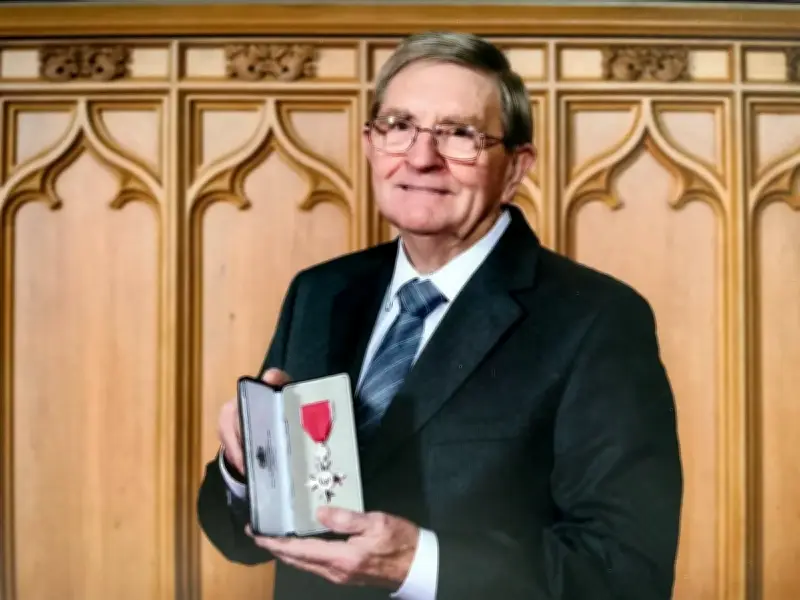
His daughter Tracey said the 92-year-old is "like a dog with a bone" when it comes to veterans' issues, and his groups still attract new members today, many of whom fought in the war but were previously unaware that such organisations existed. Keld's efforts earned him an MBE in 2023, when he met King Charles at Windsor Castle.
Over the years, he has also built ties with the South Korean embassy and has travelled back to the country twice, recalling one visit with Tracey where he landed to find himself mobbed by TV crews. "As soon as we were told, 'You'll be met at Incheon Airport', we expected it to be like going on holiday, someone will have a placard with your name on," he said. "But we didn't, we got off the plane and walked into blazing lights of the TV, radio and everything."
He spoke highly of the hospitality shown towards ex-soldiers from the Korean people, praising how they rebuilt their nation from the "ashes of war" to become the highly developed nation it is today. Today, Keld's branch has roughly 80 members, but numbers of veterans are dwindling nationwide as the conflict fades further into the past.
He said: "Just before this interview, I was told one of my members of the North of England branch has just passed away, he was 95… and I'm probably one of the youngest that served in Korea."
Honouring the fallen this Remembrance Sunday
This Remembrance Sunday, he will be joining fellow ex-servicemen a short drive away in Filey, North Yorkshire, where he has been invited for a special service commemorating the 100th year of the local Royal British Legion chapter. He said of the thousands of services taking place nationwide this weekend: "It's up to people to get involved - I'll be going to make sure the ones who didn't come back aren't forgotten."
Philippa Rawlinson, Director of Remembrance at the Royal British Legion, said: "More than 110,000 British and Commonwealth Armed Forces personnel served in the Korean War, facing harsh conditions, freezing winters and fierce battles. Despite more troops being killed in Korea than in any other conflict since the Second World War, many feel it is the 'Forgotten War'."
"These men showed great bravery, at times while heavily outnumbered by the enemy. It is vital that we continue to remember and honour all those who served in Korea, and ensure that the sacrifice of the 1,100 British servicemen who lost their lives is never forgotten."