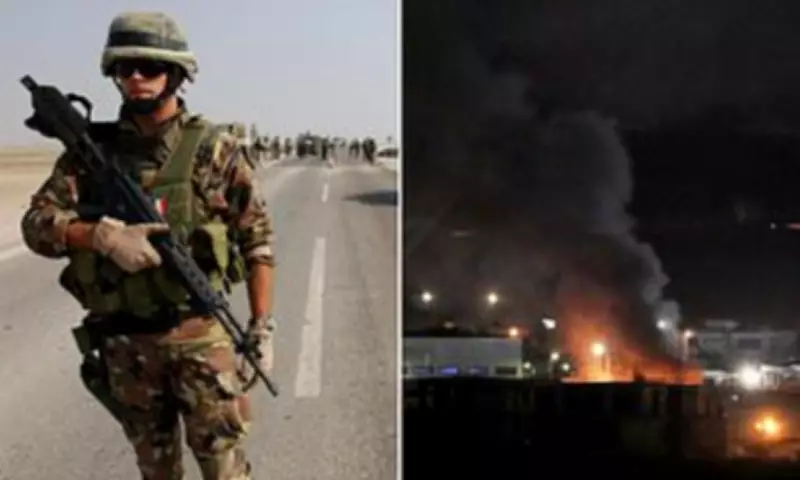
Italy Initiates Troop Withdrawal from Iraq Following Drone Strike on NATO Base
Italy has commenced the withdrawal of its military personnel from Iraq in response to a targeted drone attack on its base, as Iran intensifies its assaults against United States allies across the Middle East. The overnight airstrike specifically hit the Camp Singara airbase located in Erbil, within Iraqi Kurdistan, where Italian soldiers were stationed.
Details of the Attack and Immediate Aftermath
The deliberate strike, which Italian Defence Minister Guido Crosetto confirmed was intentional, resulted in the destruction of a restaurant and two vehicles at the base. Fortunately, no injuries were reported among the approximately 300 troops present, including NATO servicemen. However, around 100 Italian soldiers have already returned to Rome, with the remaining personnel being relocated.
Minister Crosetto emphasised the base's significance, stating: 'Absolutely yes. That is a NATO base within Operation Inherent Resolve, so it is also an American base.' He clarified that while the withdrawal was previously planned, the attack accelerated the process, with 102 personnel repatriated and about 40 moved to Jordan.

Attribution and Regional Security Concerns
Italian Foreign Minister Antonio Tajani indicated that the drone likely originated from pro-Iranian militias based in Iraq, though no definitive responsibility has been claimed. The attack occurs amid Iran's sustained bombardment of the Kurdistan region, driven by fears of potential uprisings from Kurdish forces.
Prime Minister Giorgia Meloni expressed solidarity with the unharmed soldiers, reiterating that Italy has no intention of joining any war with Iran. She criticised US and Israeli actions as operating 'outside the scope of international law' and highlighted concerns over Iran's nuclear and missile capabilities, which could threaten Italy and Europe.
Military Preparedness and Diplomatic Responses
Colonel Stefano Pizzotti, commander of Camp Singara, reported that military staff had received warnings of aerial threats and sought shelter in bunkers hours before the strike, underscoring their training and prioritisation of personnel safety. Following the incident, Kurdistan Region President Nechirvan Barzani engaged with Minister Tajani, urging the Iraqi government to enhance protection for diplomatic envoys and coalition forces against illegal groups.
Broader Economic and Strategic Implications
The regional instability has significant economic repercussions, particularly with Iran's actions affecting the Strait of Hormuz—a critical passageway for 20% of global oil flow. Closure threats have spiked oil prices and airfares worldwide, with Iranian officials warning of oil potentially reaching $200 a barrel due to destabilised security.
In response, Italy has deployed air-defence assets to Gulf states and stationed a warship in Cyprus to bolster defences, citing the protection of Italian citizens and thousands of soldiers in the area. Additionally, Italy and France are negotiating with Iran to ensure safe vessel passage through the Strait, aiming to mitigate broader economic impacts.
As tensions escalate, Iran's rhetoric remains confrontational, with threats to make the Persian Gulf run with 'the blood of invaders' if US and Israeli strikes continue, highlighting the volatile landscape shaping Italy's strategic withdrawal and international diplomacy efforts.