Israel Launches Major Strike on Iranian Nuclear Facility
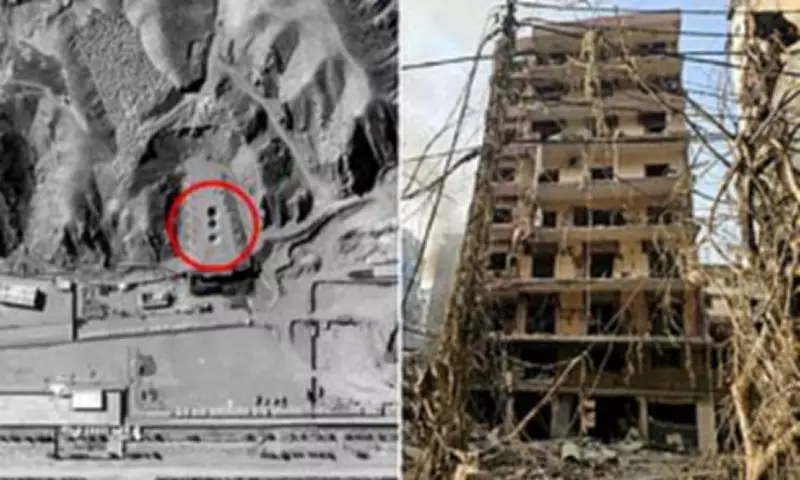
The Israeli Air Force has conducted a significant military operation against Iran's nuclear weapons development capabilities, striking the Taleghan compound near Tehran. This facility, located in the Parchin area southeast of the Iranian capital, is known for covert military activities related to nuclear weapon advancement.
Precision Targeting of Nuclear Infrastructure
According to Israeli military statements, the strike was executed based on precise intelligence from the Israel Defense Forces (IDF). The military explicitly stated that 'the Taleghan compound was utilised by the regime to advance critical capabilities for developing nuclear weapons'. This marks the second Israeli attack on this particular site, following an initial strike in October 2024.
The IDF has accused Iran of taking 'steps to rehabilitate the compound' since the previous attack, prompting this renewed military action. Israeli officials described the operation as part of a broader 'series of operations' designed to 'further damage the Iranian terror regime's nuclear aspirations'.

Devastating Impact Revealed
Satellite imagery analysis reveals the destructive consequences of the Israeli strikes, with evidence suggesting the deployment of powerful bunker buster munitions. Three substantial holes are visible in the concrete protective shell surrounding the facility, indicating penetration of reinforced structures.
Military analysts suggest Israel likely employed 30,000-pound GBU-57 bombs, known as Massive Ordnance Penetrators (MOPs), which represent the largest conventional weapons in existence. These same munitions were previously used by the United States during last year's Twelve-Day War to target Iran's underground nuclear sites at Fordow and Natanz.
The damage pattern at Taleghan appears remarkably similar to the destruction witnessed at those previously targeted Iranian nuclear facilities. Recent months had seen the compound covered with protective soil layers, a defensive measure that necessitated the use of such powerful penetrating weapons to achieve meaningful damage.
Expanding Theater of Operations
Concurrently with the nuclear site strike, Israel has launched an extensive wave of airstrikes across Tehran itself. The IDF targeted multiple strategic locations including:
- Command centers of the Iranian Revolutionary Guard Corps air force
- A compound at Imam Hossein University
- The IRGC's military academy
- Various weapon storage facilities
- Iran's internal security forces and Basij paramilitary units
- A headquarters of Iran's intelligence ministry
Iranian authorities reported that these strikes resulted in casualties among security personnel stationed at checkpoints throughout the capital.
Regional Escalation and Economic Implications
In retaliation for the Israeli actions, Iran has initiated missile and drone attacks against United States allies throughout the Middle East. Additionally, Tehran has taken the dramatic step of forcing closure of the Strait of Hormuz, a critical maritime passage responsible for transporting approximately twenty percent of global oil supplies.
This blockade has triggered substantial spikes in oil prices, creating potential for a worldwide economic crisis as energy markets react to the disruption of vital shipping routes.
Intensified Conflict with Hezbollah
The regional conflict has expanded significantly with Israel ramping up attacks against Iranian-backed Lebanese militant group Hezbollah. Overnight strikes targeted Beirut's southern suburbs, a known Hezbollah stronghold, with the Israeli military confirming attacks on ten separate Hezbollah targets.
A particularly deadly strike occurred at Ramlet al-Bayda in central Beirut, where Lebanese health authorities reported eight fatalities and thirty-one injuries. This represents the third attack in the heart of Lebanon's capital since the broader Middle East conflict began.
The seaside area where the strike occurred had become home to displaced persons sleeping in tents or rough conditions, with reports indicating some shelters were damaged by shrapnel from the attack.

Hezbollah has responded with substantial force, launching approximately two hundred rockets alongside multiple drones toward northern Israel during extended attacks on Wednesday evening. The militant group announced a major new operation against Israel coinciding with these escalations.
The conflict continues to intensify across multiple fronts, with nuclear facilities, urban centers, and proxy forces all now engaged in an expanding regional confrontation that shows no immediate signs of de-escalation.