
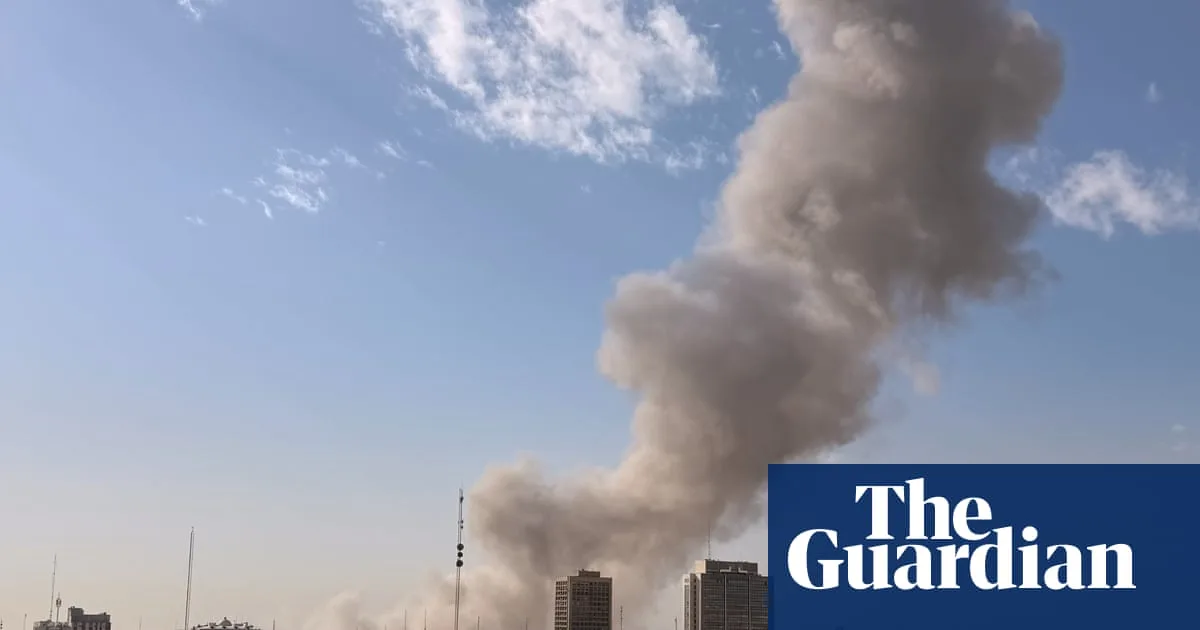
The United States and Israel have launched a major military offensive against Iran, with waves of air strikes targeting senior officials and military infrastructure. Israeli Prime Minister Benjamin Netanyahu said in a televised address that there are 'many signs' that Iran's supreme leader, Ayatollah Ali Khamenei, is no longer alive. Satellite imagery shows heavy damage to Khamenei's secure compound, though his whereabouts remain unconfirmed.
Iran has responded with retaliatory strikes across the Middle East, including in Israel, Bahrain, Syria, Iraq, the United Arab Emirates, Kuwait and Saudi Arabia. Iranian officials said they were not surprised by the attacks and warned of 'long-lasting and extensive' consequences. The Revolutionary Guards threatened all US bases and interests in the region, vowing to continue retaliation until 'the enemy is decisively defeated'.
The offensive, named Operation Epic Fury by the US, aims to end what President Donald Trump called a security threat and to encourage Iranians to 'rise up' against their rulers. Netanyahu called on Iranians to 'flood the streets and finish the job'. Israeli military officials said the strikes would continue as long as necessary to achieve lasting change.
Analysts have warned that the campaign risks severe regional destabilisation, with potential economic consequences including disruption to oil shipments through the Strait of Hormuz, through which a third of global seaborne oil exports passed in 2025. The UN Security Council called an emergency meeting on Saturday, and dozens of countries urged immediate de-escalation. French President Emmanuel Macron said the escalation 'must stop'.
In Iran, dozens of explosions were reported, including in Tehran. Iranian state media said a primary school in southern Iran was hit, killing dozens of pupils. Israel reported 94 wounded from Iranian strikes, including a teenager lightly injured by shrapnel. Iran's retaliatory attacks also targeted US military bases in Abu Dhabi, Bahrain and near Erbil in northern Iraq.




