Irish Defence Forces Mobilised in Major Police Operation Against Fuel Blockades
Ireland's Defence Forces have been deployed to support a significant police operation aimed at dismantling a blockade at the country's sole oil refinery. This intervention comes after days of sustained protests have severely disrupted fuel distribution across the nation, pushing the Republic towards a critical supply shortage.
Police and Military Action at Whitegate Refinery
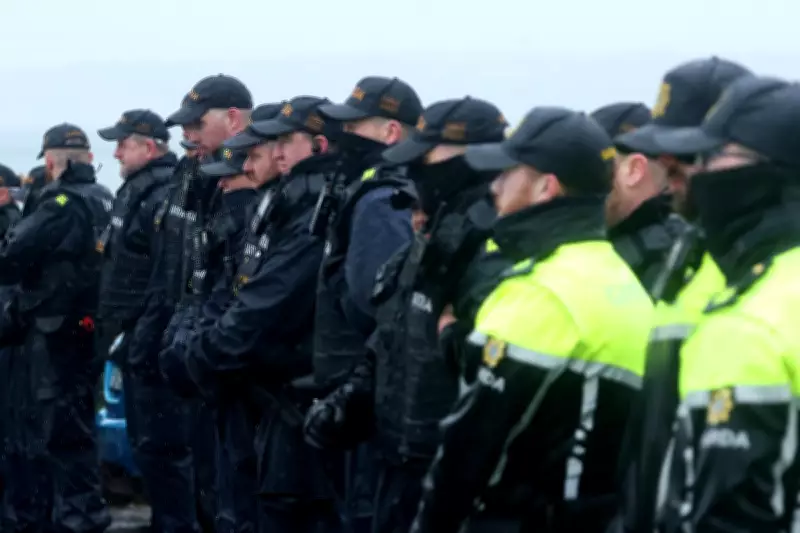
An Garda Siochana, the Irish police service, has restored access for fuel trucks to the Whitegate oil refinery in County Cork following a prolonged blockade. Leading the operation, gardai have utilised a Defence Forces heavy-lift recovery truck capable of removing the large trucks and tractors employed by protesters to barricade the site.
The police have implemented "exceptional" measures to bolster staffing over the weekend, deploying scores of officers, including the Public Order Unit, to the protest. Reports indicate the use of pepper spray and physical removal of protesters as authorities worked to re-secure the refinery. An Garda Siochana internally declared an "exceptional event," enabling the designation of every available member for duty.

Nationwide Fuel Shortages Loom
The blockades have precipitated a severe fuel crisis, with approximately 600 of Ireland's 1,500 filling stations already depleted. Kevin McPartlan, chief executive of Fuels for Ireland, warned that this number "will grow quite dramatically" if the blockades persist. He stated that without resolution, "I don't think we could guarantee fuel at any forecourt by very early next week, Monday morning or Monday perhaps."
Despite the shortages, Health Minister Jennifer Carroll MacNeill assured the Irish Medical Organisation that "all of our ambulances have been refuelled successfully." However, broader emergency services and vital goods deliveries face potential curtailment, prompting the National Emergency Coordination Group to urge the public to purchase only necessary fuel.
Transport and Infrastructure Disruption
The protests have caused extensive transport chaos, resulting in full closures on sections of the M50 ring road around Dublin, as well as the M4, M6, M7, M8, M9, and M20 motorways. Transport Infrastructure Ireland reported "significant disruption" affecting counties Clare, Limerick, Tipperary, Laois, Offaly, Kildare, Galway, Cork, and Dublin, with close coordination with gardai to manage traffic.
Bus routes across Ireland and within Dublin have been disrupted, and Luas Green Line tram services are affected. Additionally, Rosslare Europort is expected to reach capacity by Sunday evening or Monday morning due to a blockade in Kilrane, County Wexford, forcing potential ship diversions.
Government Talks and Protester Demands
The Irish Government re-entered talks on Saturday aimed at defusing the protests, which involve blockades at key fuel distribution sites including Whitegate, Galway, and Foynes, County Limerick. This follows a crunch meeting on Friday that failed to yield concrete proposals.
Protesters, comprising professional drivers, farmers, hauliers, taxi, and bus operators, demand urgent government action on fuel prices, warning they risk going out of business. Christopher Duffy, a spokesman for protesters in Dublin, stated the blockades would continue until a "serious reduction in our costs" is achieved.
While many official representative groups express sympathy, they deny involvement in organising the protests. A spokesman for the protesters expressed "devastation" at being excluded from Friday's government meeting with these groups. A subsequent government commitment to a "substantial" fuel cost package did not dissuade protesters.
Political and Cross-Border Implications
Taoiseach Micheal Martin described the situation as "unconscionable," "illogical," and "difficult to comprehend," warning that Ireland is on the "precipice of turning oil away from the country." Deputy premier Simon Harris indicated that Saturday's talks aimed to finalise "substantial and significant" measures for affected industries.

Ger Hyland, president of the Irish Road Haulage Association, expressed hope for a resolution by Saturday evening, noting negotiations were ongoing with "no red lines." Meanwhile, police in Northern Ireland are assessing social media calls for similar protests, with the PSNI preparing a response to ensure public safety and minimise disruption.