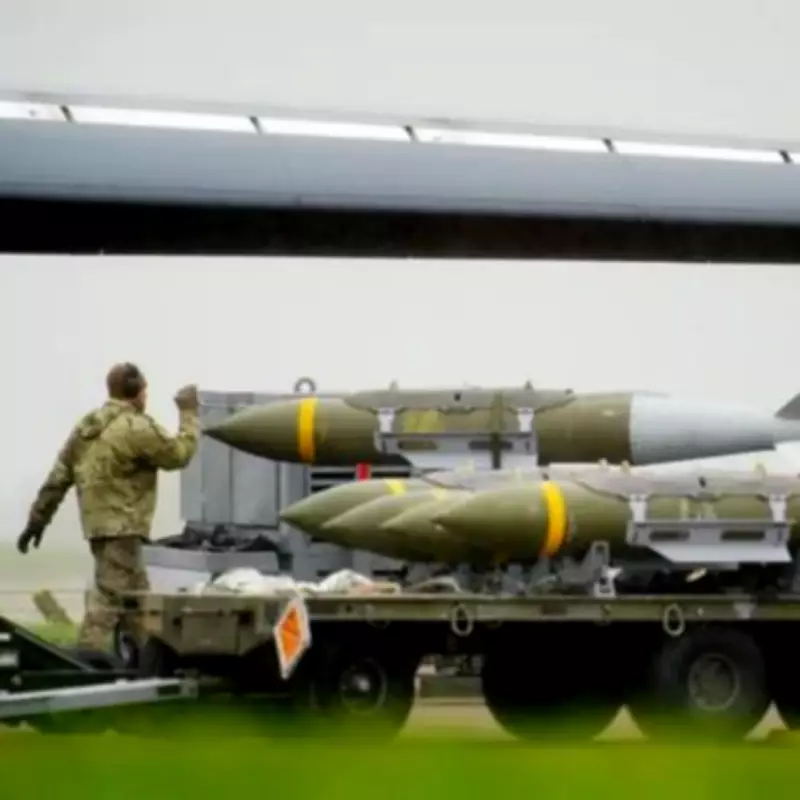
A senior Iranian official has issued a grave warning that British lives have been placed "in danger" following Prime Minister Sir Keir Starmer's decision to grant the United States permission to utilise UK military bases for strikes against Iranian missile sites targeting the Strait of Hormuz.
Escalation in the Middle East
This development comes amidst a significant escalation of conflict in the Middle East, which has now persisted for three weeks. The initial trigger was a series of joint strikes conducted by the United States and Israel on several key Iranian sites on February 28th. Iran responded with retaliatory strikes across the region, setting the stage for the current crisis.
UK Policy Shift and Immediate Retaliation
On Friday, March 20th, UK ministers agreed to a pivotal policy shift. Previously, the US was restricted to using UK bases, such as RAF Fairford in Gloucestershire and the joint base at Diego Garcia in the Indian Ocean, solely for defensive actions against missile sites threatening British interests. The new agreement expands this to allow offensive strikes against Iranian missile positions.

Reports indicate that Iran swiftly retaliated against this decision. Early on Saturday, according to the Wall Street Journal, Iran fired two intermediate-range ballistic missiles targeting the Diego Garcia base. Fortunately, neither missile struck the facility, but the act underscores the immediate and tangible escalation.
Diplomatic Warnings and Public Statements
Iranian Foreign Minister Abbas Araghchi was unequivocal in his response. In a post on social media platform X, he stated, "Iran will exercise its right to self-defence." He further argued that the "vast majority of the British People do not want any part in the Israel-US war of choice on Iran."
"Ignoring his own People, Mr Starmer is putting British lives in danger by allowing UK bases to be used for aggression against Iran," Araghchi declared, framing the UK's decision as a direct provocation.
International Reactions and Political Pressure
The move has also drawn commentary from former US President Donald Trump, who expressed criticism of the UK's timing. Speaking to reporters outside the White House, Trump remarked, "It’s been a very late response from the UK. I’m surprised because the relationship is so good, but this has never happened before."
He specifically referenced Diego Garcia, noting, "They didn’t want us to use the island, the so-called island, which for some reason they gave up rights to it. I was a little surprised in the UK, to be honest. They should have acted a lot faster."
Strategic Implications for the Strait of Hormuz
In a separate statement on his Truth Social platform, Trump addressed the strategic importance of the Strait of Hormuz, a critical global oil shipping chokepoint. He asserted that the strait "will have to be guarded and policed" by other nations that use it, explicitly stating, "The United States does not!"
He offered conditional support, saying, "If asked, we will help these countries in their Hormuz efforts, but it shouldn’t be necessary once Iran’s threat is eradicated." Trump characterised a potential military operation as "easy" and suggested the US was nearing its objectives, considering winding down military efforts against what he termed the "Terrorist Regime of Iran."
The situation remains highly volatile, with Iran's missile launch against Diego Garcia serving as a clear demonstration of its capability and intent to respond militarily to perceived aggression facilitated through UK territory.