
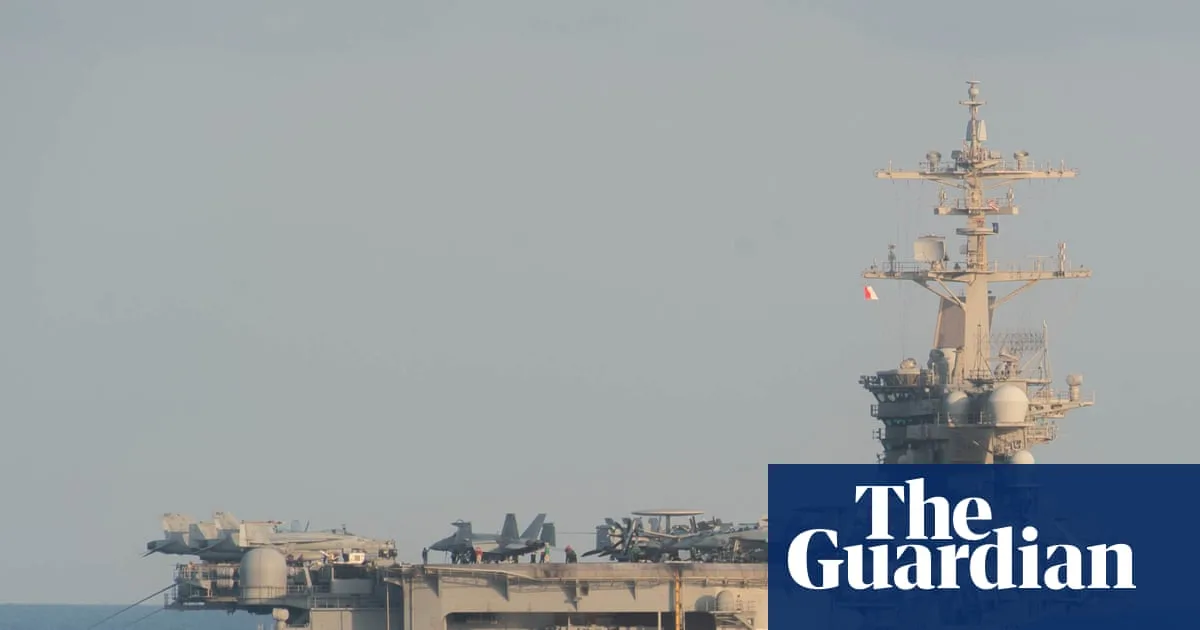
President Donald Trump has escalated tensions with Iran, warning that time is running out for a nuclear deal and that a US naval armada is prepared to use violence if necessary. In a social media post on Wednesday, Trump said the carrier strike group led by the USS Abraham Lincoln was moving towards Iran with 'great power, enthusiasm and purpose' and was ready to 'rapidly fulfil its missions with speed and violence if necessary'.
Trump urged Iran to 'come to the table' and negotiate a fair deal, stating: 'NO NUCLEAR WEAPONS – one that is good for all parties. Time is running out, it is truly of the essence!' He referenced a previous military operation, 'Operation Midnight Hammer', which he described as a major destruction of Iran, and warned that the next attack would be 'far worse'.
The remarks mark a shift in the White House's rationale for deploying the carrier group, moving from concerns over protests in Iran to the fate of Tehran's nuclear programme. US Secretary of State Marco Rubio told the Senate that thousands had been killed in recent unrest and that the Iranian government was 'probably weaker than it has ever been' since the 1979 revolution. However, he warned that Iranian missiles and drones still pose a threat to US personnel in the region, with about 30,000 troops within range of Iranian ballistic missiles and UAVs.
Iran has responded defiantly. Ali Shamkani, a senior adviser to Supreme Leader Ali Khamenei, stated on social media: 'Any military action by America, from any source and at any level, will be considered the beginning of a war, and the response will be immediate, comprehensive and unprecedented, directed at the aggressor, at the heart of Tel Aviv and at all its supporters.' Gulf states and Turkey have been mediating, but Tehran insists it will not negotiate under duress.
Trump's special envoy Steve Witkoff said at the World Economic Forum that a deal with Iran should cover missiles, enrichment, non-state proxies, and nuclear material. The US is now seeking to curb not only Iran's nuclear programme but also its long-range missile capabilities. Trump has also suggested Khamenei must leave the world stage, a demand Iran is expected to reject.




