Iran Conflict Escalates Toward Europe as Ballistic Missiles Target Turkey
The bloody Middle East war is dramatically spreading across the wider region, with the conflict now edging perilously closer to European shores. In a significant escalation, Iran has opened fire with a ballistic missile barrage targeting Turkey, a nation renowned as a popular holiday destination for British tourists. This aggressive move has forced NATO defence systems into action for a second time to intercept the incoming projectiles.
Soaring Casualties and Regional Fallout
The human cost of the conflict continues to mount at an alarming rate. Official figures now confirm 1,255 fatalities within Iran itself, while at least 13 have perished in Israel. Tragically, eight US soldiers have lost their lives due to Iranian attacks, with a further 14 now reported dead across the Gulf States. The devastation extends to Lebanon, where close to 500 people have been killed. Throughout the war-battered region, the total number of injured has soared beyond 10,000.
In Israel alone, a further 1,929 individuals have been wounded in Iranian assaults since last week, with 157 people hurt in strikes over the most recent 24-hour period. Iranian missiles have also repeatedly targeted the headquarters of the US Navy’s critical 5th Fleet, located in Bahrain’s Juffair area, underscoring the strategic breadth of the attacks.

New Hardline Leadership in Tehran
The geopolitical landscape shifted as Tehran named its new supreme leader: Mojtaba Khamenei, the 56-year-old son of the slain Ayatollah Ali Khamenei. This appointment has significantly dampened hopes for an early diplomatic resolution to the war. Mojtaba Khamenei is a mid-ranking cleric with deep, insider connections to Tehran’s powerful Islamic Revolutionary Guard Corps (IRGC).
Analysts believe he may adopt an even more hardline stance than his father, a perspective potentially hardened by profound personal loss; he has reportedly lost his wife, a son, and both parents in the conflict that ignited on February 28. The Assembly of Experts confirmed his selection by a "decisive vote," with the IRGC swiftly declaring its "devotion and obedience" to the new leader.
Military Escalation and International Response
As the war entered its tenth day, the joint US-Israeli military onslaught intensified, striking approximately 140 regime targets in Tehran with around 900 missiles. The campaign shows little sign of abating. In a clear signal of bolstered force, three additional US Air Force B-52 bombers have landed at RAF Fairford in Gloucestershire, joining a vast fleet of American warplanes being prepared for operations against Iran.
This deployment includes three American B-1 stealth bombers, activated after the UK granted permission for the US to utilise British bases at Fairford and Diego Garcia in the Indian Ocean. Simultaneously, European warships from nations including Greece, France, Italy, Spain, and Germany have converged around Cyprus to prevent conflict spill-over, though notably, no UK vessel is currently in the region. The Type 45 warship HMS Dragon is expected to set sail imminently.
Strategic Strikes and Warnings
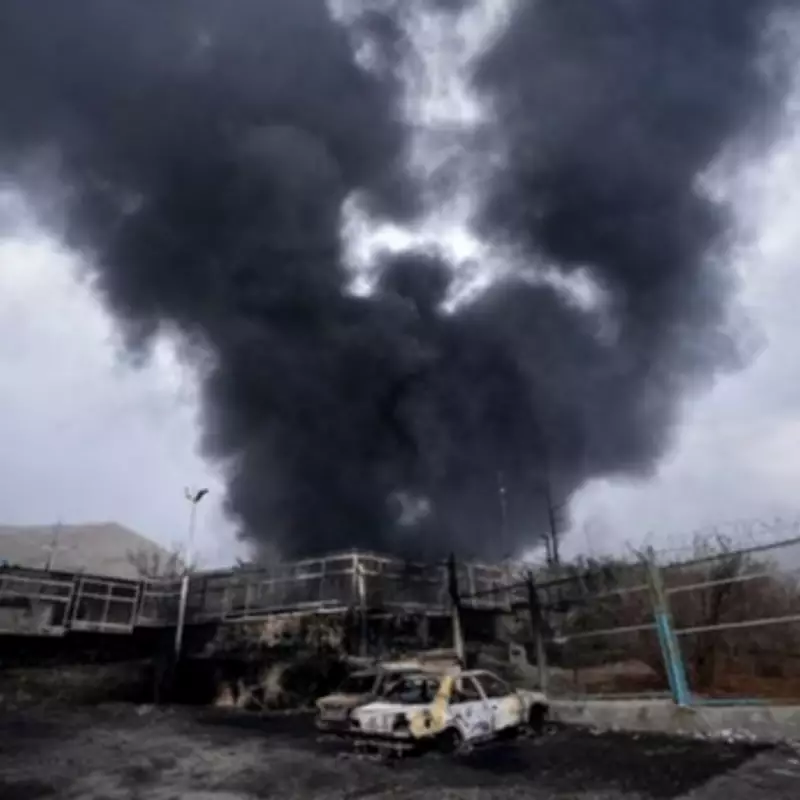
Israeli forces have conducted precise, high-value strikes within Iran. They successfully targeted and killed the late Ayatollah’s emergency command chief, Abu al-Qassem Baba’iyan, in Tehran. In a significant strategic move, they also attacked Iranian fuel storage facilities in Tehran over the weekend—marking the first known assault on Iran’s critical oil infrastructure since the war's inception. The Israeli Defence Force stated this fuel was destined for Iran's missile programme and military support, deeming it a legitimate target.
Iran has retaliated with continued bombardments on Israel, triggering air raid sirens across the country's centre, south, and coastal regions. While some weapons were intercepted, others fell in uninhabited areas. Israeli bombs, in turn, rained down on Iran's city of Isfahan, targeting command centres for the Revolutionary Guard and its Basij security force, alongside a rocket engine production facility and missile launch sites.

Diplomatic Tensions and Firm Stances
The leadership transition has sparked fierce diplomatic rhetoric. US President Donald Trump warned that Iran's next supreme leader was "not going to last long" without his approval. The Israeli military issued a stark threat on social media, vowing to pursue every successor of Ali Khamenei. Iranian Foreign Minister Abbas Araghchi forcefully rebuffed such external pressure, asserting that "nobody else's business" would interfere in Iran's domestic affairs and the selection process conducted by the Assembly of Experts.
Intelligence analysis reaffirms growing fears that Iran, having decentralised the command structure of its 250,000-strong IRGC and the half-million-strong Basij security police, is prepared to spin the conflict out into a prolonged confrontation. The IRGC has already launched attacks on at least 27 bases across the Middle East hosting US troops, as well as Israeli military facilities. Iranian strikes have now impacted ten countries in the region, including Israel, Bahrain, Iraq, Jordan, Kuwait, Oman, Qatar, Saudi Arabia, and the United Arab Emirates, with an Iranian drone even striking a runway at a UK military base in Cyprus.