
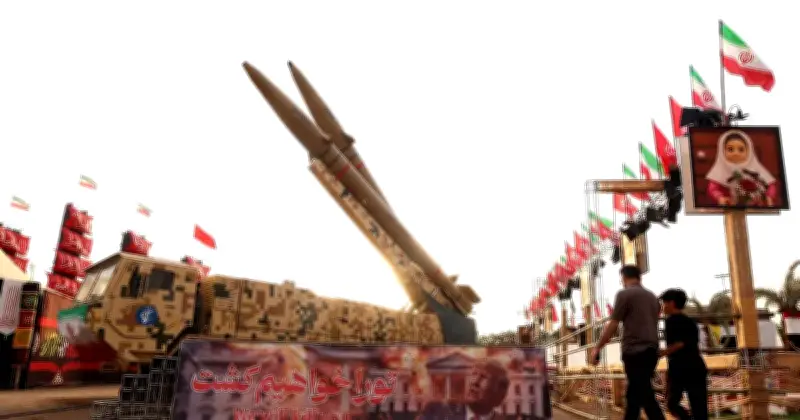
Iran has disclosed new missile guidance capabilities, according to Revolutionary Guards officials, as the country insists the US must meet its conditions before the Strait of Hormuz is reopened.
Iranian missiles have developed guidance and course-altering capabilities, according to Revolutionary Guards spokesman Hossein Mohbi. "This war was an exceptional experience in the use of new technologies, and the United States brought its latest technologies to the battlefield but failed," Mohbi said on Monday.
Strait of Hormuz closure persists
An Iranian Foreign Ministry spokesperson confirmed that Iran will not reopen the Strait of Hormuz until the United States fulfils its conditions. "It is up to the U.S. side to stop and make amends for its illegal and destructive actions," Esmail Baghaei said on Monday, referencing the American blockade of Iranian ports.
Iran is demanding the U.S. lift the blockade, provide compensation for months of conflict damage, remove economic sanctions, and release Iran's frozen assets.
Impact on oil and politics
The closure of the Strait of Hormuz - a waterway that typically handles approximately one-fifth of the world's traded oil supplies - has emerged as the conflict's most enduring impact. The deadlock has kept energy costs at the forefront of U.S. politics in the run-up to November's midterm elections.
Iran is conducting separate discussions with Oman regarding passage through the strait, potentially including a temporary shipping route. However, it has been indicated that any genuine reopening depends on negotiations with the US.
Demands and prospects
According to a Wall Street Journal report, Iran is seeking to secure the release of up to $100 billion in frozen assets and for the U.S. to remove all sanctions presently imposed on the nation. It also demands U.S. forces withdraw from the entire region, and an end to the naval blockade.
Beyond the $300 billion in compensation, it seeks to levy transit charges on every vessel passing through the Strait of Hormuz. The U.S. is unlikely to accept the demands, which have substantially diminished the prospects of a formal conclusion to the conflict.




