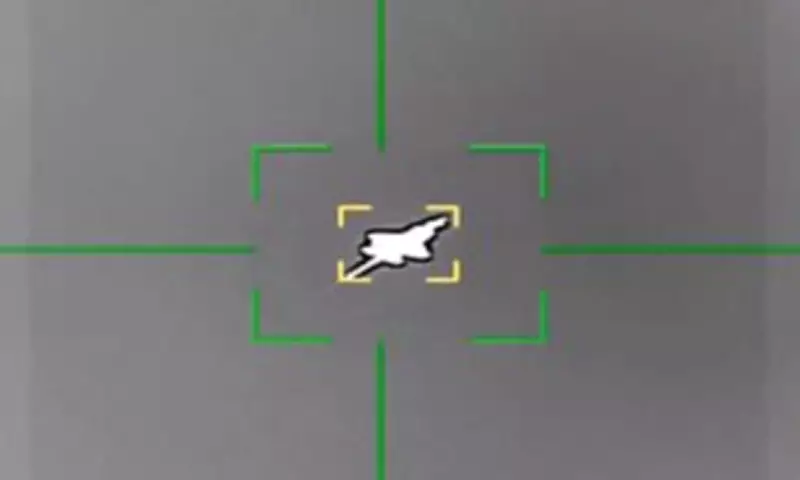
Iran Claims Historic Combat Strike Against US F-35 Stealth Fighter
As American forces intensify their bombardment of Iranian defensive positions, the embattled regime appears to have developed a countermeasure against one of the United States' most formidable weapons. Iranian military officials assert they have successfully struck an F-35 Lightning II stealth fighter jet using anti-aircraft artillery systems. This incident, if verified, would represent the inaugural instance of an American F-35 being hit by hostile fire during active combat operations.
Emergency Landing Confirmed Amid Combat Mission
US Central Command has acknowledged that an F-35 was compelled to execute an emergency landing while conducting a combat mission over Iranian territory. Captain Tim Hawkins, a spokesperson, stated, "The aircraft landed safely, and the pilot is in stable condition." The precise location of the landing was identified as a US military base within the Middle East, though it remains unclear whether the pilot sustained any injuries during the incident.
The F-35's advanced stealth technology is specifically engineered to render it virtually undetectable to conventional military radar systems, making such a successful strike appear statistically improbable. However, defense analysts suggest that Iranian air defense networks are not relying exclusively on radar to monitor America's elusive fighter aircraft.

Understanding Stealth Technology and Its Limitations
The F-35 Lightning II represents a fifth-generation stealth fighter developed by Lockheed Martin and deployed extensively by both the United States and Israel. Its formidable combat capability stems from its capacity to evade or confuse enemy radar systems, enabling it to engage targets while minimizing retaliation risks.
Radar systems operate by emitting electromagnetic signals and analyzing their reflections, similar to echolocation. To avoid detection, the F-35 incorporates specially designed angular surfaces that deflect radar waves away from their source, akin to light reflecting off a slanted mirror. Additionally, the aircraft stores its weaponry internally behind radar-absorbing panels, further disrupting its radar signature.
The entire aircraft is coated with specialized radar-absorbent materials that dissipate incoming electromagnetic energy rather than reflecting it. Collectively, these features reduce the F-35's radar cross-section to approximately that of a small bird, making conventional detection and targeting exceptionally challenging.
Expert Analysis: Stealth Versus Observability
Dr. Can Kasapoğlu, a senior fellow at the Hudson Institute, provided crucial context regarding stealth capabilities. "The F-35 is not invisible; it is low observable," he explained. "Its design aims to delay detection, degrade tracking accuracy, and avoid engagement zones rather than eliminate detection entirely."
Dr. Kasapoğlu emphasized that "any aircraft can be detected under optimal conditions; the critical factors are timing and detection quality." While certain radar frequencies, such as very-high frequency (VHF) and ultra-high frequency (UHF) systems, can potentially identify stealth aircraft, these detections typically lack the precision required for weapons-grade targeting.
Infrared Systems: A Plausible Countermeasure
A more credible explanation for the reported F-35 strike involves Iran's potential use of passive infrared detection systems. Unlike active radar, infrared systems scan for thermal signatures emitted by aircraft engines. Although the F-35's powerplant incorporates design elements to minimize infrared emissions, it cannot completely eliminate detectable heat at close ranges.
This technological reality suggests the Iranian attack likely constituted a short-range ambush rather than a long-range precision strike. Dr. Kasapoğlu identified the Iranian 358 loitering munition as a "natural culprit" in such scenarios. This surface-to-air missile, measuring approximately nine feet in length, employs infrared detection to identify targets while patrolling in figure-eight patterns over battlefields.

If an F-35 ventured sufficiently close, the 358 could potentially lock onto its engine signature and strike with minimal warning. This methodology aligns with tactics demonstrated by Houthi rebels in Yemen during the previous year, where relatively basic infrared systems effectively challenged stealth technology, forcing American pilots to execute evasive maneuvers.
Strategic Implications and Future Considerations
Despite this incident, Dr. Kasapoğlu maintains that it represents an isolated occurrence that does not necessitate fundamental strategic revisions for the United States. He characterizes infrared detection as likely part of a "layered detection approach" rather than a standalone capability that negates stealth advantages.
"No fundamental shift is required for now," Dr. Kasapoğlu concluded. "This reinforces the necessity for disciplined mission planning and continuous suppression of enemy air defenses in complex operational environments. The F-35 remains a reliable fifth-generation platform and a cornerstone of US airpower."
The incident underscores evolving challenges in aerial warfare as adversaries develop increasingly sophisticated counter-stealth methodologies, potentially reshaping future combat dynamics in contested airspace.