Iran Accused of Deploying Sea Mines in Strait of Hormuz Amid Escalating Tensions
Iran has been accused of littering the Strait of Hormuz with mines, transforming this critical oil route into a battleground between warring nations. The United States Institute for the Study of War estimates that approximately 10 mines have been laid in the strait so far, further complicating maritime operations and heightening regional instability.
US and UK Responses to the Crisis
President Donald Trump stated on Wednesday that the US would "look very strongly" at the situation in the Strait of Hormuz, despite claiming to have neutralised all of Iran's mine-laying vessels. US forces report striking 58 Iranian naval ships, including 16 mine-layers near the strait, with Trump asserting that Iran is "pretty much at the end of the line." Concurrently, the United Kingdom Maritime Trade Operations has documented reports of 16 ship attacks in and around the Arabian Gulf, Strait of Hormuz, and Gulf of Oman.
In a Truth Social post on Tuesday, Trump issued a stern warning: "If Iran has put out any mines in the Hormuz Strait, and we have no reports of them doing so, we want them removed, IMMEDIATELY! If for any reason mines were placed, and they are not removed forthwith, the Military consequences to Iran will be at a level never seen before." This rhetoric underscores the severe diplomatic and military stakes involved.

Iran's Extensive Mine Arsenal
Experts estimate that Iran possesses a stockpile of at least 2,000 Soviet, Western, and Iranian-made drifting and moored contact mines, according to the Strauss Center. Additionally, Iran maintains a substantial collection of more advanced bottom and rising mines sourced from Russia, China, and North Korea. Mines are notably inexpensive compared to other weapons; a simple contact mine can cost as little as $1,500 (£1,123.07).
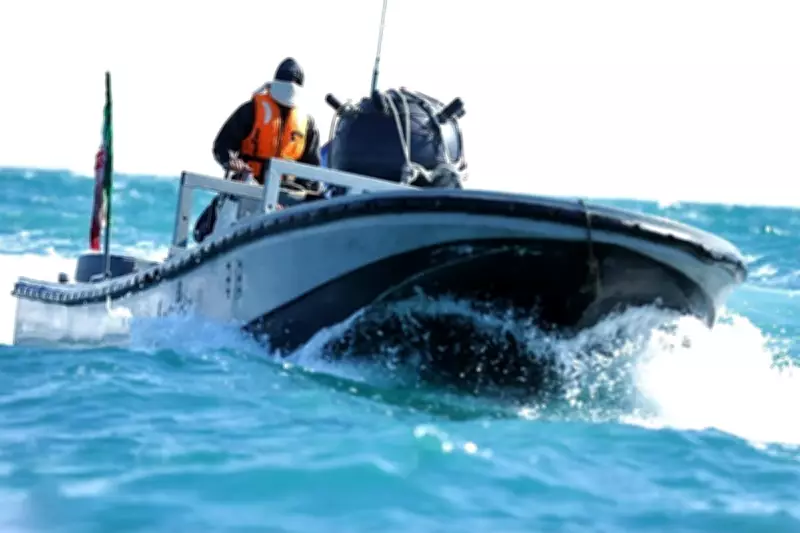
Iran primarily deploys mines using frogmen on small boats that resemble ordinary fishing vessels, forming an informal maritime militia of dinghies that is virtually impossible to identify and eliminate, as reported by the Wall Street Journal. Iranian MAHAM mines constitute a significant part of the country's artillery, including a range of sea mines that can be released in water and triggered in various ways, as well as limpets that attach to ships.
Advanced Mine Technologies and Their Impact
The advanced Maham-2 mine can be deployed on the seabed at depths of 10 to 50 metres to destroy submarines and surface vessels. It contains a 350kg explosive charge with magnetic and acoustic sensors, according to Collective Awareness to UXO (CATUXO). Meanwhile, the Sadaf-02 sea mine is designed to sit just below the waterline and detonate with approximately 114kg of explosives upon contact with a passing ship.
One of the limpet mines, the Maham 4, attaches to various ship platforms via a frogman using a nail gun or magnet. It operates at depths between 1 and 40 metres and runs on a timer adjustable from 10 minutes to six hours, capable of causing large explosions.
Damage Caused by Sea Mines
The primary aim of sea mines is to damage ships and submarines through underwater explosions that generate sufficient force to breach hulls and sink vessels. Iran's diverse array of sea mines impacts damage in different ways, depending on deployment methods or the quantity of explosives packed.
Seabed mines, embedded deep below the surface, detonate when the pressure differential between an expanding gas bubble and the water quickly creates a void or hole. The gas bubble shoots rapidly upward, and the initial explosion produces damaging shock waves. Limpets, on the other hand, are detonated when ships trigger mines by contact or via ship noise and magnetic signals, posing a persistent threat to maritime traffic in the region.