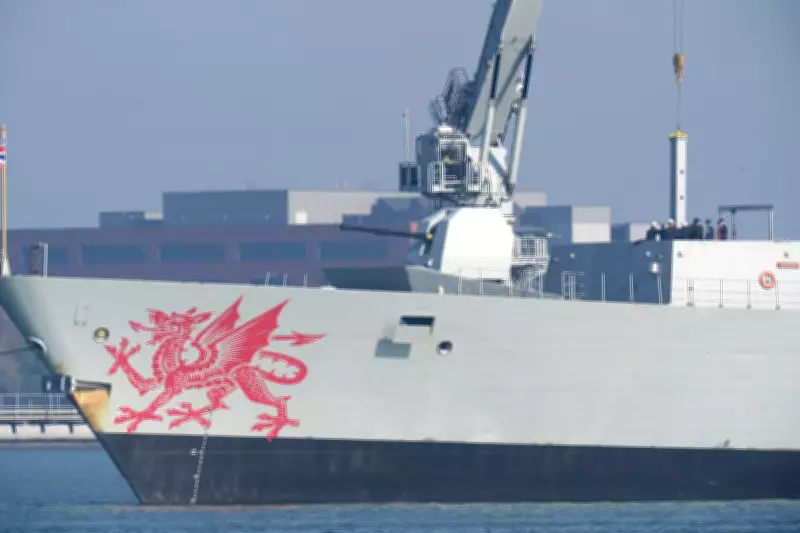
Royal Navy's HMS Dragon Finally Deploys to Cyprus After Week-Long Delay
The Royal Navy's HMS Dragon has set sail for Cyprus, a full seven days after Prime Minister Sir Keir Starmer announced its deployment in response to an Iranian drone strike on a Royal Air Force base. The delay has sparked significant criticism, with some labelling it an "appalling and embarrassing" failure that highlights deeper issues within the UK's naval preparedness and strategic priorities.
A Delayed Response to Iranian Aggression
On the night of 1st March, a drone struck the RAF base in Cyprus, prompting Sir Keir Starmer to announce in a televised address that he had agreed to a US request to use British military bases for defensive strikes against Iranian missile sites. The following day, the Prime Minister stated that HMS Dragon would be scrambled to the eastern Mediterranean. However, the Type 45 destroyer only departed from the Solent on Tuesday afternoon, a week later, after what Defence Secretary John Healey described as a "remarkable effort" by crews.
The ship is now en route, scheduled to sail past the Isle of Wight, through the Bay of Biscay, around the Iberian peninsula, and into the Mediterranean. Under the 1960 Treaty of Guarantee, the UK has a legal obligation to ensure Cyprus's security, but the Cypriot government has expressed disappointment in Britain's delayed response, forcing it to seek assistance from France.

Criticism and Strategic Shortcomings Exposed
The week-long wait has left Ministry of Defence officials reportedly "fuming" and has exposed shortcomings linked to financially-motivated decisions. These include agreements with contractors, such as Serco, that initially restricted overtime work, including weekend shifts, on HMS Dragon. Armed Forces Minister Al Carns had to intervene to overturn a money-saving contract tweak from last year that ended such overtime provisions.
MoD sources indicated that contract changes were part of efforts to find £2.6 billion in savings for this financial year. Before the issue was resolved, an MoD source criticised the situation, stating, "People are fuming here. It is not on for a contractor to work to rule in these circumstances." By Thursday, both the Royal Navy and Serco confirmed that work was proceeding, with both insisting the contract allows for necessary overtime.
Broader Defence and Readiness Concerns
This incident has raised broader concerns about the Royal Navy's readiness and strategic focus. Professor Kevin Rowlands, a former senior Royal Navy officer now at the Royal United Services Institute, explained that each ship has a declared "readiness" level indicating how many days it takes to set sail. He noted that the UK's strategic priorities have shifted towards Russia and NATO in recent years, leading to a drawdown of forces in other regions like the Middle East.
"Every time you make a choice, sod’s law is that it’s going to be the wrong one, but then you’ve got to accept the consequences, which are that you’re not necessarily going to be there straight away," Professor Rowlands said. He added that forward planning occurs "all the time" in the armed forces, with the navy likely preparing for potential Middle East action months in advance.
However, other voices, such as Commodore Steve Prest, former director of Royal Navy acquisition, pointed to funding issues. He told BFBS Forces News that the navy's ageing Type 23 and Type 45 ships have suffered from a lack of spares and maintenance, making it difficult to deploy them at sufficient readiness. Commodore Prest also questioned why the UK did not send a warship sooner, noting that the US had requested use of UK bases on 11th February, weeks before strikes on Iran. "We could and should have seen this coming," he stated, suggesting the UK has taken "our eye off the ball" strategically.

International Reactions and Naval Context
The delay did not go unnoticed internationally. Reports that the UK was updating the readiness level of HMS Prince of Wales prompted US President Donald Trump to comment on Truth Social, suggesting, "we don’t need them any longer" and criticising the UK for joining conflicts after they are perceived as won. This adds to the embarrassment, as it is also believed to be the first time since 1980 that no Royal Navy ships have been stationed in the Gulf, following years of scaling back British presence in the region.
Admiral Lord Alan West, former First Sea Lord, previously described the decision to bring home the last remaining vessel as a "terrible error." Meanwhile, HMS Dragon, one of six Type 45 destroyers, is equipped with the Sea Viper anti-air missile system and manned by a crew of around 200. It recently underwent maintenance and was loaded with ammunition after crews worked over the weekend, having been in dry dock for refitting last week.
Official Statements and Moving Forward
As HMS Dragon set sail, its Commanding Officer, Commander Iain Giffin, praised his crew's efforts, stating, "My ship’s company have worked tirelessly to ensure we are ready for our mission to the Eastern Mediterranean. I am proud of professional manner in which they have responded." Defence Secretary John Healey echoed this, highlighting that six weeks of work was completed in just six days, calling it "a remarkable effort delivered around the clock."
A Ministry of Defence spokesperson earlier reinforced the UK's defensive posture, noting additional deployments including Typhoon jets to Qatar and Wildcat helicopters to Cyprus. The spokesperson emphasised that Royal Navy personnel are working as fast as possible to prepare HMS Dragon, including resupplying air defence missiles. Despite these efforts, the delay has underscored ongoing challenges in UK defence capabilities, from funding constraints to strategic misalignments, leaving many to wonder if lessons will be learned from this high-profile setback.