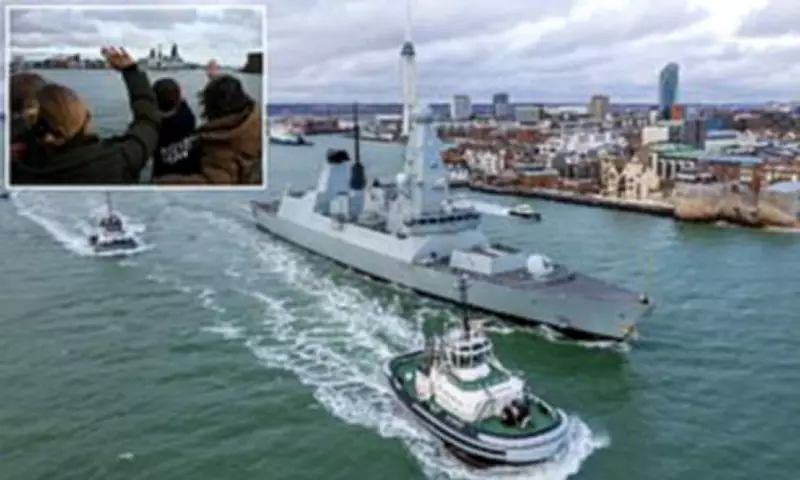
In a dramatic turnaround, the Royal Navy's Type-45 destroyer HMS Dragon has finally set sail from Portsmouth, marking the end of an embarrassing period where Britain failed to deploy a single warship to the volatile Middle East region. The £1 billion warship embarked on its journey after frantic engineering efforts repaired critical systems, allowing it to cruise into the Solent as families and friends waved emotional farewells from the harbour.
Urgent Repairs and Upgrades
The departure came as something of a surprise on Tuesday, following Defence Secretary John Healey's statement to the Commons on Monday that the ship would leave "in the next couple of days." What would normally take six weeks of maintenance work was completed in just six days through round-the-clock efforts by military and civilian staff.
Mr Healey praised the teams involved, stating: "I have only praise for our teams who worked flat out. A remarkable effort delivered around the clock. They are the very best of Britain in action."

Enhanced Capabilities
During its time in dock, HMS Dragon received significant upgrades to its anti-drone systems and was fitted with new weapons specifically designed to counter Iranian missile threats. Naval sources have described the vessel as "one of the world's most capable air-defence warships," with its primary role being to detect, track and destroy aerial threats in the region.
The destroyer's mission comes as part of a broader strategic approach implemented since January to prepare for potential conflict in the Middle East. This comprehensive plan has included deploying radar systems, air defence capabilities, and F-35 jets to the region.
Geopolitical Context
HMS Dragon's departure coincided with significant international developments. On the same day, the first US B-1 Lancer bomber left a British base to launch a strike against Iran, following a heated dispute between Prime Minister Sir Keir Starmer and former US President Donald Trump regarding America's use of British military facilities.
The supersonic strategic bomber, capable of carrying 75,000 pounds of bombs or missiles at speeds exceeding 900 miles per hour, represents a major escalation in military operations. This deployment occurred after Sir Keir belatedly granted permission for US strike operations from UK bases, a decision that has drawn criticism from political opponents.
International Coordination
Sir Keir has been actively engaged in diplomatic efforts, holding talks with German Chancellor Friedrich Merz and Italian Prime Minister Giorgia Meloni about the ongoing security crisis. Downing Street confirmed that all parties "agreed on the vital importance of freedom of navigation for vessels through those waters."
Meanwhile, France has significantly outpaced Britain in its naval commitments to the region, with President Emmanuel Macron deploying at least eight French ships to the eastern Mediterranean and the strategically vital Strait of Hormuz.
Evacuation Preparations
As tensions escalate, the Ministry of Defence has confirmed that RFA Lyme Bay, the UK's designated civilian evacuation vessel, is being prepared for potential deployment. The 579-foot Bay-class dock landing ship, part of the Royal Fleet Auxiliary, has been placed on a shortened "notice to move" period.
With approximately 173,000 British citizens registered in the region, Lyme Bay could play a crucial role in evacuation operations, potentially rescuing civilians stranded in countries like Lebanon and transporting them to relative safety in Cyprus. Defence officials have characterized these preparations as "prudent planning," though the ship could have been readied as early as January when other contingency measures were implemented.
Regional Security Operations
British forces have maintained an active defensive posture in the region, with pilots completing more than 230 flying hours on defensive operations specifically targeting Iranian drones. Over the past week, the Ministry of Defence has bolstered its presence with additional counter-drone specialists, Wildcat and Merlin helicopters, and four more Typhoon jets deployed to Qatar.

It is important to note that neither HMS Dragon nor RFA Lyme Bay is expected to participate in operations to secure the Strait of Hormuz, the world's most critical maritime route for oil and gas transportation.
Political Reactions
The deployment has sparked political debate, with Reform Party leader Nigel Farage arguing that Britain lacks the capability to meaningfully contribute to international efforts. "Given that we can't even send a Royal Navy vessel to defend British sovereign territory and an RAF base," Mr Farage stated, "we don't have the capability to offer anything of value to the Americans or the Israelis. If we cannot defend Cyprus let's not get involved in another foreign war."
HMS Dragon is expected to take approximately one week to reach Cypriot waters, where it will join naval assets from Greece, France, Italy, Spain, and the Netherlands in a multinational effort to maintain regional stability.