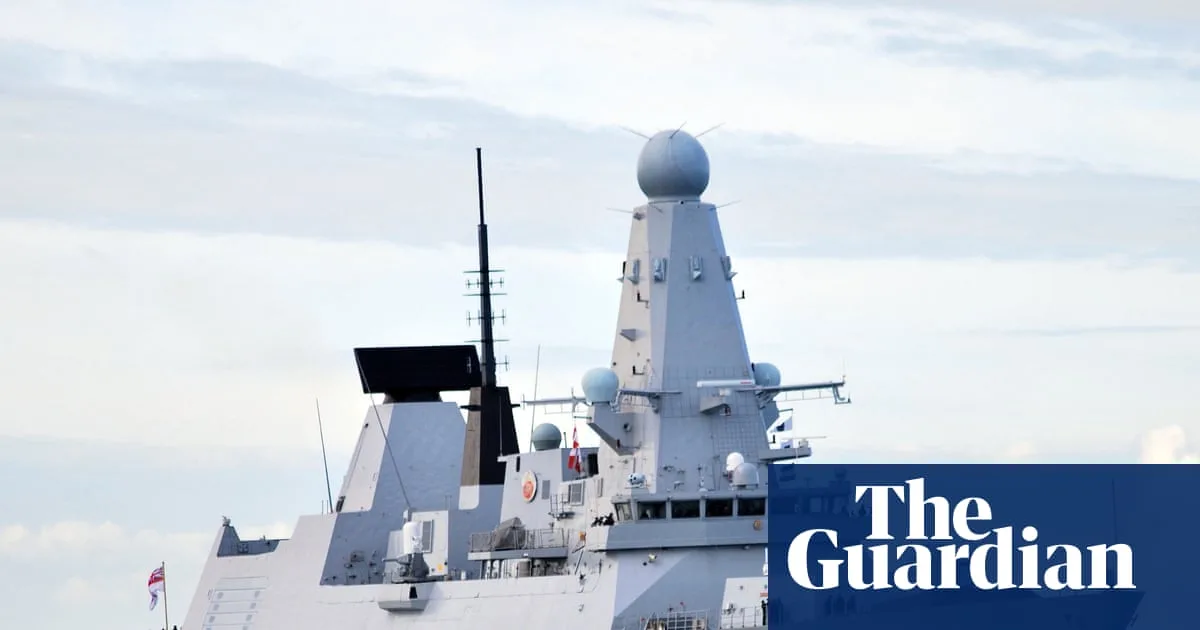
The Royal Navy's formidable Type 45 destroyer, HMS Dragon, has set sail from Portsmouth Harbour, embarking on a critical deployment to the eastern Mediterranean. This strategic move aims to reinforce the United Kingdom's defensive posture around Cyprus, responding directly to escalating tensions in the Middle East.
Urgent Deployment Following Drone Attack
The warship's departure comes precisely one week after its mission was officially announced by defence authorities. This deployment was triggered by a recent drone attack that successfully struck the RAF Akrotiri base located in Cyprus, highlighting immediate regional threats.
Officials have emphasised that HMS Dragon was prepared with exceptional speed for this operation. An intensive six weeks' worth of essential preparatory work was compressed into a mere six days to ensure the vessel could depart without delay.
Advanced Capabilities and Crew Readiness
As the destroyer exited Portsmouth, crew members were visibly lined along the deck, demonstrating both ceremonial tradition and operational readiness. HMS Dragon is equipped with state-of-the-art systems, specifically designed to intercept and destroy drones and ballistic missiles. This capability is considered crucial for countering potential threats from Iran and its allied proxy groups active in the ongoing crisis.
Second Vessel on Heightened Alert
Concurrently, the Ministry of Defence has confirmed preparations for a potential second deployment. The landing ship RFA Lyme Bay has been placed on heightened readiness as a precautionary measure.
This auxiliary vessel possesses advanced aviation facilities and comprehensive medical resources, positioning it to provide critical support if the situation deteriorates further. Specifically, RFA Lyme Bay could be tasked with assisting in evacuation operations from Lebanon, where Israeli military actions have been targeting Iran's Hezbollah allies.
A Ministry of Defence spokesperson stated: "As part of prudent planning, we have taken the decision to bring RFA Lyme Bay to heightened readiness as a precaution, should she be needed to assist in maritime tasks in the eastern Mediterranean."
Market Reactions and Economic Concerns
Financial markets experienced a temporary calming effect following remarks from US President Donald Trump. He characterised recent military actions as a likely "short-term excursion" rather than a prolonged conflict. However, he also issued a stark warning to Iran, threatening "death, fire and fury" unless freedom of navigation is maintained through the strategically vital Strait of Hormuz, a key global route for oil and gas shipments.
Despite this, underlying nervousness persists regarding the potential economic impact of rising energy costs. The UK's independent fiscal watchdog, the Office for Budget Responsibility (OBR), has issued a revised warning. Professor David Miles, a member of the OBR's budget responsibility committee, informed MPs that inflation for the current year could exceed previous estimates.
Professor Miles elaborated: "Right now, if prices do not change from their current levels—including both spot prices and market expectations for futures prices, which are particularly important for the Ofgem price cap—we think the inflation rate would end the year not near 2%, but nearer 3%." This adjustment reflects heightened concerns over energy market volatility linked to the geopolitical instability in the Middle East.




