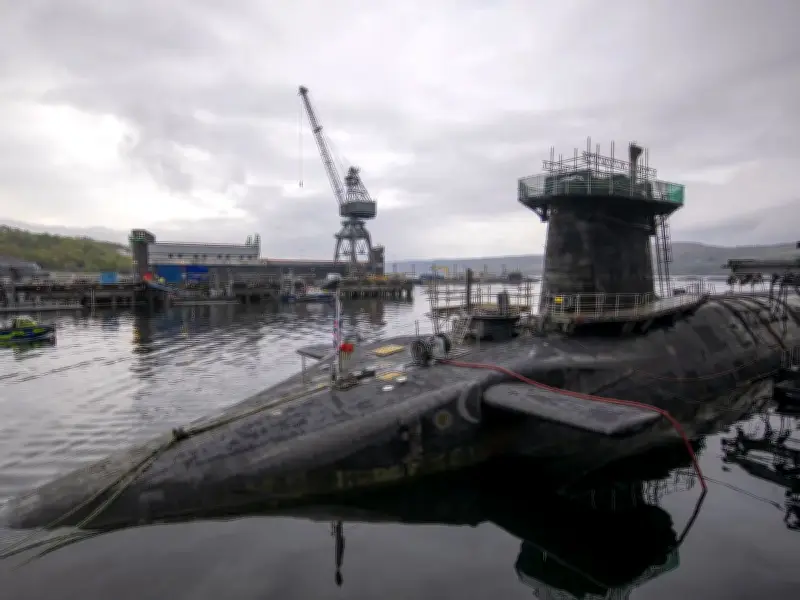
Helensburgh, a Scottish seaside town across from HM Naval Base Clyde at Faslane, has been identified as the most dangerous place to live in Britain outside London if World War 3 were to break out, according to an analysis using Google's Gemini AI model.
The town of around 13,000 residents sits on the north shore of the Firth of Clyde, directly across the water from Faslane and a few miles from RNAD Coulport. Together, these two military sites house the entirety of Britain's nuclear deterrent, making the surrounding Garelochhead peninsula a guaranteed first-wave target for an adversary.
Military sites and strategic targeting
Faslane serves as the home port for the Royal Navy's Vanguard-class ballistic missile submarines, which carry the UK's Trident nuclear missiles, as well as the Astute-class fleet of nuclear-powered hunter-killer submarines. Over the ridge on the banks of Loch Long, Coulport stores and loads Trident II D5 nuclear warheads inside reinforced hillside bunkers.
In a full-scale nuclear exchange, experts have previously stated that military doctrine prioritises "counterforce" strikes - the immediate destruction of an enemy's nuclear arsenal before it can be launched, reloaded, or deployed. Even if one Vanguard submarine is already on patrol at sea, an enemy would immediately target Faslane and Coulport to obliterate the rest of the fleet and destroy support infrastructure.
Why Helensburgh is particularly vulnerable
What makes Helensburgh particularly lethal compared to urban centres is the type of weaponry that would be used against it. While cities are typically targeted with "airburst" detonations designed to maximise blast damage over a wide area, hardened submarine pens and underground warhead bunkers require "ground-burst" strikes using multiple high-yield warheads. Detonating directly on impact to crack through thick concrete and solid rock, these strikes vaporise thousands of tonnes of earth and water, creating the heaviest and most lethal radioactive fallout possible.
Geography also turns the area into a physical trap with virtually zero chance of evacuation. Framed by deep sea lochs and the rugged Arrochar Alps, the peninsula relies on just two main routes out - the A814 and the A82 running south-east towards Glasgow. A single disabled vehicle or structural collapse on either road would completely seal the town in, experts have claimed.
Cultural heritage at risk
Founded in 1776, the town was the birthplace of John Logie Baird, the pioneer who invented the world's first working television system and demonstrated the first colour transmission. It was also the birthplace of Hollywood legend Deborah Kerr, as well as former Manchester City, Leeds United, and Rangers striker Derek Parlane, and Paralympic wheelchair tennis champion Gordon Reid.
Over the years, the town has also been home to legendary Rangers, Everton, and Scotland manager Walter Smith, former Conservative Prime Minister Bonar Law, RuPaul's Drag Race UK winner Lawrence Chaney, and actresses Morven Christie and Georgie Glen.
Environmental impact
Because Helensburgh sits right on the edge of the Loch Lomond and The Trossachs National Park, a strike on the Faslane corridor would heavily irradiate Loch Lomond, destroying an ancient ecosystem and contaminating central Scotland's water supply for generations.