Defense Secretary's Media Fixation Raises Eyebrows During Iran Conflict
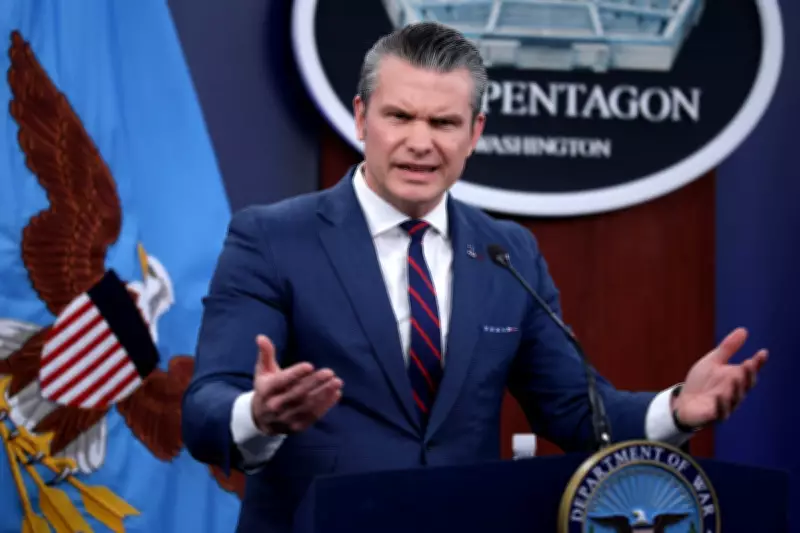
In a striking display of priorities, US Defense Secretary Pete Hegseth appears more consumed with media portrayal than military strategy during the ongoing Iran conflict. The former Fox News host, who assumed his position five days into President Donald Trump's second term, commands a trillion-dollar budget and nearly 3 million personnel, yet his recent Pentagon briefing revealed an extraordinary focus on press coverage rather than battlefield developments.
Press Criticism Takes Center Stage
During a rare appearance in the Pentagon briefing room, Hegseth immediately targeted journalists, urging what he called the "fake news" to acknowledge American military successes against Iran. The defense secretary, a Harvard and Princeton graduate, demanded alternative headlines including "Iran increasingly desperate" and "Iran shrinking, going underground" instead of what he deemed misleading coverage about the conflict's escalation.
Hegseth's preoccupation extended to television news graphics, with the former weekend morning show host complaining about on-screen banners and headlines that didn't reflect his perspective. He specifically criticized CNN's reporting about administration officials underestimating Iranian retaliation through the Strait of Hormuz, calling their coverage "patently ridiculous" and "fundamentally unserious."

Longstanding Antagonism Toward Media
This media obsession isn't new for Hegseth, whose appointment was reportedly influenced by his history of attacking press colleagues and what President Trump considered his "central casting" appearance. Since confirmation, the least-experienced defense secretary in US history has implemented increasingly restrictive policies toward journalists at the Pentagon.
His administration has systematically limited press access, removing established news organizations from traditional workspaces and replacing them with predominantly right-wing outlets. Last fall, Hegseth escalated restrictions by requiring reporters to sign pledges against publishing unapproved information, prompting even Fox News to surrender Pentagon credentials rather than comply.
Visual Media Restrictions and Partisan Preferences
The secretary's media concerns extend beyond written and broadcast coverage to visual representation. Recent reports reveal Hegseth ordered award-winning photographers removed from briefings after deeming their images "unflattering." During press conferences, he consistently favors questions from explicitly pro-Trump outlets while relegating respected Pentagon correspondents to back rows.
While occasional substantive questions emerge from partisan commentators—such as inquiries about civilian casualty prevention—these remain exceptions in briefings dominated by what critics describe as softball questions from sympathetic outlets. This approach has created an environment where legitimate journalism faces systematic barriers at the Defense Department.
Strategic Implications Amid Global Crisis
The timing of Hegseth's media preoccupation raises particular concerns as the US and Israel conduct one of the largest air campaigns in recent history against Iran. With at least 13 American service members killed, including a KC-135 tanker aircraft crew, and Iran threatening global oil supplies through the Strait of Hormuz, military leadership demands undivided attention.
As the conflict risks triggering a worldwide energy crisis and economic disruption, questions mount about when the defense secretary finds time for strategic military planning between monitoring television chyrons and critiquing press photography. The situation highlights tensions between media management and national security responsibilities during international conflicts with far-reaching consequences.