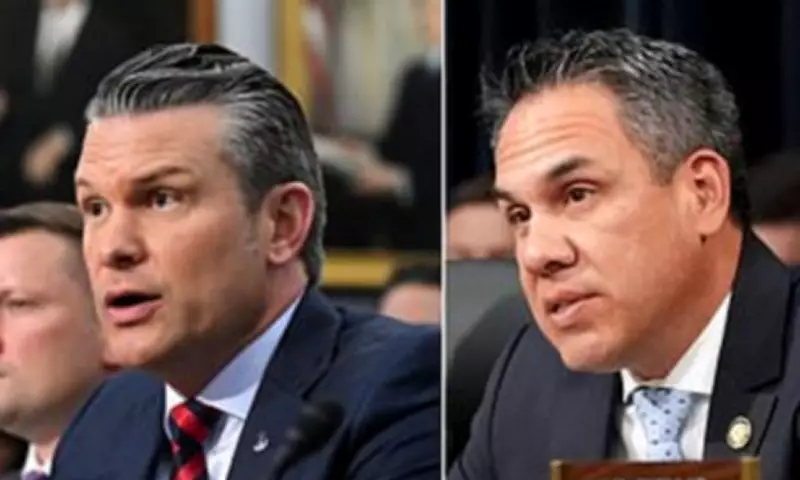
Defense Secretary Pete Hegseth faced intense scrutiny on Capitol Hill Tuesday morning as he attempted to sidestep direct answers regarding the escalating costs of the Iran war. Appearing before the House Appropriations Committee alongside Pentagon comptroller Jay Hurst and Joint Chiefs of Staff Chairman Dan 'Razin' Kaine, Hegseth was pressed by California Democrat Pete Aguilar to disclose more details about the Pentagon's budget.
Hegseth's Evasive Response
When Aguilar demanded specifics, Hegseth replied that the Pentagon would 'share what we can … when it's relevant and required.' Aguilar countered, asserting that the hearing was the appropriate forum for such disclosure. The exchange highlighted the administration's reluctance to fully account for the war's financial burden.
Cost Escalation Revealed
Pentagon comptroller Jay Hurst informed lawmakers that the estimated cost of the Iran war had surged to $29 billion, up from the previous $25 billion figure presented in late April. Hurst attributed the increase to 'updated repair and replacement of equipment costs, and also just general operational costs to keep people in theater.' This revelation comes as the Trump administration faces mounting pressure to end the conflict ahead of the midterm elections.

Political and Economic Pressures
The war, now in its tenth week, has strained the administration, with gas prices soaring over 50 percent to a national average of $4.52 per gallon. President Trump's approval rating has plummeted to 37 percent, with 59 percent disapproval, according to a recent NPR/PBS News/Marist poll—the lowest of his presidency. Democrats have seized on the issue, questioning the rationale for a conflict originally estimated to last only four to six weeks.
Previous Tensions
At a hearing in late April, Hegseth clashed with top Democrats over the war's justification. He faced pointed questions about Trump's claim that Iran's nuclear facilities were 'obliterated' during Operation Midnight Hammer in June 2025, despite the administration citing Iran's nuclear program as a reason for the February 2026 invasion. Representative Adam Smith of Washington noted the contradiction, stating, 'We had to start this war because the nuclear weapon was an imminent threat. Now you're saying it was completely obliterated?' Hegseth countered that Iran 'had not given up their nuclear ambitions and still had thousands of missiles,' but Smith concluded the war 'left us at exactly the same place we were before.'
Budget Hearings Continue
Hegseth's testimony is part of a series of hearings on the Pentagon's $1.5 trillion budget proposal for fiscal year 2027, the largest in history. The defense secretary has faced lawmakers twice since the war began and participated in a third hearing on Tuesday. The budget, if approved, would significantly boost military spending amid ongoing conflicts.