Germany's sudden surge in military spending, which largely bypasses cooperation with European partners, has reignited old anxieties among its neighbours, particularly Poland and France, according to a new analysis.
Concerns over German military dominance
The German chancellor, Friedrich Merz, invited Liana Fix, a Washington-based German researcher, to a private dinner during his visit to the White House earlier this year, after she wrote an essay in Foreign Affairs warning of the perils of Germany becoming "Europe's next hegemon". Fix, a historian and senior fellow at the Council on Foreign Relations, has expanded her argument into a book, Germany Rearmed: The Return of War and the End of Illusions.
The book examines how the combination of German rearmament, doubts over the US commitment to Nato, and the rise of the far-right Alternative für Deutschland (AfD) party has revived old fears among Berlin's neighbours.
Fallen myths and European integration
Fix argues that the illusion of economic interdependence making Russia a benign partner collapsed with Moscow's invasion of Ukraine, and that the "illusion of the west" central to Germany's identity since 1945 is fading. "It is not that Germany wants to leave the west, but the west seems to be abandoning Germany, in particular the US-led western order," Fix told the author.
To guard against hegemonic temptation, Fix urges Berlin to anchor its military power in closer European unification, including joint defence bonds, Europeanisation of arms industries, and deeper integration of the Bundeswehr into European forces.
Merz's defence strategy and national focus
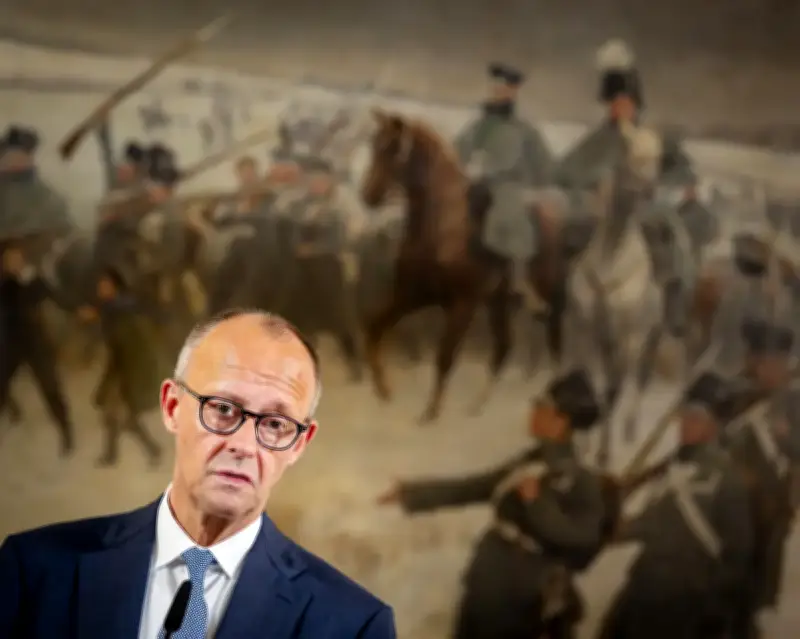
Merz, whose defence strategy in April vowed to make Germany Europe's strongest conventional army by 2039, has ruled out eurobonds for European defence. His government scrapped arms cooperation projects with France, and planned arms purchases worth €123.3bn are overwhelmingly from national and US industries.
Germany remains committed to Nato, has invited allies to join its European Sky Shield programme, is the biggest donor to Ukraine, works with the UK on deep precision strike weapons, and has stationed a brigade in Lithuania.
Defence industrial nationalism is not confined to Germany, with France and the UK equally protective of their arms makers. The EU's defence commissioner, Andrius Kubilius, laments that up to 80% of European defence purchases are made without competitive tender.
The German question returns
Fix argues that because of its history and weight in Europe, Germany must do more to reassure neighbours and embed rearmament in common European structures. As Timothy Garton Ash has argued, Helmut Kohl anchored German reunification in a common European currency.
"The German question is not dead," Fix said. "It's dead in the sense that a militaristic Germany will not re-emerge under a centralised government. But the German question can also just be a question of dominance and of balance."