France's Naval Might Highlights UK's Defence Failings
In a stark demonstration of military capability, France has deployed the vast majority of its naval surface fleet while the United Kingdom struggles to mobilise even a single major warship. This embarrassing contrast comes amid escalating tensions in the Middle East, where Iran has targeted a US Navy base in Bahrain following American-Israeli operations.
Macron's Mediterranean Power Play
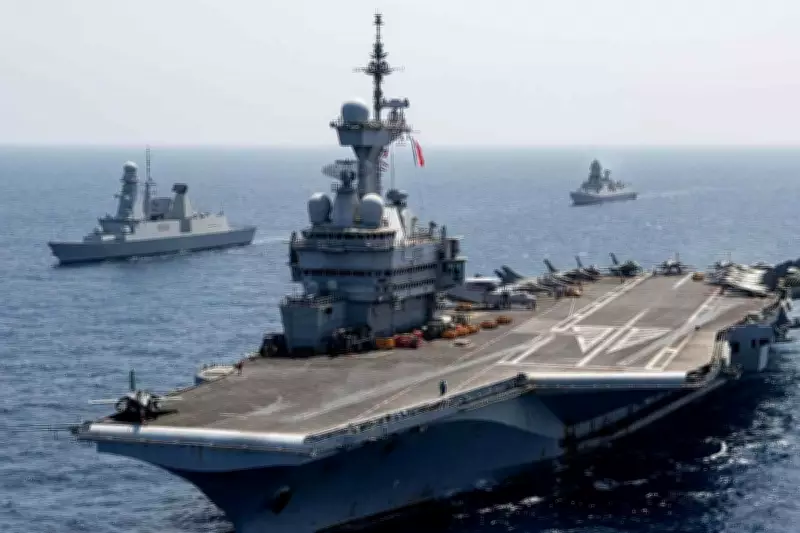
French President Emmanuel Macron delivered a barnstorming performance from the deck of the aircraft carrier Charles de Gaulle in the eastern Mediterranean. Speaking to assembled forces, Macron pledged France would guarantee the security of Cyprus—whose major base remains British—protect French citizens in the region, safeguard allied interests, and establish a European stabilisation force to ensure freedom of navigation through the Persian Gulf and Strait of Hormuz.
The Charles de Gaulle presented an impressive sight with seven surface escorts from France and European allies, plus twenty-one fully armed Rafale strike aircraft lined up on its decks, ready for immediate action. This display forms part of a broader French naval deployment that sees nineteen of France's twenty-one major surface vessels either at sea or preparing for operations.

Britain's Naval Paralysis
By contrast, the Royal Navy faces severe limitations in responding to the same regional crisis. The UK is struggling to deploy HMS Dragon, one of only two available air defence destroyers, to Cyprus. Meanwhile, the aircraft carrier HMS Prince of Wales has been deemed too vulnerable for Mediterranean deployment, with the government unable to assemble necessary escort vessels.
Compounding these problems, only a handful of F-35 Lightning fighters are currently fit to accompany any carrier deployment, and these aircraft cannot match the all-round firepower of France's Rafales. The Ministry of Defence is reportedly considering sending Lyme Bay, an amphibious support ship rather than a dedicated warship, primarily for potential civilian evacuation duties.
The Royal Air Force maintains approximately a dozen Typhoons and F-35s in Qatar and Cyprus, but this limited presence cannot conceal the inadequacy of Britain's defensive offering for citizens, bases, and allies across a Middle East threatened by widening conflict.
Systemic Defence Failures
The current situation exposes deep, systemic problems within British defence policy and practice. For much of the past half-century, the Royal Navy maintained responsibility for keeping seaways open through the upper Gulf and Strait of Hormuz, operating alongside allies with patrol frigates, minehunters, and explosives experts.
Today, the last remaining frigate, HMS Lancaster, is being broken up in the Gulf because returning it to Britain proves too expensive. The final minehunters have been withdrawn, and the shore base at Bahrain has suffered Iranian attacks. Revolutionary Guard forces have effectively closed the Hormuz narrows, choking off nearly a quarter of global seaborne oil and gas commerce.
Chronic Underfunding and Mismanagement
Defence refurbishment and modernisation programmes have suffered from misdirection, poor leadership, and chronic underfunding since the 2008 financial crisis. Even before the Cold War ended, defence reviews frequently served as thinly disguised rounds of budget cuts.
Last year's Strategic Defence Review promised a change of direction, including a defence budget increase to three percent of GDP—though not until after 2030—plus an additional £5 billion to tide things over. However, this funding illustrates the pathology of UK defence spending: approximately £3 billion has gone toward servicing housing in desperate condition, with the remainder allocated to unexpected public wage settlements, National Insurance increases, Afghan dependent personnel rescue, and the complex Chagos Island situation.
The government has yet to produce its Defence Investment Plan, originally due last September. Meanwhile, all three services face delays in equipment, training, and ammunition programmes, with stocks badly depleted after assistance to Ukraine.

Comparative Naval Decline
The Royal Navy currently operates about three working destroyers and at most four elderly frigates. This compares starkly with France's nineteen operational warships. Within two years, Italy is projected to possess the largest and perhaps most capable working navy among European NATO allies, featuring cutting-edge systems throughout.
The first of Britain's new Type 26 frigates isn't due to enter service for nearly three years, further extending the capability gap. Defence and security strategy now represents what analysts term a "cluster-crisis," touching vital national interests as highlighted by the Iranian conflict.
Political and Public Disconnect
Government and Labour party members frequently note that voters and opinion polls show little interest in strong defence requirements. However, Dr Fiona Hill, one of three authors of the Defence Review, has expressed dismay at how poorly the British public has been informed about evolving threats from Russia, Iran, and their allies.
European NATO partners grow increasingly concerned about Britain's declining hard power contribution to the alliance. Not only are British people, bases, interests, and allies vulnerable, but vital sea lines for energy, food supplies, and communications face unprecedented threats.
Time for Accountability and Action
Emmanuel Macron's grandstanding performance from the decks of the Charles de Gaulle may ultimately benefit Britain by highlighting the glaring inadequacies of the Royal Navy and broader defence establishment. The situation demands accountability through resignations and dismissals, with the prime minister needing to address a problem largely avoided until now, before disaster strikes.
The famous words of Admiral Beatty at the Battle of Jutland—"Something's wrong with our bloody ships today"—echo with renewed relevance as the Royal Navy faces its most significant capability crisis in decades, exposed by French naval superiority without a single shot being fired.