
Reform leader Nigel Farage's plan for the Royal Navy to stop small boats in the English Channel has been criticized as enormously difficult, logistically complex, and an appalling use of badly needed military assets. Experts say the idea, which might appeal to the far-right's notion of using the military to protect the UK, would be "incredibly risky and impractical."
Maritime law and operational challenges
Maritime law requires vessels to safeguard lives at sea, and as witnessed first-hand by the Daily Mirror, such an operation would be almost impossible to launch in variable conditions and with limited resources. This is especially true at a time when the Royal Navy is desperately short of ships and under-resourced in the face of real threats.
A western intelligence source told the Mirror: "This is clearly an attempt to label the migrant crisis, yet again, as an invasion, a military threat that requires troops to deal with it. The messaging is disturbing, but the impracticality of such an undertaking is so unintelligent it defies belief, given the complexities of sea operations and all of the variables they entail. This is not an interdiction on stable land. You only have to witness a high-seas rescue by the RNLI to see how complex and difficult this would be and how uncertain the outcome each time."
Historical precedent: HMS Bulwark in 2015
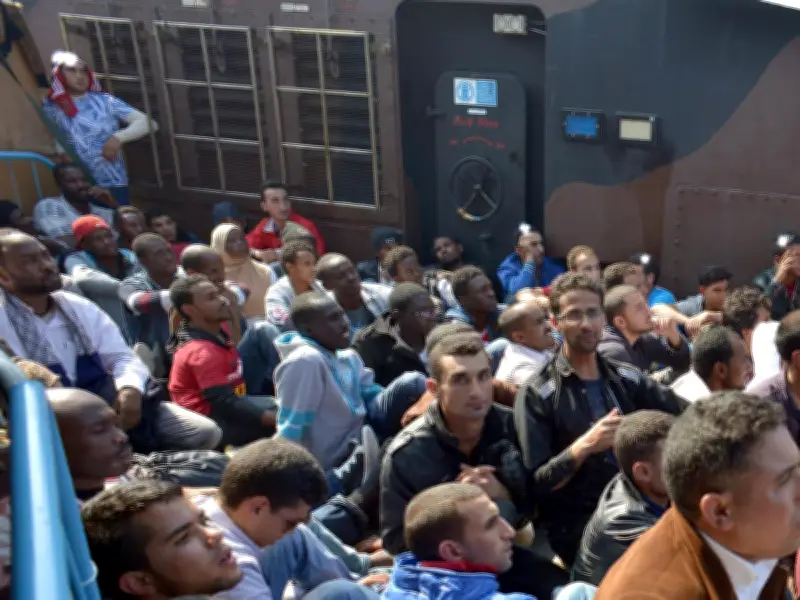
In 2015, a Mirror team joined an international military effort to interdict small boats packed with migrants sailing from Libya to Italy, rescuing 1,200 in a matter of hours. Ensuring nobody drowned required Royal Marines and sailors aboard HMS Bulwark to undertake a painstaking mission lasting many hours.
The operation in relatively calm Mediterranean conditions showed how intense rescuing so many people can be. Navy boats drifted slowly towards the migrants as commandos encouraged them to stay calm, not to move, and to put on life-jackets. The rescued were taken to HMS Bulwark, then sailed to a port in Sicily for asylum processing.
Legal and practical pitfalls
That mission was in calm seas to save lives, not to shunt people back to France regardless of conditions, which would likely end in tragedy. Many migrants in the Channel may have travelled from further afield and may resist being returned, risking violent struggles that could become mass casualty nightmares involving women and children.
The legality of taking rescued people to another country would likely land a Reform government in a legal quagmire. In 2015, there was no war in Ukraine (apart from the quiet Russian invasion of Crimea) and no Strait of Hormuz crisis. Now, British military planners are focused on assisting in securing the Strait of Hormuz against Iranian threats, intercepting Kremlin "shadow vessels" smuggling oil, and numerous other operations.
Strained Royal Navy resources
The Royal Navy is poorly resourced, with no vessels free for such an operation, especially since HMS Bulwark was decommissioned last year. Ex-Royal Navy Commander Tom Sharpe adds: "You're better off using an actual ferry." But a civilian ferry would lack the military message of a British destroyer, the far-right thrill, and the bullying image of uniformed personnel shooing off exhausted and terrified foreigners. They would first have to find a member of the Armed Forces willing to carry out such a senseless, shameful, and inhumane order.




