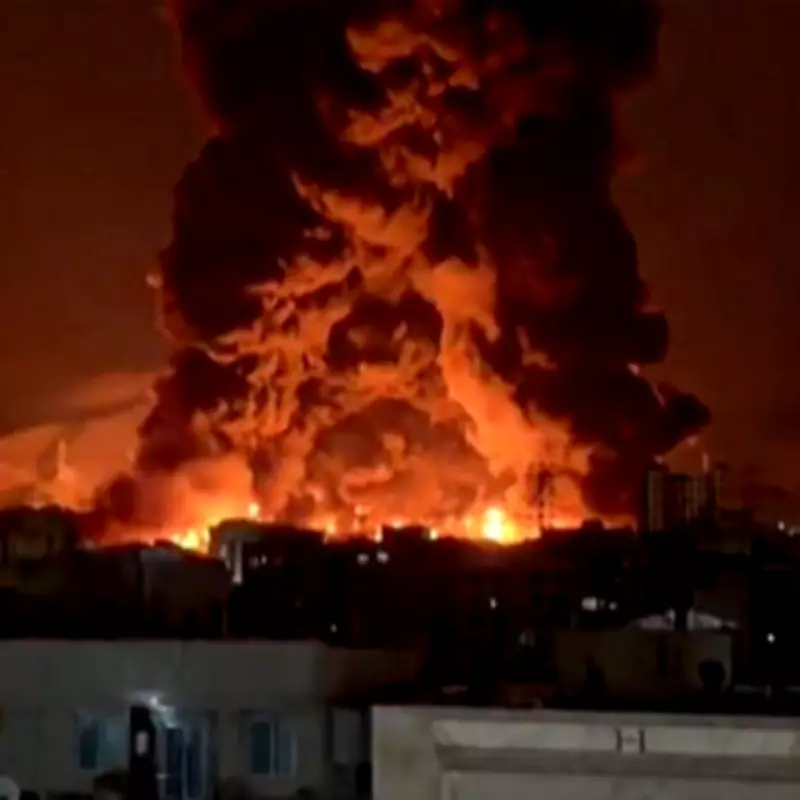
Terrorism Expert Urges Sustained Military Pressure on Iran
A senior terrorism expert and former British military commander has issued a stark warning against prematurely ending the conflict with Iran, arguing the regime still represents a substantial danger despite recent military setbacks. Colonel Richard Kemp, who previously served as a government adviser, emphasized that thousands of drones and missiles remain operational within Iran's arsenal, necessitating continued offensive operations.
Significant Capabilities Remain Despite Degradation
Colonel Kemp detailed that Iran potentially retains thousands of lethal drones alongside a considerable stockpile of ballistic missiles, even after eleven days of intensive US-Israeli airstrikes. "Iran still poses a significant threat and has possibly thousands of drones left and the perhaps the capability to make even more," Kemp told the Daily Mirror. "There is also the ballistic missile threat from Tehran, although vastly degraded by the US-Israeli airstrikes, which remains to be dealt with as that too is a threat."
Initial intelligence assessments suggested Iran began the conflict with approximately 100,000 combat drones, 5,000 short-range missiles, and around 2,500 ballistic missiles. While sixty percent of Iranian launchers have reportedly been destroyed, estimates indicate 2,410 ballistic missiles and up to 200 missile launchers may still be operational.

Strategic Objective: Regime Weakening and Collapse
The former commander articulated a clear strategic goal for the ongoing military campaign. "Ideally the war should be kept up until the collapse of the regime or until the point at which the opposition could get rid of it and take over," Kemp stated. He highlighted Iran's continued possession of enriched uranium, despite damage to nuclear facilities, as a key concern.
Kemp warned against a ceasefire that would allow the Iranian regime to recover and regroup. "It is possible the war will end with a significant amount of damage having been done to the regime for the opposition to move on it. But I do believe that there is no point in ending the war without maximising the amount of damage you can do to this regime and its ability to launch attacks," he explained. The colonel concluded that ending hostilities before achieving maximum degradation of Iran's offensive capabilities would be a strategic mistake.
Context of US Signals and Escalating Strikes
This warning comes amidst conflicting signals from Washington. While US President Donald Trump has hinted at a potential conclusion to the conflict, US Defense Secretary Pete Hegseth declared that Tuesday would witness "the most devastating day of attacks on Iran since the war began," describing it as "the most intense day of strikes." Paradoxically, Iranian weapons launches have reportedly decreased by ninety percent over the past twenty-four hours.
Allegations of Illegal Weapon Use and Regional Tensions
Further complicating the situation are allegations that Iran has deployed internationally banned cluster munitions against Israeli targets. The British-Israeli thinktank BICOM confirmed these reports, stating, "The weapon that has been a leading source of concern for the Israeli home front was the cluster munitions affixed to Iranian ballistic missiles."
BICOM elaborated on the illegal nature of these attacks: "These work by releasing a cluster of two dozen or so submunitions from a missile warhead about 10km above the ground, which then disperse over a wide area. They are designed to be used over large military targets, such as airfields, and their use over cities in the manner that Iran has used them in both this war and the Twelve Day War last June is illegal under international law."
Expanding Regional Conflict and Evacuation Orders
The conflict shows signs of regional expansion, with the Israeli military launching a warning strike on Beirut's southern suburbs in Lebanon. This action followed explicit warnings that Israel would target Hezbollah positions in the Tyre and Sidon coastal areas, as well as operations south of the Litani River. The Israel Defense Forces reiterated urgent evacuation orders for civilians in these conflict zones, emphasizing the heightened risk of military engagement.