In the critical months preceding Russia's full-scale invasion of Ukraine, I served as a senior staff officer at the Ministry of Defence. As we monitored the alarming Russian military build-up along the border, we conducted extensive war-gaming exercises to analyse Vladimir Putin's potential strategies. Our objective was to provide clear, actionable advice to British politicians regarding their available options. At the time, it appeared exceedingly difficult to envision any feasible method to halt his advance, if such intervention were even possible.
The Inevitability of Conflict and Western Response
With hindsight, it is now evident that the Russian dictator was resolutely committed to launching a swift war, anticipating a triumphant victory parade through the streets of Kyiv. The only remaining uncertainty was the precise timing of the offensive. As the inevitability of large-scale military action became unmistakably clear to our intelligence and defence teams, the range of viable options for the Western alliance significantly narrowed.
Nevertheless, we recognised an imperative to undertake every possible measure, short of direct participation in the conflict, to assist Ukrainian forces in resisting occupation. This approach was designed to enable Ukraine to impose a substantial and enduring cost on Russia for its brazen aggression against a sovereign neighbour. A fundamental concern underpinned this strategy: if the annexation of Ukraine proved straightforward, would it embolden Russia to advance further into Moldova, parts of the Balkans, or even the Baltic states? I firmly believed this was a credible and dangerous possibility.

Ukraine's Defiance and British Public Solidarity
When hostilities commenced, the profound significance of Ukraine to its own citizens and to the broader European community surpassed Russian expectations. The Ukrainian spirit of unwavering defiance resonated deeply within the British populace. I recall witnessing large, solemn yet determined crowds demonstrating solidarity with Kyiv across the United Kingdom.
These citizens demanded decisive action and robust leadership from the British Government. Nationwide, people proudly displayed the blue and yellow Ukrainian flag, opened their homes to refugees, and organised fundraising campaigns to send essential supplies to the new eastern front in Europe. This collective concern was both justified and morally correct.
Establishing Britain's Strategic Trajectory
Consequently, the direction of Britain's response was firmly established. From the highest political levels down to tactical operations, we received directives to provide maximum feasible assistance. During my initial visit to Kyiv shortly after the full-scale invasion began, Ukrainian military leaders were unequivocal: this was their war to fight. Our designated role was to mobilise comprehensive international support—diplomatic, military, and economic—to empower their defence efforts.
The Ukrainian objectives were clear: repel the invasion, reclaim occupied territory, and ensure Russia paid a severe price for its actions. They aspired to emerge from the conflict as a stronger nation, more closely integrated with Europe and aligned with NATO, thereby preventing any future recurrence. Ultimately, they sought to break free from the centuries-long stranglehold of Russian imperial ambition, following the path of many Central and Eastern European states after the Cold War.
The Broader Strategic Stakes for the West
British support was motivated not merely by principle but by a stark realisation: this conflict extended far beyond Ukraine's borders. Putin's strategic design was, and remains, far more expansive. His ambitions include the collapse of NATO, sowing division within Europe, and ultimately reasserting dominion over former Soviet states. The West, including Britain, is directly in the crosshairs of this agenda. The choice presented is stark: acceptance on Russian terms or no agreement at all.

This threat will persist regardless of how the war in Ukraine concludes. Unless a significant shift occurs, we are on a collision course with a Russia that is fully mobilised for war, rapidly replenishing lost equipment, and accelerating rearmament. Neither the catastrophic casualties suffered by Russian troops nor the extraordinary resilience of Ukrainian forces has deterred Putin from his strategic calculus. The war remains critically important to him, and its ultimate outcome hangs in the balance, as is typical of conflicts until their final resolution.
Urgent Modernisation of British Defence Capabilities
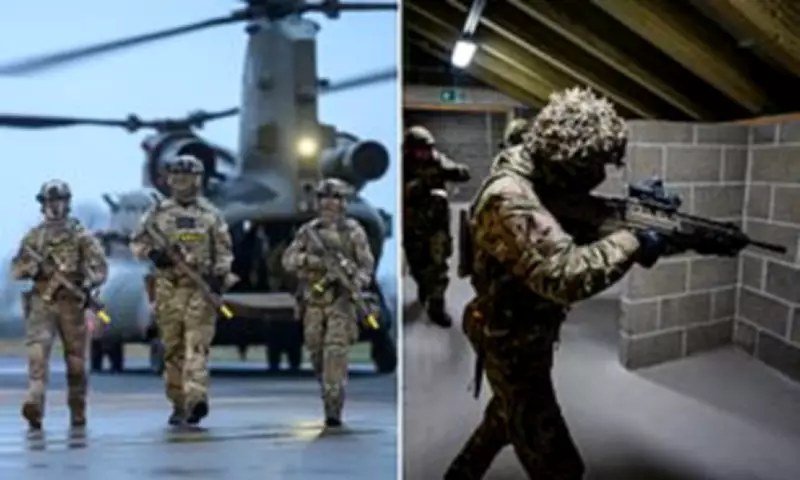
In response to this enduring threat, with profound implications for our collective future, the British Army—alongside the Royal Navy, Royal Air Force, and the Cyber & Specialist Operations Command—has been directed to prepare for high-intensity 'war fighting' alongside NATO allies. As the military professional responsible for the British Army, I must rigorously plan for worst-case scenarios.
My primary focus has been the rapid modernisation and enhancement of our land forces' combat power, ensuring our soldiers can fight and prevail if called upon. This aligns with recommendations from the Strategic Defence Review, informed by near-daily insights from the Ukraine conflict. However, as my Ukrainian counterpart cautioned during a meeting several months ago, front-line capabilities are not the sole consideration when confronting this version of Russia.
Putin will only take Western resolve seriously when he observes our industrial base operating at wartime production levels. This underscores the critical necessity to rebuild our national defence industrial arsenal and reinvigorate the connection between society and the Armed Forces. The time is ripe for economic regeneration within traditional defence sectors and for fostering new industries in robotic and autonomous systems, artificial intelligence, and advanced software—the new tools of modern warfare.
A Call to Action for National Preparedness
The urgency is unmistakable. Consider this: if you knew today that British soldiers would be engaged in large-scale combat operations by 2027, what actions would you take differently—and why are you not implementing them now? I have been profoundly impressed by the number of British businesses, service providers, and manufacturers approaching us to offer assistance.
This spirit of generosity and willingness to serve the nation, whether by applying specialised skills and expertise or assuming financial risks, is truly inspirational. I can affirm that this commitment is mirrored by bottom-up innovation and creativity from our soldiers. This collective effort bolsters their confidence, knowing their country stands firmly behind them should combat become necessary. They will be mentally and physically prepared, without doubt, but broader societal and industrial support is essential.
Conclusion: A Firm Stance Against Aggression
Russia initiated this war by invading Ukraine, and only Russia can decide to end it. Ukraine continues to demonstrate remarkable resolve and ingenuity, and we must sustain our support. Simultaneously, we must send a unequivocal signal to Putin: having failed to achieve his objectives after four years of what was intended as a brief campaign to seize a country, any belief that annexing NATO territory would be easier would represent profound miscalculation.
Therefore, do not initiate conflict with Britain, our partners, or our allies. We will never relinquish what we hold dear. Our future will be determined on our own terms, and ours alone.