

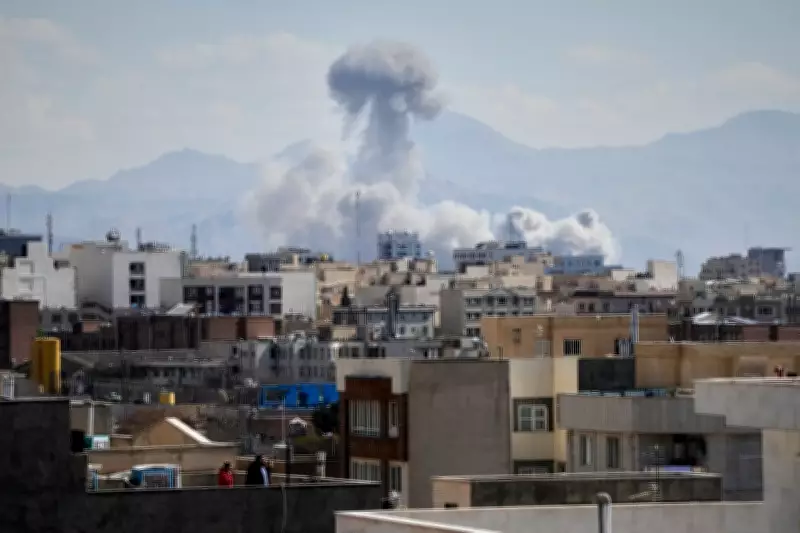
Defence Secretary Declares 'Few Will Mourn' Ayatollah's Death Following US-Israeli Strikes
UK Defence Secretary John Healey has asserted that "few people will mourn" the death of Ayatollah Ali Khamenei, the Supreme Leader of Iran, who was killed in joint US-Israeli military strikes over the weekend. Iranian state television officially confirmed the demise of the 86-year-old leader early on Sunday, as the nation launched retaliatory missile barrages targeting Gulf neighbours and Israel.
Healey Condemns Iranian Regime as a "Source of Evil"
In the first official response from the British Government, Mr Healey appeared on Sky News's Sunday Morning With Trevor Phillips to deliver a scathing assessment. "I think few people will mourn the Ayatollah's death, not least the family and friends of those thousands of young protesters murdered on the streets of Iranian cities," he stated emphatically.
The Defence Secretary further characterised the Iranian regime under Khamenei's long leadership as "a source of evil, murdering its own citizens and sponsoring and exporting terror, including to countries like Britain." His comments underscore the UK's firm stance against Tehran's domestic repression and international activities.

Iran's Retaliatory Strikes Threaten Regional Stability
Mr Healey warned that Iran is now "lashing out in an increasingly indiscriminate and widespread way," citing attacks on civilian infrastructure such as an airport in Kuwait and hotels in Dubai and Bahrain. He revealed alarming details about the proximity of Iranian firepower to British forces:
- Missiles and drones landed within "a few hundred yards" of approximately 300 British troops stationed at a base in Bahrain.
- Two missiles were fired towards Cyprus, where thousands of UK military personnel are based, though they were not believed to be directly targeted at the island.
"We don't believe they were targeted at Cyprus, but nevertheless it's an example of how there is a very real and rising threat from a regime that is lashing out widely across the region," Healey explained, highlighting the escalating danger to allied forces and regional stability.
UK Military Involvement in Defensive Operations
On Saturday, Prime Minister Sir Keir Starmer confirmed that UK aircraft were actively engaged in defensive operations, which continued into Sunday. Mr Healey elaborated that British planes were "taking down" drones and missiles that posed a direct threat to UK bases and allies, including Qatar. However, he declined to comment on whether the UK had refused the United States permission to utilise British bases like Diego Garcia for offensive strikes against Iran, or on the legality of the American and Israeli actions.
"That is for the US to set out and explain. It's not for me, as Defence Secretary of the UK, I'm here to speak for the UK," Healey stated, maintaining a focus on British defence priorities rather than international legal assessments.
Background and International Reactions
The strikes that resulted in Khamenei's death occurred on Saturday, with US President Donald Trump previously claiming the Ayatollah had perished and urging the Iranian populace to seize "the single greatest chance... to take back their country." The confirmation from Iranian state TV has now solidified the event, triggering a volatile chain of retaliatory measures from Tehran.
As the situation develops, the UK remains on high alert, with Defence Secretary Healey's remarks reflecting a broader Western concern over Iran's aggressive posturing and the potential for further escalation in an already tense Middle Eastern theatre.






