
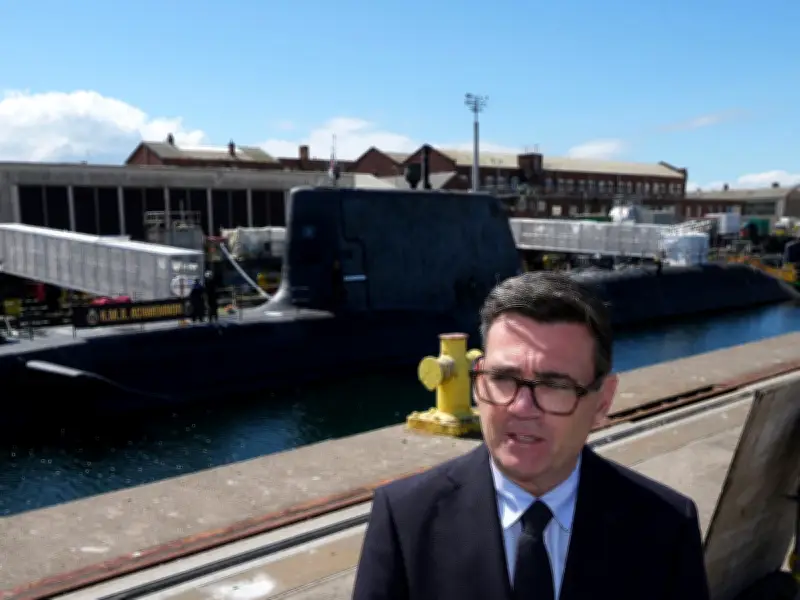
Prime Minister Andy Burnham has announced an £8.4 billion investment for the next generation of Britain's nuclear deterrent, securing the future of the HMS Dreadnought submarine programme. The new submarines, set to replace the current Vanguard Class, will be capable of launching Trident 2 D5 ballistic missiles and are scheduled to enter service by the 2030s.
Investment details and impact
Speaking during a visit to Barrow in Cumbria, Burnham said the investment secures the town's future. “It secures the future of the town, the future of Barrow. It’s that significant. This is an £8.4 billion investment, obviously bringing through the next generation of the nuclear deterrent,” he said.
Downing Street stated the move will support 18,000 extra jobs in nuclear defence by 2030 and create 22,000 additional apprentices by 2035.
Prime Minister's statement
Writing on X, Burnham said: “Keeping this country safe is the first responsibility of any government - but security isn’t just about what we build, it’s about who builds it. The submarines produced in Barrow protect us all, the jobs and apprenticeships they create change lives. This is Britain - reindustrialised.”
Defence spending commitment uncertain
The announcement comes as Defence Secretary Wes Streeting refused to guarantee the government would spend 3% of GDP on defence by 2030. Streeting said he was committed to the UK's overall goal and NATO spending pledges, but did not want to pre-empt future spending details.
Speaking to Sky News, Streeting explained: “Let’s say, for argument’s sake, I just said ‘yes, we will by 2030 meet 3%’. The inevitable next question is how will you fund it? And the trap that I’ve seen so many previous, particularly Conservative, governments fall into is setting out what they would spend or the taxes they would cut, without at the same time, saying how they would pay for it. I’m sorry but that path leads to uncertainty, a loss of market confidence, a rise in borrowing costs, so we end up paying a heavy price if you don’t have that fiscal discipline of spelling out at the same time, not just what you will spend, or the taxes you would cut, but also how you would pay for it.”




