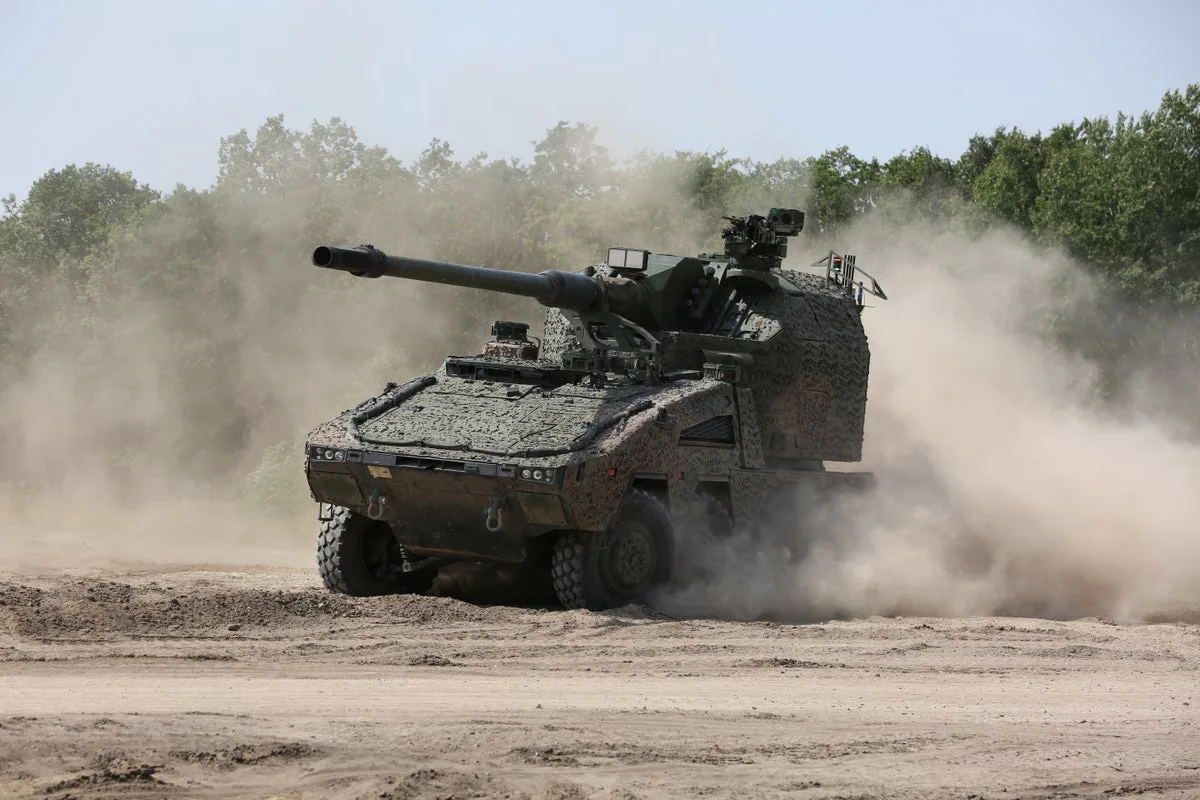
British Army to Get Remote-Controlled Guns in £1bn Deal

The British Army is set to receive remote-controlled artillery pieces as part of a £1 billion defence investment. The Ministry of Defence (MoD) has confirmed the procurement of 72 Remote-Controlled Howitzers 155mm (RCH-155), which can fire eight rounds per minute at targets up to 70 kilometres (43.5 miles) away.

Advanced Capabilities

The RCH-155 will be mounted on a BOXER chassis, allowing it to redeploy at speeds of up to 100 km/h (62 mph), making it a challenging target for adversaries. The system can be operated via a push-button interface from a crew compartment by just two soldiers, enhancing safety and efficiency on the battlefield.

British Manufacturing

The guns will be manufactured on British soil by European firms Rheinmetall and KNDS. Rheinmetall's Telford facility will produce the barrel, breech, recoil system, and trunnions using British steel from Sheffield Forgemasters. This announcement follows the Prime Minister's recent declaration of nationalising steel production. The chassis, engine, and drive train will be assembled at KNDS in Stockport. The MoD estimates that this project will support at least 500 jobs across the country.

Wide Pickt banner — collaborative shopping lists app for Telegram, phone mockup with grocery list

Strategic Importance

Deputy Chief of the General Staff, Lieutenant General Simon Hamilton, highlighted that this acquisition marks a significant milestone in replenishing Britain's artillery capabilities after providing systems to Ukraine. "Britain answered the call for aid by providing artillery systems to Ukraine at the outbreak of the war. We knew the risk – the gap in our warfighting capability – that this would present," he said.

The programme falls under the Trinity House Agreement, a UK-German collaboration established in October 2024 to strengthen European defence ties and boost industrial capacity in armoured vehicles and artillery.

Political Response

Defence Secretary John Healey MP emphasised that the investment bolsters NATO against Russian aggression. "This major investment is defence delivering for the battlefield and for Britain's economy. By securing next-generation artillery with Germany, not only are we rearming to strengthen NATO against growing Russian aggression, but also creating highly skilled jobs here in Britain," he stated. Healey added that this demonstrates how defence can drive economic growth.

First deliveries of the RCH-155 are expected in 2028. The UK government aims to increase defence spending to 2.6 per cent of GDP from 2027, following NATO allies' commitment to a 5 per cent target by 2035.

Concerns Over Defence Commitments

Former defence chiefs have voiced concerns about Britain's defence posture. Lord Stirrup warned in February that the UK risks being seen as a "paper tiger" and needs to "put our money where our mouth is." An open letter from three former defence secretaries, retired senior military chiefs, and ex-MI6 head Sir Richard Dearlove argued that Britain's actions fall "dangerously short" of meeting treaty obligations. "We are deluding ourselves if we believe Russia and our other adversaries are unaware of this," the letter stated, urging a commitment to spending 5 per cent of GDP on core defence to deter aggression and secure Britain's future.

Pickt after-article banner — collaborative shopping lists app with family illustration




