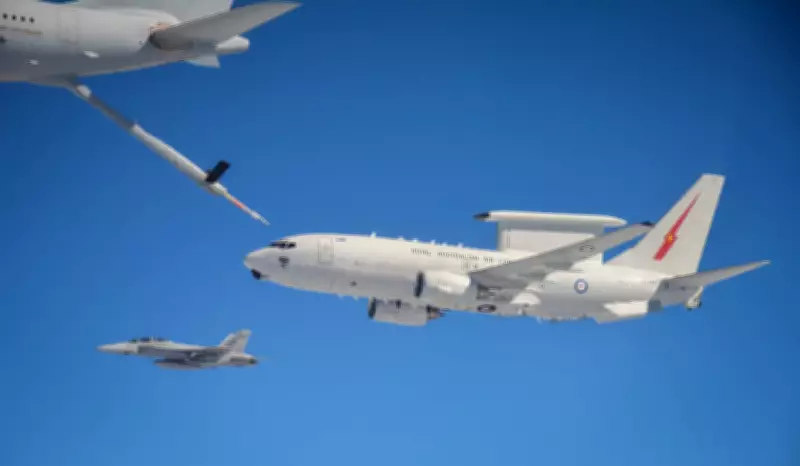
In a significant development, Australia's defence chief has publicly confirmed that operators of Australian spy planes deployed in the Middle East are not sharing critical intelligence with the United States for use in offensive military operations. This revelation underscores the strict operational protocols and national security considerations guiding Australia's involvement in the region.
Defence Boss Clarifies Intelligence-Sharing Protocols
The defence boss emphasised that while Australia maintains a close alliance with the US, the sharing of intelligence gathered by its spy planes is governed by stringent rules. These rules explicitly prohibit the use of such data for offensive actions, ensuring that Australia's contributions are aligned with its defence policies and international commitments.
Implications for US-Australia Military Cooperation
This policy has potential implications for US-Australia military cooperation in the Middle East, where both nations are engaged in various security initiatives. By withholding intelligence for offensive purposes, Australia aims to maintain a balanced approach, focusing on defensive and surveillance roles rather than direct combat involvement.

The decision reflects broader strategic considerations, including the need to protect sensitive sources and methods, as well as to avoid escalation in volatile regions. Defence analysts note that this stance could influence future joint operations and intelligence-sharing agreements between the two allies.
Background on Australian Spy Plane Operations
Australian spy planes, such as the P-8A Poseidon, have been actively deployed in the Middle East for surveillance and reconnaissance missions. These aircraft play a crucial role in monitoring maritime and aerial activities, contributing to regional stability and counter-terrorism efforts.
The defence boss's statement highlights the careful calibration of Australia's military engagements, ensuring that its actions are consistent with national interests and legal frameworks. This approach is part of a wider trend among allies to define clear boundaries in intelligence collaboration, especially in conflict zones.
As geopolitical dynamics evolve, the transparency around these protocols may foster greater trust and coordination among international partners, while safeguarding Australia's autonomous decision-making in defence matters.