News that yet more expanse of beautiful countryside is set to be blighted by thousands of acres of solar farms has me throwing up my hands in despair.
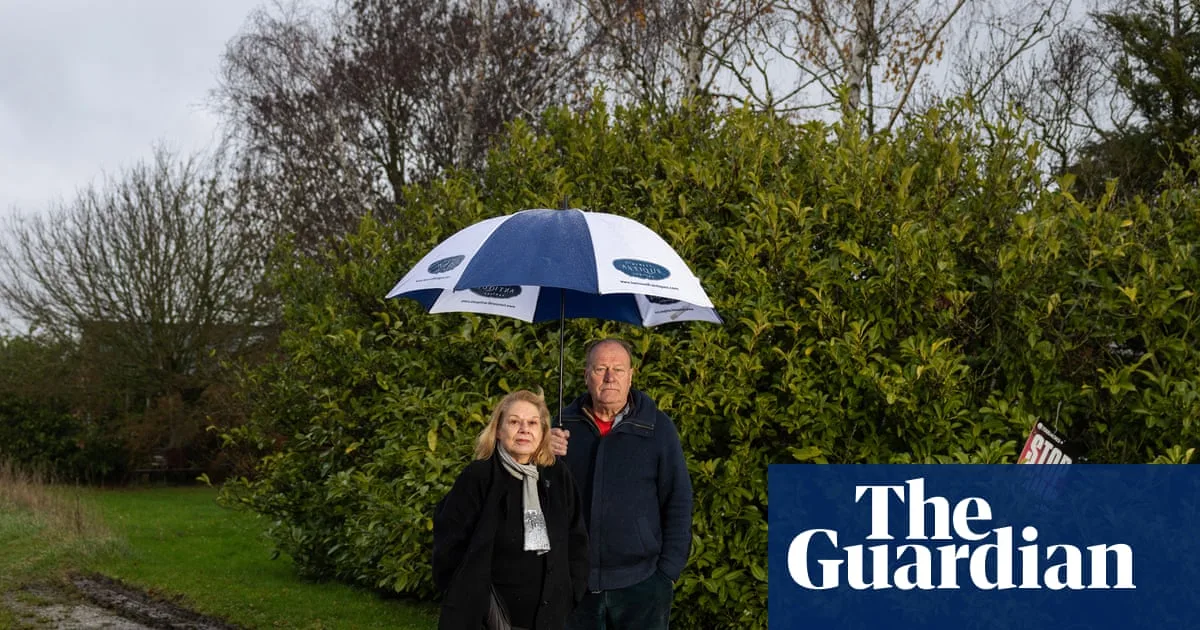
Residents in Burnhope, County Durham, will feel no less frustrated with a planning system that paved the way for 110,640 solar panels to be installed across 14 fields with little local scrutiny.
Ministers have relaxed planning rules so much that judicial reviews will not be permitted on 'all but human rights grounds'. It is becoming a free-for-all.
Of course, I'm horrified at the prospect of these hideous structures carpeting our fields. But my anger goes much deeper than that.
It's yet another kick in the teeth for the agricultural sector – for many of these solar farms are being sited on valuable fertile land, which is desperately needed for food production.
For example, Sunnica Energy Farm on the Suffolk-Cambridgeshire border, which got planning approval in 2024, will devour 2,500 acres (900 football pitches). Half is prime agricultural land, so that's 1,250 acres taken out of service.
It's nonsensical but, I'm afraid, entirely symptomatic of the way this government views farmers – something I saw time and again as President of the National Farmers' Union from 2018 to 2024.
How can it possibly make sense that Ed Miliband can override local planners and give permission to an eyesore solar farm (whose lithium batteries have already proved to be a massive fire risk), yet a farmer must jump through endless hoops at huge cost, simply to extend a building like a chicken shed to meet the requirements for higher welfare food production?
Energy Secretary Ed Miliband, who is facing backlash for plans to build solar farms, was pictured leaving a Cabinet meeting at 10 Downing Street last week.
Yet more expanse of beautiful countryside is set to be blighted by thousands of acres of solar farms, as ministers relax planning rules so much that judicial reviews will not be permitted on 'all but human rights grounds'.
It is utter madness and means we suck in more imports produced to lower standards.
It's the same with reservoirs. It's patently obvious farmers need water to irrigate crops. Small on-farm reservoirs will deliver benefits to the rural area and help lower the costs of food production.
But I have countless horror stories of farmers spending up to five years battling through red tape to try to get permission to build a reservoir and then being turned down at the last hurdle.
On top of the time and energy expended, they have also wasted thousands of pounds on everything from legal fees to expert advice.
Anyone who's watched Jeremy Clarkson's brilliant TV series, Clarkson's Farm, will have an inkling of the bureaucratic nightmares we endure as standard.
Read More Ed Miliband's wind turbines and solar farms ARE bad for environment, Government privately admits.
Watching Jeremy battle West Oxfordshire District Council over simple things like the colour he can paint the roof of his farm shop may be entertaining, but, if you're a farmer, it's hard not to want to weep as you watch.
The distressing thing is that farmers have much to offer a community. I recently visited a cheesemaker in the South West who is exporting green biogas to power more than 6,000 local houses.
Farming is a win-win for us all: affordable food, fuel, fibre, water and energy, while maintaining the patchwork quilt countryside we all adore.
As I point out in my new book, Harvest, the stark truth is that we are running out of time to make simple but vital changes to ensure we can produce the food we need. Relying on imports, as we've long done, is dangerously foolhardy.
Global crises – from the war in Ukraine to the closure of the Strait of Hormuz – must teach us how essential it is to build our domestic food resilience.
We have already faced food rationing. Back in 2023, we produced a billion fewer eggs after gas prices shot up, so farmers had no choice but to stop production and we imported more eggs.
Jeremy Clarkson battled with West Oxfordshire District Council on his TV series, Clarkson's Farm, over simple things like the colour he can paint the roof of his farm shop.
Former president of the National Farmers Union Minette Batters spoke at the National Farmers Union conference in Birmingham in 2023.
We should be producing more food here, as it keeps more money within the UK economy, provides jobs and economic growth.
Alarmingly, UK farms now produce less than 65 per cent of food bought domestically, down from 78 per cent in 1984.
Costs for farmers are expected to be over 30 per cent higher next year than five years ago, and the £2.4 billion farming budget for England has all but flatlined since 2007.
We need the Government to work with us, not tie our hands behind our backs.
Put simply, with 70 million people to feed, the nation's food security should be taken every bit as seriously as our defence needs.
Planning permission should be fast-tracked to allow new buildings and expansion of existing ones, new reservoirs on farms, solar on rooftops (not fertile fields) and small turbines to power local communities and provide affordable energy for food production.
The sector needs a Secretary of State for Food (not a minister) who sits in Cabinet, backed by the best commercial advice on how to quickly position agriculture as a frontier industry.
I'm convinced there is massive goodwill towards farmers, as seen in the public's outcry at Labour's attempt to tax small family farms out of existence.
It's time that the Government wakes up, and lets us get on with the job of keeping Britain fed.
Harvest by Minette Batters is out now (Penguin, £22).