
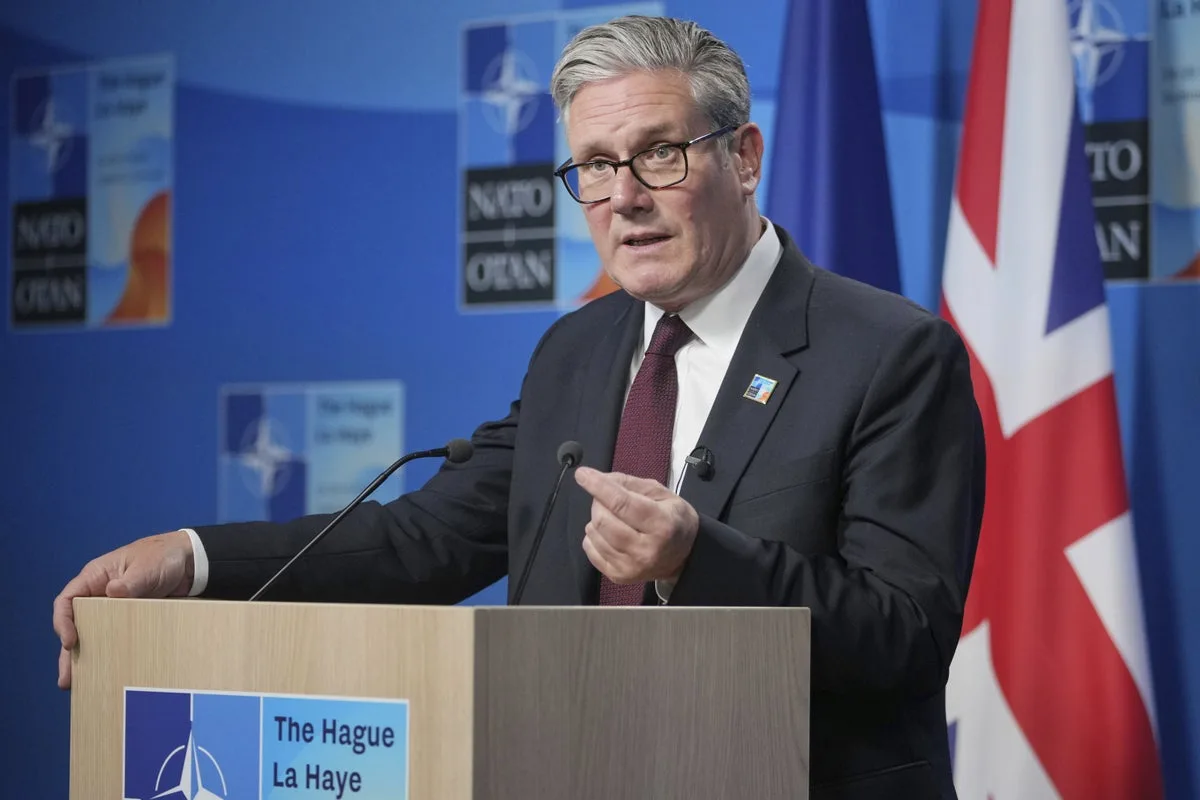
Nato leaders have agreed to a historic increase in defence spending to 5 per cent of GDP, with US President Donald Trump hailed as the driving force behind the uplift. The new pledge, described by Trump as a “monumental win” for the US, Europe, and “Western civilisation”, includes 3.5 per cent of GDP on core defence by 2035 and 1.5 per cent on security and resilience measures.
Nato Secretary General Mark Rutte praised Trump for his role, likening him to a “daddy” figure in the context of the Iran-Israel conflict. Trump had likened the fighting between Iran and Israel to children quarrelling, saying: “They fight like hell, you can’t stop them. Let them fight for about two to three minutes, then it’s easy to stop them.” Rutte added: “And then Daddy has to sometimes use strong language to get [them to] stop.”
Prime Minister Sir Keir Starmer said the summit sent a “decisive message to aggressors”. He announced the purchase of a dozen new nuclear-capable F-35A fighter jets, reintroducing a nuclear role for the Royal Air Force for the first time since the Cold War. Britain is on track to spend 4.1 per cent of GDP on defence by 2027.
The summit’s closing statement did not explicitly condemn Russia’s war in Ukraine, instead referring to “the long-term threat posed by Russia to Euro-Atlantic security”. Sir Keir insisted his position on Russia had not changed, saying: “Now is the time to push again, to get Putin to the table for the unconditional ceasefire.”
Trump reaffirmed his commitment to Nato’s Article 5 collective defence, stating: “I stand with it; that’s why I’m here.” He also said he would consider supplying Ukraine with more Patriot surface-to-air missiles. Britain announced plans to provide 350 air defence missiles to Kyiv, funded by £70m from interest on seized Russian assets.




