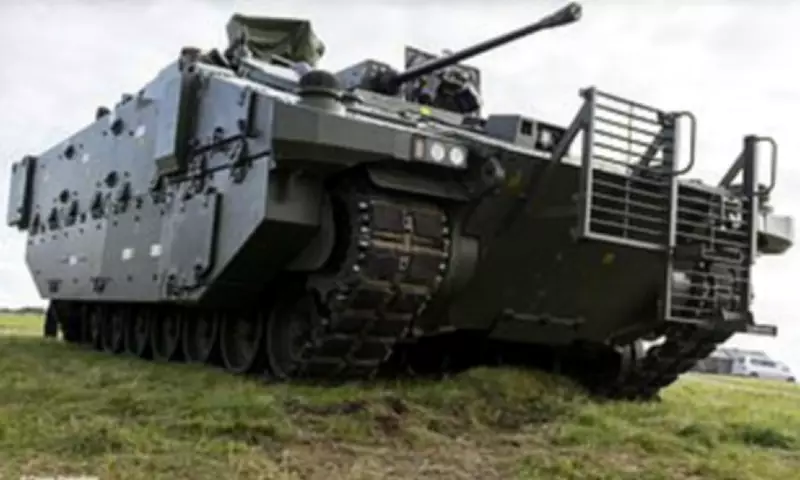
Trials of the British Army’s £6.3 billion Ajax armoured vehicle are set to resume, despite an exclusive report by the Mail on Sunday revealing that troops face the threat of carbon monoxide poisoning. The budget-busting Ajax project has been beset with technical issues, causing scores of soldiers to suffer injuries.
Classified Report Reveals Concerns
The Mail on Sunday’s exclusive included a classified report detailing the latest litany of concerns about Ajax, including missing air filters that could lead to ‘cold exposure and possible fume or CO/CO2 exposure’. These issues arose during Exercise Titan Storm, staged in Hampshire in November last year.
Minister’s Commitment to Safety
Today, Minister for Defence Readiness Luke Pollard promised to ‘proceed cautiously’ in light of the latest issues, which cannot be attributed to a single cause. More than 30 soldiers fell ill following those tests, making the resumption of trials a major move for ministers. The Ajax armoured vehicle, pictured a decade ago, is still not fully in service and was supposed to offer the Army a step-change in capability. Ajax has suffered so many problems that soldiers fear it is jinxed.

Investigation Findings
The decision to resume trials is based on the findings of the Army Safety Investigation Team (ASIT), which the Mail acquired from defence sources. In his statement to Parliament this morning, Pollard downplayed clear warnings about carbon monoxide (CO) and carbon dioxide (CO2), referring instead to ‘air quality’. Inhaling carbon monoxide is dangerous because it prevents blood from carrying oxygen, effectively starving vital organs like the brain and heart. As CO2 is odourless and colourless, it is often called the ‘silent killer’. Low-level symptoms include headaches, dizziness, and gastrointestinal issues.
Pollard stated: ‘The ASIT’s findings indicate no single causal mechanism of the symptoms reported by our soldiers but rather a combination of multiple factors. Instead, these symptoms were likely the result of… technical issues related to the platform conditions at the time of the exercise – such as incorrect track tension and loose or missing engine deck bolts – alongside environmental and human factors, including variability in training and experience, cold exposure and air quality within the Ajax vehicle itself. All personnel have returned to normal duties following Exercise Titan Storm. The majority of soldiers who felt ill during this exercise suffered from temporary symptoms and with the ASIT report concluding that there was no single causal factor, I have now agreed to restart the acceptance of vehicles from General Dynamics. However, I accept that the experience for our soldiers using Ajax has not been good enough and that is not acceptable. I have implemented strict new controls on the reintroduction of the Ajax vehicles that are focused on providing a significantly improved user experience.’
Vehicle Improvements and Future Plans
A batch of 23 vehicles crewed by troops who suffered illness are being held back before being reintroduced to Army regiments. The second phase of Ajax delivery will see improvements relating to the use of air filtration, crew compartment heating, and the electrical power generation system. Pollard added: ‘Any return to training will be controlled with a crawl-walk-run staged progression ensuring safety is paramount throughout. We know we have more to do to rebuild confidence in the vehicle and we do not underestimate the work still ahead. The above commitments will be met within the existing programme scope and financial envelope.’
Previously, Ajax has caused injuries including hearing loss and joint damage due to vibrations. The troubled vehicle is manufactured in Merthyr Tydfil, South Wales. The future of Ajax has also caused huge rows between top brass, some of whom want to scrap the vehicle. Ajax has already cost taxpayers billions of pounds, and the Ministry of Defence is expected to make further payments based on contractual obligations.

Political Reactions
Today, Conservative Defence Minister Mark Francois said: ‘Today’s written statement raises more questions than answers. The safety of our troops is paramount but the statement is vague about worrying concerns about the potential adverse effect of CO2 on Ajax crews. We have been saying for months that ministers must finally ‘fix Ajax or fail it’. This vague statement does not confirm they have done either.’
The Army is due to receive 589 Ajax vehicles to form the backbone of its expanded armour strike brigades. The first 40-ton vehicles should have entered service back in 2011. The problems prompted former Conservative Defence Secretary Ben Wallace to call Ajax ‘a ridiculous project’. The MOD was supposed to issue a statement regarding Ajax last week, but plans were changed after the report reached Whitehall.
Manufacturer’s Response
Today, manufacturers General Dynamics UK welcomed the resumption of tests. A spokesperson said: ‘GD UK has confidence in the performance and protection Ajax is designed to provide. It is the world’s most advanced, fully digitised, armoured fighting vehicle and ensures soldiers see and understand the battlefield faster than any adversary.’