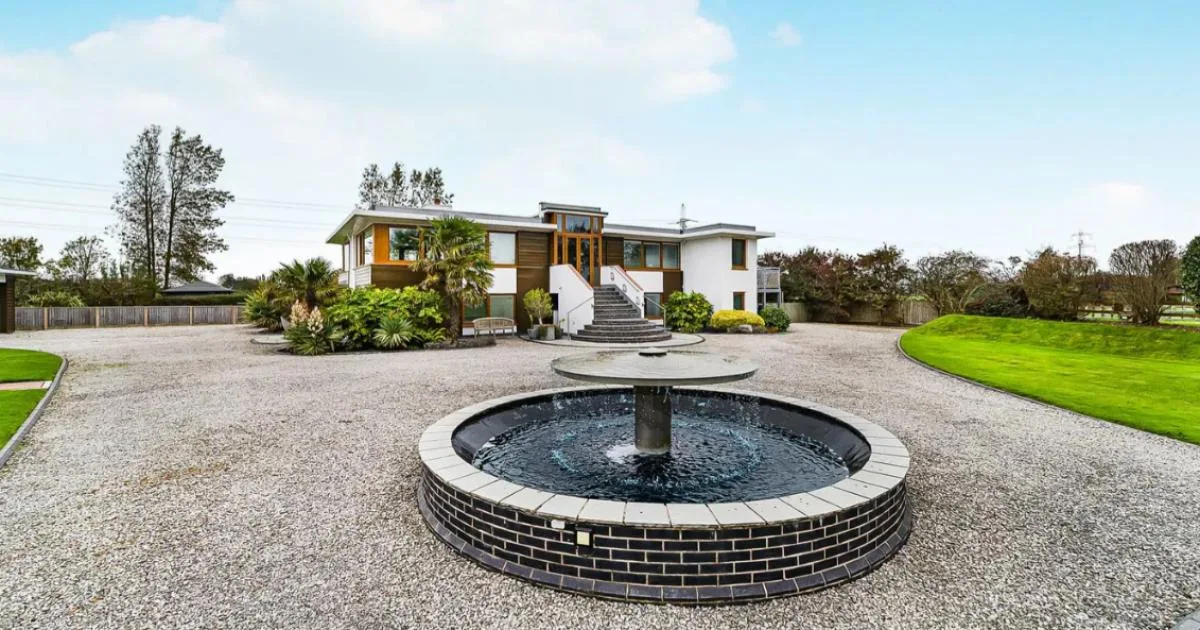
A contemporary riverside home featuring a heated swimming pool and panoramic countryside views has been listed for sale at £1.2 million. The property, named River View, is located along Kiln Lane in Hambleton, Poulton-le-Fylde, and overlooks the River Wyre on 2.6 acres of private land.
Spanning 5,140 square feet, the home offers four ensuite bedrooms, a detached leisure suite with a heated pool, and extensive outdoor terraces. The first-floor living area includes a lounge that stretches the full length of the house, providing views across the river and open countryside through triple-aspect glazing. A central contemporary fireplace and full-height internal glazing enhance the modern design, while underfloor heating and air conditioning ensure year-round comfort.
The kitchen, crafted by Carl Joseph, features bespoke solid oak cabinetry, Corian work surfaces, and an integrated Corian dining table. All four bedrooms on the ground floor come with en-suite shower rooms and bespoke storage, with the principal suite including fitted furniture by Langley’s of Bolton and a ceiling fan.
The detached leisure suite houses a heated swimming pool with sports jets beneath pine-clad ceilings, creating a warm, natural atmosphere. Full-height sliding doors open onto a sun terrace, and the pool house also includes a shower and changing room, a living and dining area with a kitchenette, and a large storeroom.
The landscaped grounds, designed by a local craftsman, feature a natural pond, fire pit, and covered alfresco dining space. Lawn terraces offer seating areas with views across open fields and the river. A quadruple garage and in-and-out driveway complete the exterior. The property sits within three title deeds, with additional land acquired in 2015.
Located in the quiet village of Hambleton, River View is a short drive from Poulton-le-Fylde, with nearby amenities including Wardley’s Yacht Club, Hambleton Tennis and Sports Club, and several golf courses. Strong road links via the A588 and M55, and rail connections from Poulton-le-Fylde station to Blackpool, Preston, and beyond, provide easy access. Liverpool and Manchester city centres are approximately 70 and 75 minutes away by car, respectively. For families, Hambleton Primary Academy, with an Outstanding Ofsted rating, is within walking distance.