English Councils to Receive New Guidance on Designing Safer Streets for Women and Girls
For the first time, English councils will receive official guidance on how to create streets that are safer for women and girls. This initiative aims to tackle what ministers describe as systemic unfairness in people's ability to walk around their own neighbourhoods without fear or anxiety.
Key Measures in the New Guidance
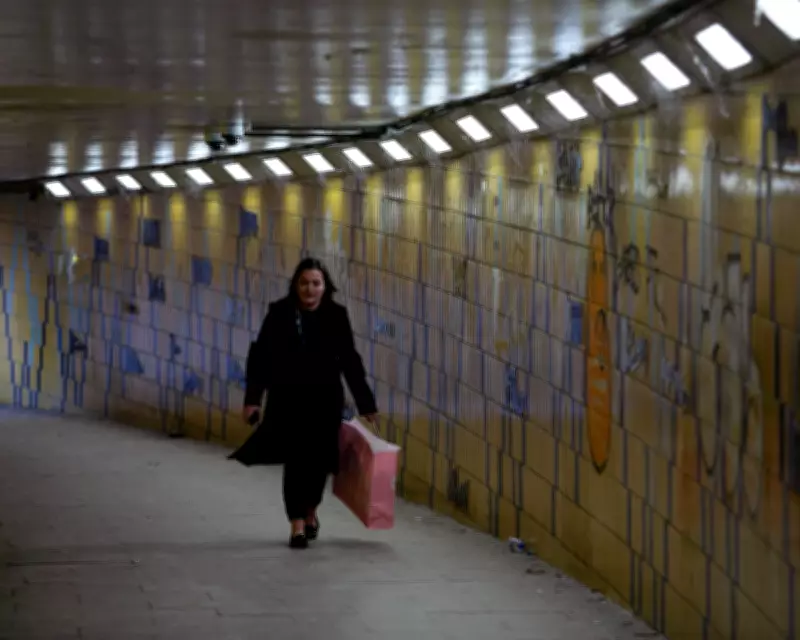
The guidance, currently being finalised by Active Travel England (ATE), is expected to include practical measures such as improved street lighting, enhanced CCTV coverage, and the replacement of dark underpasses with street-level crossings. These changes are designed to create environments where women and girls feel more secure during their daily travels.
Officials are also examining successful initiatives from other countries, including schemes in Spain and Sweden that allow women to request bus drivers to drop them between stops at night. This approach minimises walking time in dark areas and could prove particularly beneficial in rural regions where public transport options are limited.

Polling Reveals Widespread Safety Concerns
New polling commissioned by ATE and conducted by YouGov reveals the extent of safety concerns among women. Nearly three-quarters of women reported changing their routes during winter months to avoid walking in dark places, while 88% expressed feeling unsafe walking alone after dark.
The survey further found that 57% of women and girls have opted for alternative transport methods such as taxis or being picked up by car due to safety worries, rather than walking to their destinations.
Ministerial Perspectives on the Initiative
Local Transport Minister Lilian Greenwood described the guidance as addressing both a fundamental fairness issue and a means to improve physical activity levels among women and girls, which traditionally lag behind those of men and boys.
"For too many people in this country, walking is not simple or straightforward," Greenwood stated in a prepared speech for a Wednesday conference. "For too many, particularly women and girls, it comes with a calculation – a constant, exhausting mental calculation – about safety, lighting, routes and risk. Rather than get excited about the destination, too many are forced to fret about the journey."
Home Office Minister Jess Phillips, whose portfolio includes safeguarding and violence against women and girls, emphasised that the guidance aims to shift responsibility away from women and toward the spaces and behaviours that create risk.
"Women and girls deserve to feel safe simply going about their lives, whether that is walking down the street, travelling, or using public spaces after dark," Phillips added.
Implementation and Funding
The guidance will be published later this year alongside comprehensive training sessions for council officials. Similar to previous ATE guidance on cycling infrastructure, councils will have the opportunity to bid for central government funding to implement improvements. However, funding approval will be contingent on schemes meeting specific quality standards.
Chris Boardman, Commissioner for Active Travel England, explained that the guidance will be developed not only through established best practices like improved lighting but also by listening to and acting on lived experiences of women and girls.
"It's a terrible thing that women and girls don't feel they have the same freedoms to simply walk in their neighbourhood as men and boys," Boardman remarked. "Everyone should feel safe getting around, and our job is to help make that happen."
Addressing Systemic Barriers
In her conference speech, Greenwood characterised helping people become more physically active through safe transport as "a political no-brainer" that benefits both public health and the economy.
"Yet all this remains out of reach if people don't feel safe on our streets," she continued. "The polling is stark. Almost nine in 10 of female respondents reported feeling unsafe when walking alone after dark. These are not small numbers. Nor is this a marginal issue. This is a systemic barrier preventing millions of women and girls from making journeys they want and need to make."

Context and Previous Criticism
This new initiative follows earlier criticism directed at the government's national planning guidelines for England, which failed to mention women's and girls' safety. The Housing and Communities Department, responsible for developing that framework, had previously stated uncertainty about why planning and women's safety should be connected.
The ATE guidance specifically aims to "introduce how looking at active travel through the lens of gender can help create safer and more inclusive places." This comprehensive approach will address not only improvements to quieter routes with better lighting but also enhancements to busier roads that already feature CCTV and regular pedestrian traffic.