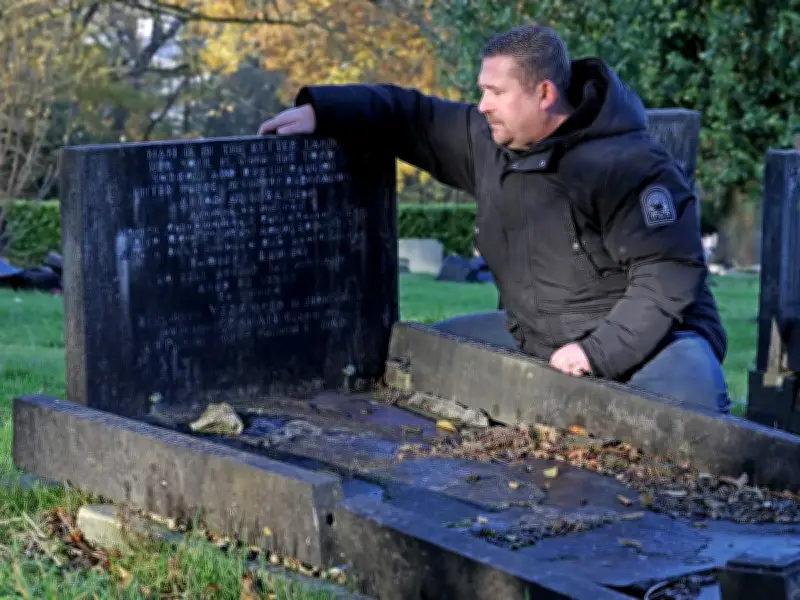
A man has criticised the 'wall of bureaucratic absurdity' he faces in trying to repair a grave honouring a young soldier who died in the Second World War. Christopher Thompson discovered the family grave in Dukinfield Cemetery, Tameside, while researching his ancestry. It honours his great uncle, Lance Sergeant Glen Bailey, a soldier from Tameside who was killed in Burma during World War II at the age of 23 and is buried thousands of miles away.
Chris found an old newspaper cutting reporting his death, saying he had been killed in action after his Ashton Territorials were mobilised in 1939 and drafted abroad in May 1942. The notice said: "He leaves a widow and one child which he has never seen." Their names were Dorothy and daughter Glenise.
Ownership dispute over family grave
The family grave was purchased by Glen's father and Chris' great grandfather Thomas Bailey in 1920, who was laid to rest there in 1970, aged 83. It is also the final resting place of Thomas' wife Alice Ann Bailey, 80, their infant daughter Vera, who died at 11 months old, and their infant grandson Graham, who died at just a day old.
Having found the grave in disrepair, Chris wanted to take ownership and pay for the repair work, which he has been told will cost between £2,000 and £3,000. But he says the process has been made 'needlessly difficult' by Tameside Council, which is blocking the transfer of ownership because of 'a 1988 technicality involving strangers'.
Legal technicality blocks transfer
The issue stems from the fact that when Thomas Bailey died, letters of administration for his estate were granted to one of his 11 children, his daughter Ermine Drummond, who was a widow at the time. Because of that, the grave rights passed exclusively down Ermine's line rather than to Thomas Bailey's surviving children or blood descendants.
Chris traced Ermine's life through official civil registration and probate records and discovered that she later married a man named Harold Henry Clarke. Because they had no children together, when she died in 1988, the grave ownership passed automatically to him. But he died a year later leaving no will or grant of probate.
Tameside Bereavement Services is now asking Chris to identify and obtain written consent from any surviving children of Harold Henry Clarke, who have no connection to the grave, before it can be transferred to him.
Council response and next steps
"I'm basically being forced to ask non-blood strangers for permission," said Chris, who lives in Ashton. He provided the council with official government probate register captures proving neither Ermine nor Harold left a will, alongside official marriage and death entries. Despite this proof, he was told the grave ownership cannot be transferred unless he identifies and obtains written consent from any surviving children of Harold Henry Clarke.
The 51-year-old father-of-two said he has now been told by the council that he can repair the grave, but he is determined to bring it back under his family's ownership, something he says the authority could easily do with a standard Statutory Declaration with an indemnity clause.
"I don't want to just repair it and then in 50 years time there's nobody to look after it again," he said. "If it's put in my name then it means I can pass it down and it's back in the blood family."
Tameside Council says it is acting in accordance with the Local Authorities' Cemeteries Order 1977. A spokesperson for the authority said: "To support the family's request, we have proposed a Statutory Declaration to enable the memorial to be repaired and cleaned. Unfortunately, we can't transfer full ownership rights of a grave without appropriate legal authority."