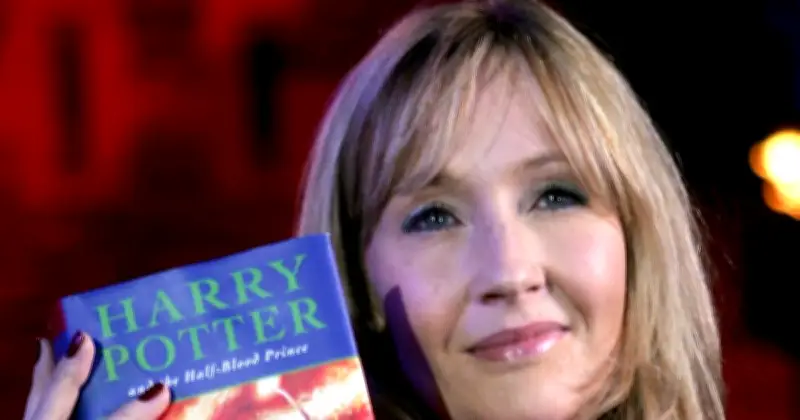
A publishing veteran has warned that Harry Potter might never make it into print in today's market, as children's books are being simplified for a generation raised on short-form social media. Robin Bennett, an author and former commercial director of Firefly Press, fears the next JK Rowling could "drown among a sea of drivel" as publishers prioritise short, simple stories for kids obsessed with social media.
Declining book lengths and reading enjoyment
Last year, an analysis of Goodreads' top-rated children's books found their average length has plunged from 193 pages in the 1930s to just 61 today. A National Literacy Trust survey also shows children's enjoyment of reading at a 20-year low.
With 35 years' industry experience, Bennett said younger authors are submitting shorter manuscripts with simpler plots and less challenging language, with publishers happy to go along with the 'less-demanding' trend.
Risk of losing literary greats
Writing in The European, Bennett warned that Britain risks losing its next Tolkien, Roald Dahl or JK Rowling, with Harry Potter books boasting between 223 pages (The Philosopher's Stone) to 870 pages (The Deathly Hallows), as publishers turn their backs on the kind of books that made them household names.
He explained: "Authors are under pressure to write shorter, simpler children's and young adult fiction to cater for readers raised on scrolling videos and bite-sized digital content. Publishers, meanwhile, are producing too many lower-quality books, with shorter windows for marketing and endlessly replicated themes, all to the detriment of originality."
Bennett questioned whether the Harry Potter series, with its lengthy chapters, rich vocabulary, complex plots and hundreds of pages demanding sustained concentration, would find a publisher in today's market. He said: "I'm not sure it would, however brilliant the writing or extraordinary the story."
Impact of technology on reading habits
Education researchers and teachers have linked shrinking book lengths to the rise of smartphones, video games, and short-form video platforms like TikTok, alongside post-lockdown drops in reading stamina. Modern children's publishing leans heavily on visual storytelling, such as graphic novels, illustrated chapter books, and more spacious page layouts, to hook reluctant readers.
Fewer children read recreationally than in previous decades, pushing publishers toward shorter, faster-paced stories that feel less intimidating. Research last year from Kapow Primary, a lesson planning resource for teachers, said children's attention spans were "shorter than ever" after the Covid lockdowns of 2020. Another analysis showed TikTok's most popular videos are between 21 and 34 seconds.
Anthony Horowitz caused irritation among some of his fellow authors when he said his Alex Rider series, which mostly run to 300-plus pages per book, would be too long to capture the dwindling attention spans of today's youth.
Bennett, himself an established children's author and writer of the bestselling novel Dreadnought, is calling on publishers to champion more ambitious books and encourage children to tackle tougher reads. He added: "It is becoming a vicious circle. Readers grow accustomed to shorter, simpler material, publishers produce more of it, and writers increasingly adapt their work to what they believe the market will accept. We should be encouraging children to tackle more demanding books, discover unfamiliar words and appreciate the richness of language."