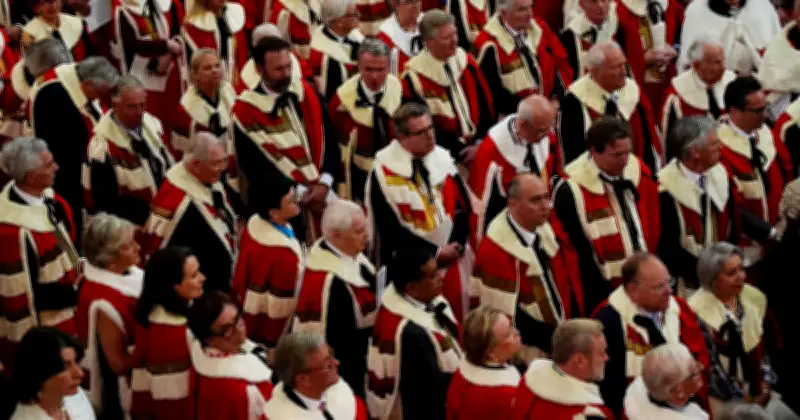
More than 260 members of the House of Lords hold shareholdings worth in excess of £100,000, according to the largest dataset compiled of peers' financial interests, prompting fresh calls for reform of the upper chamber.
Researchers at the University of Birmingham gathered information on peers' shareholdings, paid directorships, professional and educational backgrounds, rental properties, land and farm holdings, and political activities. The findings show the chamber contains some of the best connected, rewarded and paid people in the country.
Lucrative outside roles
The data reveals that more than 250 peers hold paid company directorships. Although few publicly disclose their exact pay, those who do show how lucrative the positions can be. Several earned between £2,100 and £2,500 a month for between four and seven hours of work, receiving roughly £418 per hour. Another declared £108,000 per annum for 18 hours of work a month, or £500 per hour.
Peers sit on the boards of major British companies and financial institutions, including Taylor Wimpey, JPMorgan Investment Trust, British Airways, Coca-Cola Europe and Lazard & Co. Members of the Lords are also free to work as advisers and consultants to overseas companies and foreign governments.
One peer declared receiving between £100,001 and £200,000 for work for an African bank. Another received £150,000 for membership of an advisory board in the Gulf. A third was paid £284,000 as an adviser to a Middle Eastern finance ministry. These external earnings come on top of the £371 daily allowance peers can claim for attending the House of Lords.
Concerns over growing wealth
The research found that more than 92% of peers who already held directorships when they entered the Lords had increased their number of paid roles after joining the chamber. The total number of directorships held by Lords had doubled.
The author of the research, Dr Huw Macartney, Associate Professor in Political Economy at the University of Birmingham, argues that the wealthy are appointed and grow exponentially wealthier after their appointment. He notes that the definition of corruption is the abuse of public power for personal gain at the expense of the public interest, and says reform is needed to avoid this perception of the institutions.
Calls for reform
Macartney argues that a peerage should be a public responsibility, not a passport to even greater private wealth. He proposes tighter limits on the number of paid outside jobs peers can hold while serving in Parliament, and suggests fixed terms for the Lords rather than lifetime appointments.
He also notes that the majority of the extremely wealthy peers have been appointed since 2010 under successive Conservative governments, and says far greater responsibility for appointments should be placed in the hands of the independent House of Lords Appointments Commission to prevent cronyism.
Finally, he calls for greater transparency over peers' financial interests, with shareholdings disclosed in full and peers required to declare exactly how much they receive from outside employment. He concludes that removing the hereditary peers has tackled birthright privilege, but replacing the aristocracy with a new 'assetocracy' is not democratisation or modernisation, and reform cannot stop here.