
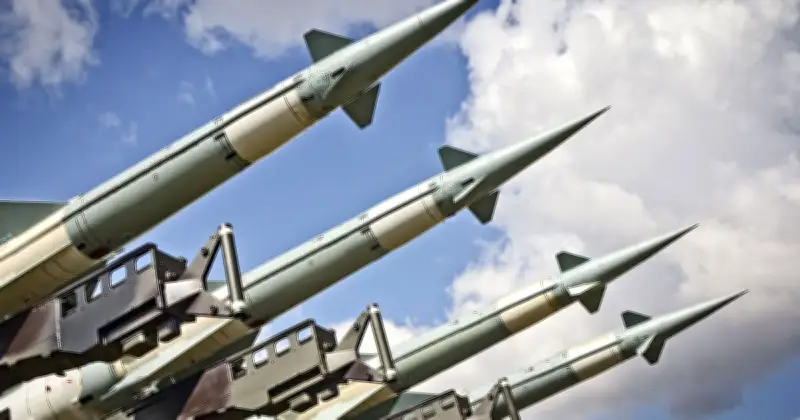
Lithuania has agreed to remove a constitutional provision prohibiting the deployment of nuclear weapons in the country, a move announced by President Gitanas Nausėda following a meeting with leaders of parliamentary factions. The current Article 137 of the Constitution states that weapons of mass destruction and military bases of foreign states are not allowed on Lithuanian territory. Nausėda called this article "outdated," asserting it could not be reformed and must be completely scrapped.
President Nausėda's Statement
"Opinions practically coincided, the leaders of almost all factions expressed the view that Article 137 has become outdated and that it does not even need to be changed, but rather should be deleted," Nausėda said. He noted that opinions differed on the method, with a representative of Nemunas Aušra suggesting a referendum, which would be a longer path. Nausėda argued that since members of the Seimas (parliament) received a mandate from voters, they could make the decision directly.
Alignment with NATO Allies
The Lithuanian President highlighted that his country was one of the last remaining NATO allies with such a ban, pointing to Finland's recent rule change. Finland removed its ban on nuclear weapons after Parliament approved amendments to the Nuclear Energy Act and the Criminal Code, which previously prohibited the import, manufacture, possession, and detonation of nuclear explosives. The vote was 125-61 in favor. Under the new regulations, nuclear explosives will be regulated only in the Criminal Code, determining which nuclear weapons can be imported for military, NATO, or defence cooperation purposes.
Concerns Over Russia Threat
Nausėda emphasized the importance of alignment, stating, "Finland, whose ban was enshrined not in the Constitution but in law, recently lifted such a ban, and today finds itself in a kind of grey zone within NATO itself. It would be really disappointing if we were a weak link or a grey area within NATO." This decision comes amid growing concerns in Lithuania over the threat from Russia. Last month, Nausėda and the prime minister were forced to seek refuge in underground bunkers after an unmanned aircraft entered Lithuanian airspace. Officials subsequently reached out to Ukrainian defence manufacturers and civil protection specialists to discuss procuring bomb shelters, according to the head of a leading Ukrainian defence industry body speaking to POLITICO.




