

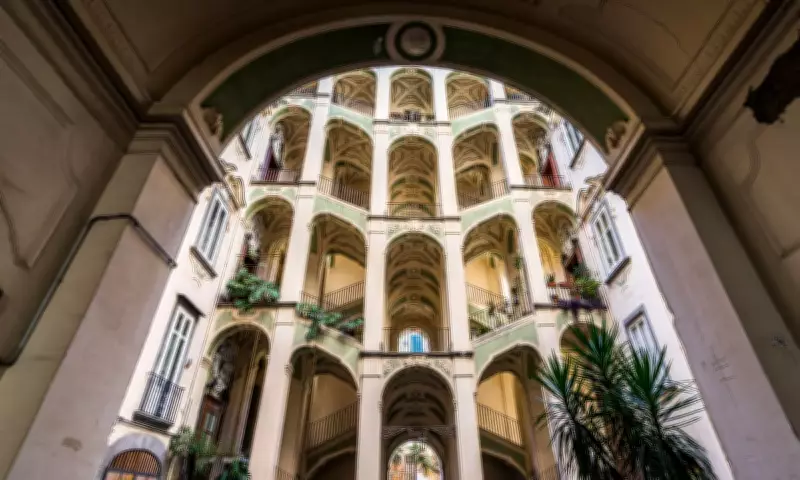
Once overshadowed by crime and decay, the historic Rione Sanità in Naples is experiencing a remarkable revival driven by its residents. This working-class district, perched on a hill above the old town, boasts a rich history dating back to the 17th century when Spanish viceroys favoured its cleaner air. Today, community-led initiatives have transformed it into a vibrant hub of local commerce and culture.
Why Go Now
Enter Rione Sanità via a bridge elevator, descending into cobblestoned streets alive with mopeds and flanked by opulent 18th-century palazzi. Behind grand doorways, courtyards host bakers, butchers, cobblers, and even the occasional contraband cigarette vendor. The area’s name, meaning 'healthy district,' reflects its historical reputation for cleanliness, as rainfall washed debris downhill. In the 18th century, Spanish viceroys built vast houses here, such as Palazzo dello Spagnolo and Palazzo San Felice, as the court passed through to Capodimonte. Business thrived until Napoleon built an overpass in the early 19th century, which eventually suffocated the area.
Decades of gang wars and a tarnished reputation spurred residents to form associations like Napoli in Vita, aiming to open up the area, support local businesses, and create jobs. The result is a neighbourhood renaissance led by the community, now a model for the city amid mass tourism.

Where to Eat and Drink
Local pizzerias are a must. La Sanità was where Sophia Loren kneaded pizza dough in Vittorio De Sica’s film L’oro di Napoli. Isabella De Cham runs the city’s first all-female fried pizza spot, serving tiny montanare pizzas loaded with cheese, vegetables, and ham. Pizzeria Oliva da Carla e Salvatore offers views of the majolica-clad basilica, while Concettina ai Tre Santi draws food pilgrims for head chef Ciro Oliva’s deconstructed pizza, using top local producers. Pair it with Vesuvian wine at Antica Cantina Sepe on Via Vergini, a generations-old fixture hosting community events and keeping prices affordable.
Cultural Experiences
La Sanità has as much to see below ground as above. In Hellenistic times, it was a sacred burial ground; beneath soft tufo stone lies a warren of tunnels and chambers, now housing garages and workshops like Fonderia Mercogliano, which casts religious objects. The San Gennaro and San Gaudioso catacombs, run by social cooperative La Paranza, employ local youth and offer tours showing ancient burial practices. The highlight is the Ipogeo dei Cristallini, a Greco-Roman crypt recently uncovered beneath a 17th-century apartment block, featuring a perfectly intact relief of Medusa.
Where to Shop
Bakeries set La Sanità apart, each with its speciality. Panificio Coppola Antonio offers taralli (crunchy savoury biscuits with fennel and black pepper), Pasticceria Mignone serves moist rum babà, and Pasticceria Poppella is famous for fiocchi di neve (snowflakes), small brioche filled with cream and ricotta.
Don’t Miss
Artisans and artists have long worked in courtyards and hidden stairways. Omega Guanti has hand-stitched leather gloves since the Bourbon period for brands like Dior. Sculptor Michele Iodice works from a studio dug into tufo stone, a masterpiece itself. Atelier Alifuoco, a shared studio space, hosts the next generation of city artists.
Where to Stay
Casa D’Anna ai Cristallini (doubles from €220) feels like a sumptuous private home with art-lined walls and antique furniture. Atelier Inès (doubles from €265), run by artist Vincenzo Oste and his wife Inès Sellami, incorporates art and design in a restored palazzo with a leafy courtyard.






