
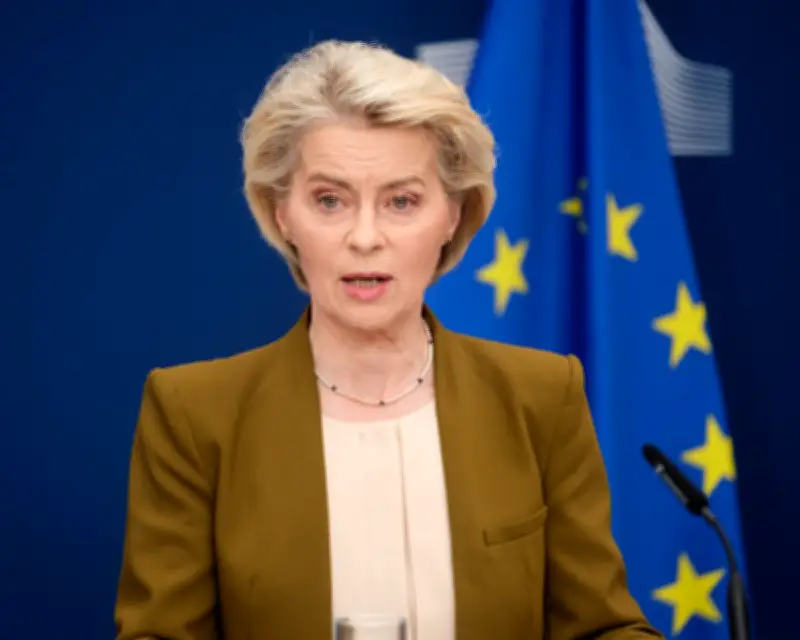
The European Union has proposed a ban on Russian soldiers entering its territory as part of its latest sanctions against Moscow, targeting banks, cryptocurrency firms, and Kremlin oil revenues. The European Commission president, Ursula von der Leyen, announced the measures on Tuesday, stating that anyone who has served in the Russian armed forces since the beginning of the war would be denied entry into the EU. 'Europe stays off limit for anyone who has participated in the invasion of Ukraine, as simple as that,' she said.
21st Sanctions Package
The proposed visa ban on combatants is part of the EU's 21st set of measures since Russia's full-scale invasion of Ukraine in February 2022. The proposals must be agreed unanimously by all 27 member states and may be amended. Von der Leyen emphasized that the sanctions are 'biting hard and cutting deep,' weakening the economic foundations of Russia's war effort.
Oil Price Cap and Shadow Fleet
The commission also aims to maintain a price cap on Russian oil at $44 per barrel until January 2027, preventing the Kremlin from benefiting from rising crude prices due to the closure of the Strait of Hormuz. Additionally, EU officials want to add 30 'shadow fleet' vessels helping Russia evade sanctions to its blacklist, bringing the total to over 660.
Cryptocurrency and Banking Sanctions
Brussels seeks to extend sanctions against cryptocurrency firms that assist Russia in bypassing Western capital markets. The proposals include sanctions on 20 banks, crypto firms, and oil traders in third countries deemed to be helping Russia dodge sanctions.
Background and Reactions
Estonia had earlier pushed for a ban on Russian ex-combatants, with Foreign Minister Margus Tsahkna warning of security risks. 'Putin will push these people to Europe,' he said, citing hybrid attacks by Russian agencies in the EU.
Von der Leyen also confirmed the EU's decision to proceed with Ukraine's accession negotiations, with the first set of chapters on rule of law and democratic standards expected to open next week.
New Trade Restrictions
The latest sanctions proposals extend to Russian fish imports, potentially banning cod and restricting other species. The EU also intends to ban imports of Russian metals, ores, and car parts worth €60 million, and impose export restrictions on metals and alloys used in aerospace and defence industries, including drone equipment.
Missing: Alumina Exports
Notably absent from the sanctions list are EU alumina exports. An investigation revealed that alumina refined at the Russian-owned Aughinish plant in Ireland feeds into Russian supply chains, potentially ending up in weapons used in Ukraine. The EU foreign policy chief, Kaja Kallas, was expected to discuss the issue with Irish Prime Minister Micheál Martin. EU officials argue that there are no alternatives to bauxite or alumina not controlled by Russian or Chinese firms.




