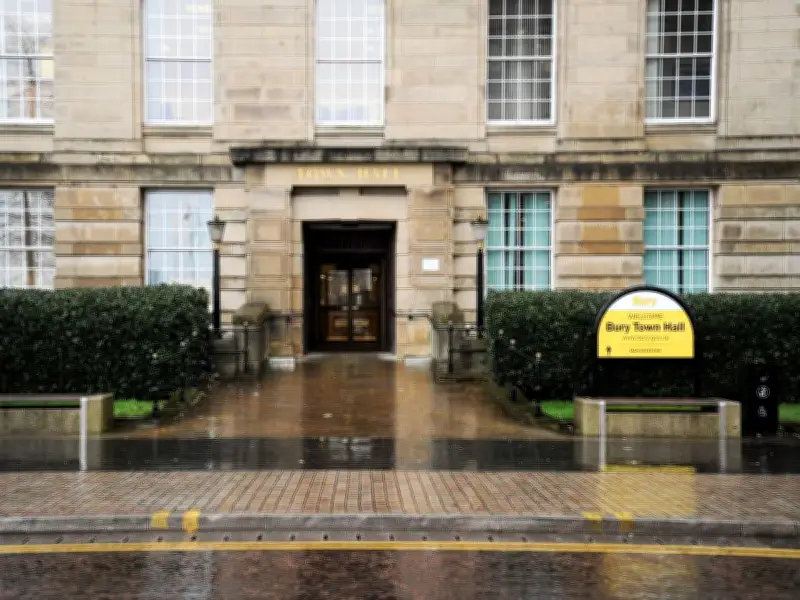
Bury Council has released new details of its savings plans as it grapples with a £20m budget gap for the coming financial year. The authority has identified measures to reduce this gap to around £9.6m through cost-cutting and revenue-raising initiatives.
Finance lead Sean Thorpe previously described the measures as 'regrettable' and 'distasteful', but said 'all options' have to be considered. The plans include changes to garden waste, street lighting, social care payments, school crossing patrols, and leisure charges.
Exceptional Financial Support and Council Tax
The council's executive has approved entering into conversations with the Government over Exceptional Financial Support (EFS) to help bridge the remaining gap. EFS allows town halls greater flexibility in meeting expenses, including higher council tax increases, permission to borrow, and flexibility with capital receipts.
Leaders have said their preferred approach would be capital receipt flexibility, but could not fully rule out an above referendum limit (4.99pc) tax hike. Coun Thorpe has stressed this is not something the authority is 'seeking'.
Bury council has drawn up its budget on the assumption of a 4.99pc council tax increase. This would take its share of the charge for a Band A property from £1,411 to £1,481 each year. A Band C property would go from £1,881 to £1,975. Residents also pay a precept to the Greater Manchester Combined Authority, so the final rate would be higher.
Each 1pc increase in the tax generates around £1.3m for the council. A lower increase would mean 'further cuts to services would be needed', the authority has said.
Consultation and Garden Waste Charges
The council is now seeking residents' opinions on the proposed savings, with a budget consultation live on its website until Monday, November 30. It asks about priorities, impacts of proposals, and current use of services.
The consultation also asks whether residents would support a higher rate of increase, borrowing more to bridge the funding gap, or selling assets for one-off funding. For every £1m borrowed, it would cost the council £110k a year to pay back if a 20-year loan is agreed.
Bury council is considering a new charge for garden waste, assumed at £50, which would be in line with other councils. If implemented, it would be expected in 2028. Residents would subscribe and receive a permit, such as a sticker for their brown bin. Those who do not sign up could still dispose of food waste in their brown bin and take garden waste to their local tip.
Street Lighting, School Crossings, and Leisure Fees
The council is proposing changes to street lights, including switching off certain lights at specific times. Two options are on the table: alternate lights off between midnight and 6am, or between 1am and 5am. Major junctions, collision hotspots, town centres, CCTV areas, and areas with higher crime and anti-social behaviour would be exempt.
There is 'no statistical link' between street light trimming and increased crime, anti-social behaviour, and traffic accidents.
Bury council is proposing a 'significant reduction' in school crossing patrols, which could see 32 crossing points scrapped and 15 staff roles 'deleted'. The authority assesses crossings every two years, rating them low, medium, or high priority. It proposes to maintain just the six high-risk crossings, with safety 'remains a key consideration'.
The council is also suggesting a 20pc hike in leisure fees, taking a monthly membership from £35.75 to £42.90 in 2027/28, and a further 20pc hike in 2028/29 to £51.48. The authority cites 'substantial financial pressures' from operating costs, maintenance liabilities, and the new Radcliffe Leisure Centre.
Adult Care Cap Removal
Finally, the council is proposing to remove the current £533.87 weekly cap for people receiving domiciliary care. This would mean people supported in this way would be asked to cover the full cost of their care, subject to financial assessment. The value of a person's main home is not included in these assessments.
The council says this would impact just 2pc of residents and, if implemented, would come into effect in April next year. Advice and support would be made available to anyone affected, and those people would be contacted directly by the council.